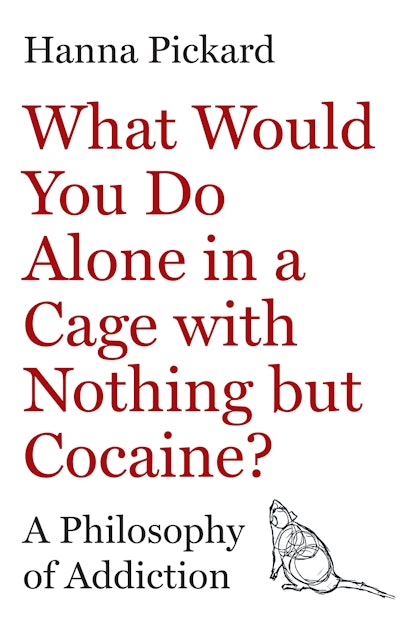
What Would you Do Alone in a Cage with Nothing but Cocaine?
Why do people with addiction use drugs self-destructively? Why don't they quit out of self-concern? Why does the rat in the experiment, alone in a cage, press the lever again and again for cocaine-to the point of death? In this pathbreaking book, Hanna Pickard proposes a new paradigm for understanding the puzzle of addiction. For too long, our thinking has been hostage to a false dichotomy: either addiction is a brain disease, or it is a moral failing. Pickard argues that it is neither, and that both models stifle addiction research and fail people who need help.
Drawing on her expertise as an academic philosopher and her clinical work in a therapeutic community, Pickard explores the meaning of drugs for people with addiction and the diverse factors that keep them using despite the costs. People use drugs to cope with suffering-but also to self-harm, or even to die. Some identify as "addicts," while others are in denial or struggle with cravings and self-control. Social, cultural, and economic circumstances are crucial to explaining addiction-but brain pathology may also matter. By integrating addiction science with philosophy, clinical practice, and the psychology and voices of people with addiction themselves, Pickard shows why there is no one-size-fits-all theory or ethics of addiction. The result is a heterogeneous and humanistic paradigm for understanding and treating addiction, and a fresh way of thinking about responsibility, blame, and relationships with people who use drugs.
Hanna Pickard
Hanna Pickard specializes in philosophy of mind, philosophy of cognitive science, philosophy of psychiatry, moral psychology, clinical ethics, and criminal and mental health law and policy. As well as being a philosopher, she worked for a decade at The Oxfordshire Complex Needs Service, a NHS specialist service for people with personality disorders and complex needs. Most of her current work focuses on addiction.
Chairing this event will be Professor of Philosophy at Cambridge, Richard Holton