
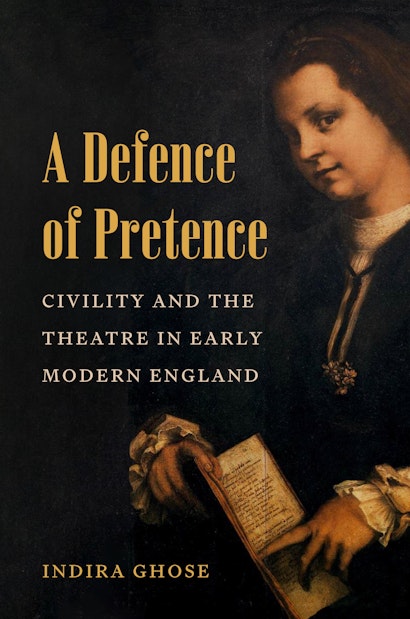
A time of turmoil, riven with conflict, a deeply divided world in which opposing factions harbour nothing but contempt for other members of society鈥攖he early modern period bears a remarkable resemblance to our own. In an era of soaring urbanisation, in which the population of London increased four-fold within a century and people rubbed shoulders with strangers who couldn’t be pinned down with regard to their birth or social origins, civility was key.
This was also the age that saw the birth of a prototypical entertainment industry: the commercial theatre. How did the theatre respond to the crisis of civility? Plays were subject to state regulation鈥攑olitically sensitive issues were censored. But in oblique ways, the plays do comment on contemporary conflicts.
What is striking about the theatre of Shakespeare, Jonson, Middleton, and others is not only the string of literary masterpieces it produced. It is also extraordinarily self-aware, reflecting on its own medium, on acting, feigning, and pretence. From the very beginning, the theatre was under attack. London civic authorities regarded it with suspicion as a place where crowds assembled over whom they had no control. They feared the power of the theatre to foment disorder, to spread seditious ideas, to encourage idleness and foster crime and disease. Moralists saw the theatre as a hotbed of immorality. A flurry of attacks on the theatre appeared in print; preachers thundered from the pulpit. Puritans in particular were suspicious of products of the human imagination, and fulminated against the theatre as a presumptuous attempt to compete with God. The response of the playwrights was remarkable. Steeped in the art of rhetoric, which they had imbibed at school, they plunged into debates about the pros and cons of playacting and make-believe. This is apparent not only in the plots of the plays, but in their form. Riddled with plays-within-plays and moments that break the fourth wall to address the audience, the plays keep reminding us that all we are watching is a fiction.
Civility is a deeply ambiguous affair. It relates both to polite behaviour and to civil society. And it can serve radically opposed ends. Elegant manners and a refined demeanour can be pressed into service to gain cultural capital and exclude others by implying that the representatives of a coterie are somehow superior to others. Or it can enable people who have nothing in common to cooperate for the common good. Above all, civility is an art of performance. It is a mode of communication with which we demonstrate esteem for each other. How we actually feel is irrelevant. What counts is what we convey with our words, gestures, and behaviour.
In their preoccupation with dissembling and pretence, the plays draw attention to the fact that in social life, we are always playing roles. We are social performers: social life is built on pretence. What the plays propose is that human beings are role-players. Pretence is an inescapable part of our lives.
They also explore the question whether this is always a bad thing. What matters, they indicate, is the purpose it serves鈥攊n the case of civility, the interests of a select group or those of the wider community. Sometimes, the plays suggest, dissimulation might even serve an ethical purpose. Merely a pretence of mutual respect might be a way to live together in society.
Another issue early modern drama grapples with is the question of sincerity. This is not specific to drama鈥攄ebates about sincerity play out in other genres like poetry as well. A culture of sincerity arose, decisively influenced by the thought of St Augustine. Augustine stressed the importance of introspection, urging believers to turn inward and seek God within. Delving into one’s heart to probe the true state of one’s sinful self became a passion, reflected in the diaries that many contemporaries kept. The plays, on the other hand, underline the difficulties with which this endeavour is fraught. We are contradictory and conflicted beings; we change all the time. How do we know our true feelings? What we believe are our sincere thoughts might be based on self-delusion鈥攐r our impression at a specific moment in time. In social interaction, what might be crucial is how we act, not how we feel.
Most importantly, the theatre shows us the complexity of human life. It opens our eyes to the fact that the truth is not black-and-white, that there are no easy answers or simple solutions. Literature sabotages the very idea of moral purity, our sense of infallible virtue.
One powerful example is Shakespeare’s tragedy, Coriolanus, about a Roman warrior who heroically defended the city from its enemies. Coriolanus categorically rejects civility, which he sees as flattery. He contemptuously dismisses the idea of pretence, which he equates with lying. Coriolanus is utterly sincere鈥攈e says exactly what he thinks. And what he thinks is often spot-on. The plebeians, on whom he pours scorn, are a fickle, cowardly bunch. The tribunes, their representatives, are a weasely, devious set, keen to stir up trouble. But by being truthful, Coriolanus escalates the conflict to such an extent that he is banished from Rome. He ends up fighting on the side of the enemy. What the play ironically shows is someone who, by insisting on being true to himself, ends up betraying everything he’d ever believed in and held dear. And betraying himself in the bargain.
Another example that plays off the two sides of civility against each other is The Merchant of Venice. The Venetians in the play are immensely attractive characters, a set of beautiful people who spout beautiful poetry and express beautiful sentiments. When it comes to Shylock, the irrascible, unpleasant outsider in their midst, however, their facade of civility crumbles. For the gilded youth of Venice, civility is entirely a matter of flaunting cultural sophistication and safeguarding the interests of an exclusive group. It is not about displaying respect for an outsider whose values differ radically from theirs. Shakespeare doesn’t make things easy for us. Shylock is not an endearing character. He is vicious, vindictive, and deeply uncivil. But the glamorous protagonists of the play disdain to extend a modicum of civility to him, to acknowledge that they have a shared stake in society. There is a extraordinary moment in the play when Portia, disguised as a lawyer, pretends to be unable to distinguish between Shylock and the merchant Antonio whose pound of flesh he demands. 鈥榃hich is the merchant here and which the Jew?鈥�, she asks. We usually take these lines at face value, but in truth, it is perfectly clear who is who. Shylock, the play tells us, is singled out by the Jewish gaberdine he wears. Shakespeare inserts these lines, I believe, to mockingly drive home the point that beneath the facade, there is no real difference between the Jews and the Gentiles. Ironically, it is in the mouth of Shylock that Shakespeare puts the famous plea for common humanity that still reverberates today: 鈥楬ath not a Jew eyes? Hath not a Jew hands, organs, dimensions, senses, affections, passions鈥攆ed with the same food, hurt with the same weapons, subject to the same diseases, healed by the same means, warmed and cooled by the same winter and summer as a Christian is? If you prick us do we not bleed? If you tickle us do we not laugh?鈥�
Indira Ghose is emeritus professor of English at the University of Fribourg, Switzerland. She is the author of Women Travellers in Colonial India, Shakespeare and Laughter: A Cultural History, Much Ado About Nothing: Language and Writing and Shakespeare in Jest.