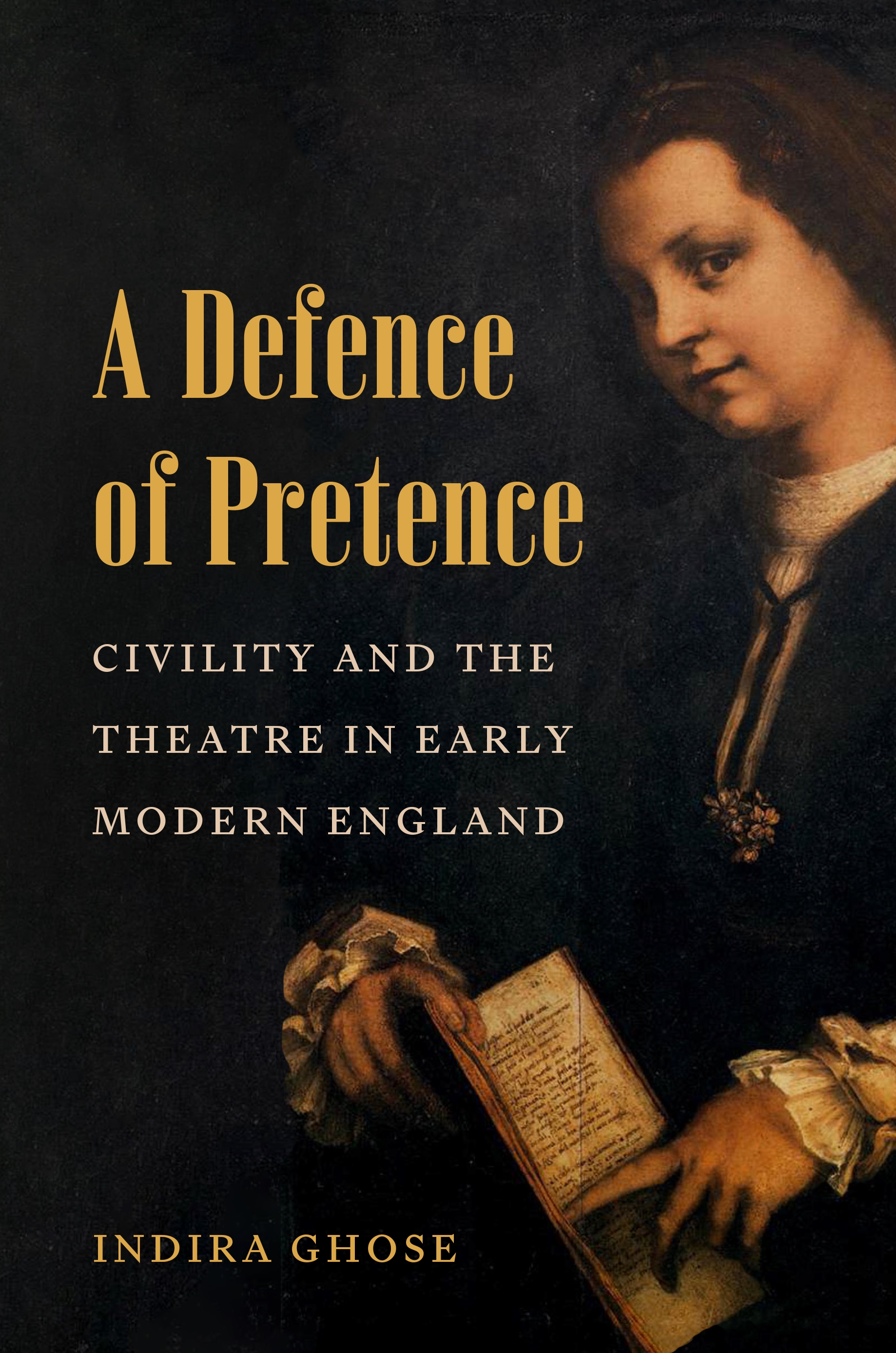
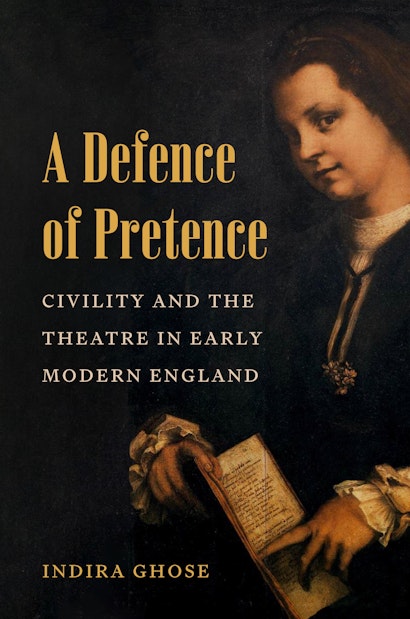
Is civility merely a matter of reinforcing status and excluding others? Or is it a lubricant in a polarised world, enabling us to overcome tribal loyalties and cooperate for the common good? In A Defence of Pretence, Indira Ghose argues that it is both. Ghose turns to the drama of Shakespeare鈥檚 time to explore the notion of civility. The theatre, she suggests, was a laboratory where many of the era鈥檚 conflicts played out. The plays test the precepts found in treatises on civility and show that, in the complexity and confusion of human life, moral purity is an illusion. We are always playing roles. In these plays, as in social life, pretence is inescapable. Could it be a virtue?
Civility, Ghose finds, is radically ambiguous. The plays of Shakespeare, Jonson and Middleton, grappling with dissimulation, lies and social performance, question the idea of a clear-cut boundary between sincerity and dissembling, between truth and lies. What is decisive is the use to which our play-acting is put. A pretence of mutual respect might serve an ethical end: to foster a sense of common purpose. In life, as in drama, the concept of the common good might be a fiction, but one that is crucial for human society.
Indira Ghose is emeritus professor of English at the University of Fribourg, Switzerland. She is the author of Women Travellers in Colonial India, Shakespeare and Laughter: A Cultural History, Much Ado About Nothing: Language and Writing and Shakespeare in Jest.
"It’s always a great pleasure when you discover that what might seem at first sight like a rather esoteric piece of academic research turns out to have immediate, contemporary significance. . . . Politicians of all stripes might benefit from putting a copy on their reading pile."鈥擳erry Potter, Letterpress Project
""A Defence of Pretence offers historians of the Renaissance a valuable new perspective on the relationship between social norms, literary culture, and public life. Ghose provides a salutary reminder that civility has never been synonymous with simple politeness”."鈥擶illiam David Green, History Today
"Ghose’s excellent book reveals the harmonizing worth of collaborative storytelling in social and theatrical life."鈥擪atharine Craik, Times Literary Supplement
“Well-informed in current scholarship, felicitously written and never less than thoughtful. Particularly excellent is the book’s all-round game, since it is at home talking about texts in several languages from several periods.”—Matthew Steggle, University of Bristol
“The scholarship is of very high standards, and the book makes a significant scholarly contribution, offering novel and intriguing perspectives on civility and its place in early modern theatre.”—Markku Peltonen, University of Helsinki
“A major contribution to the understanding of a topic that has lately come to be seen as one of increasing significance.”—Quentin Skinner, author of Liberty as Independence: The Making and Unmaking of a Political Ideal
“Indira Ghose writes with clarity, sophistication, wit and no little authority. Her A Defence of Pretence is a boldly and intelligently executed piece of literary and cultural history that will be of the widest interest to scholars of early modern literature, theatre, history and political thought.”—Rhodri Lewis, author of Shakespeare’s Tragic Art