
The first time my mother had Sunday lunch with her future in-laws in Roscommon, a small town in rural Ireland, she was astonished when the conversation turned to politics and my father and grandparents, hitherto so kind and polite, began yelling at each other. 鈥淚t was like,鈥� she said, 鈥渢he Christmas dinner scene in Portrait.鈥�
Even as a young teenager, before I had read Joyce, I got this reference to the most famous Christmas in Irish literature (rivalled only by the Christmas party in that other Joyce work, 鈥楾he Dead鈥�) which has become shorthand, or cultural signifier, for family harmony disrupted by politics. In Portrait of the Artist as a Young Man, the dinner is recounted from the perspective of the child Stephen Dedalus who witnesses the national furore of the Parnell Split played out in a domestic setting as his father and his nurse [nanny], Dante, take opposing sides on the adultery scandal that brought down the nationalist leader, Charles Stewart Parnell.
Dante voices the puritanical morality of the Irish bishops and British nonconformist MPs, while Stephen鈥檚 father and his friend, Mr Casey, stand up for the separation of church and state and Ireland鈥檚 right to carve its own path against what Joyce elsewhere calls the 鈥榯wo Masters: the British Empire and the Holy Roman Catholic Church鈥�. What gives the scene its raw power is the sense of a nation being distilled into a household鈥攖he Parnell Split of 1890/91 was one of those controversies, like the Dreyfus Affair or Brexit, where people can be profiled according to which side they took.
In his magisterial biography of Joyce, Richard Ellmann presents the scene as having taken place as written in the Joyce household in Christmas 1891, when Joyce was nine years old. Ellmann affirms that 鈥榯he argument was so acrimonious that neighbours [the Vances] heard it across the street鈥� and that 鈥楳rs Conway [Dante] left the house for good four days later.鈥� Ellmann has been criticised for his tendency to take Joyce鈥檚 fiction as autobiography, but not when it comes to the Christmas dinner scene, the historical actuality of which was never queried.
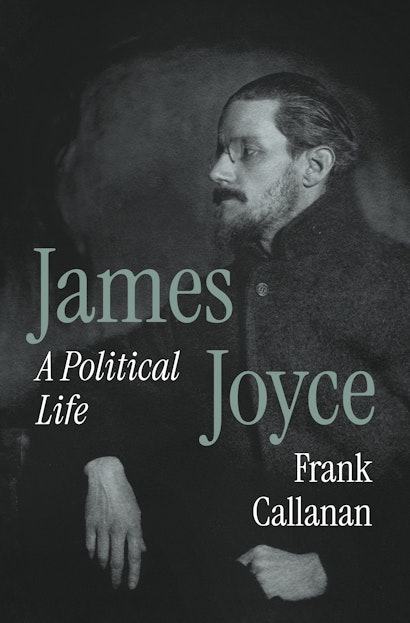
Remarkably it is only now, almost seventy years鈥� after the publication of Ellmann鈥檚 Joyce, that another biographer has asked the question: 鈥楧id the Christmas dinner scene actually take place?鈥� In James Joyce, A Political Life, recently published by 快色直播, my late husband, Frank Callanan follows up his query with the admission that 鈥榠t would be more than a little disappointing if it had not [taken place]. The scene has come to be central to how the Parnell Split is recalled in modern Ireland.鈥� But after examining the evidence鈥攖he memories of Joyce鈥檚 brother, Stanislaus, the date when Mrs Conway actually left the household, and the dating of the scene in Joyce鈥檚 earlier unpublished novel Stephen Hero鈥擣rank concludes urbanely: 鈥極ne is driven, not without regret, to the conclusion that no event corresponding to the Christmas dinner scene actually took place鈥�.
When I was preparing the book for publication, following Frank鈥檚 sudden death in December 2021, Luca Crispi, an eminent Joyce scholar who was helping me with the editing and proofing, observed shrewdly that this 鈥榖ombshell鈥� would be 鈥榯he headline in reviews鈥�. I wondered鈥攊t seemed to me the book had other headline-grabbing revelations鈥攂ut clearly Luca knows his audience. In an otherwise positive review in the Irish Times, the Joyce scholar Terence Killeen becomes agitated on this question:
鈥淚ntriguingly and paradoxically, Callanan does not believe this event actually happened: he is, I think, the first to make this claim […] The reasons given by Callanan for doubting at least its basis in fact do not seem to me convincing. The characters involved are all authentic, recognisable figures from James Joyce鈥檚 world at the time, the dating 鈥� Christmas 1891 鈥� and Joyce鈥檚 age fit well, and most readers can feel, with justifiable relief, that this dramatic confrontation is indeed a historical echo.鈥�
This is very revealing. Why should readers be relieved to feel that the dinner actually happened? And why justifiably? Clearly, as Luca divined, Frank has hit a nerve (and probably knew that he would, given that he expressed his own disappointment and regret at where the evidence leads).
What explains people鈥檚 need for the scene to have happened as written? I think it has something to do with the heightened realism of the writing. The way that Stephen follows the adult conversation, understanding nothing about sex or politics and everything about emotion, is so brilliantly done that we are in the mind of the nine-year-old. It feels so real, we cannot believe it could be made up.
This is atavistic of us. Since Freud, we have known that 鈥榩erfect recall鈥� is an oxymoron; that memory is a distorting mirror, not a video-recorder. Even if we鈥檝e never gone through analysis, we experience this every time we exchange memories with old friends and family. Rationally, we know that the scene鈥檚 elegance, exactitude and coherence are proof that it is invented. But it seems we can鈥檛 absorb the lesson. We insist on equating history, memoir and non-fiction with reality and truth; and fiction, dreams and imagination with untruth.
And because the Christmas dinner scene concerns actual historical events and actual people鈥攅veryone present, including the child Stephen, is drawn from a real-life person in Joyce鈥檚 family and circle鈥攊t adds an extra layer of difficulty. We seem unable, or unwilling, to sort the wheat of actuality from the chaff of imagination.
The Parnell Split is the foundational argument on religion and modernity that Irish people are still having. Joyce was a novelist, 鈥榥ot a politician, professional controversialist or proponent of political ideas鈥�, as Frank puts it in his introduction, and after 1912, he went into self-avowed 鈥榮ilence鈥�, making no public statements on the climactic political events he lived through鈥攏ot on the First World War, the Easter Rising, Irish Independence, the rise of Fascism or Vichy France. How then can he be the subject of 鈥榓 political life鈥�? Frank wrote his book in answer to this question. The genesis lies, I think, in the small boy positioned as witness to the scandal that divided a nation, and the insistence by generations of Irish people that he was a reliable witness.
Bridget Hourican is a freelance journalist and historian. She is literary editor of The Dubliner magazine and a regular contributor to the Irish Times book page.