
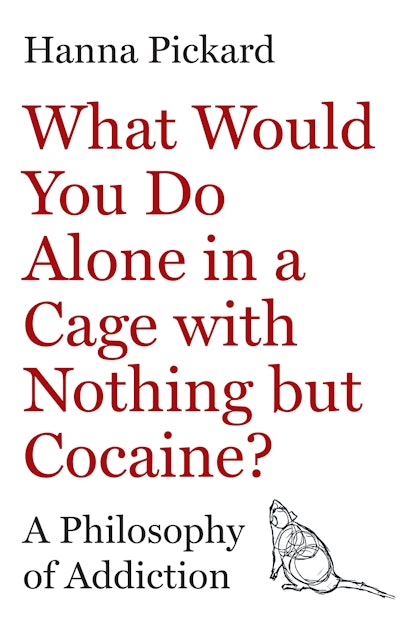
Why do people with addiction use drugs self-destructively? Why don鈥檛 they quit out of self-concern? Why does the rat in the experiment, alone in a cage, press the lever again and again for cocaine鈥攖o the point of death? In this pathbreaking book, Hanna Pickard proposes a new paradigm for understanding the puzzle of addiction. For too long, our thinking has been hostage to a false dichotomy: either addiction is a brain disease, or it is a moral failing. Pickard argues that it is neither, and that both models stifle addiction research and fail people who need help.
Why did you call the book What Would You Do Alone in a Cage with Nothing but Cocaine?
Hanna Pickard: Understanding addiction is not only a scientific project but a humanistic and imaginative endeavor. Beginning with the title, I directly address you, the reader, at various points throughout the book to invite you to participate in this endeavor. But the title also alludes to an important scientific experiment from the early days of animal models of addiction. In this experiment, rats were trained to press a lever to get a dose of cocaine, delivered immediately and intravenously. They 颅 were then permanently 颅 housed in an experimental chamber containing only food, 颅 water, and the lever, which they could press for as much cocaine as they wanted. In other words, the rats were effectively alone in a cage with nothing but cocaine. The title symbolizes the book鈥檚 integration of science and humanism by asking you to imagine what you would do if, like the rats in this experiment, you were living in these circumstances.
What happened to the rats in the study?
HP: You probably won鈥檛 be surprised to learn that the rats in this study took a lot of cocaine. Because cocaine suppresses hunger and thirst, they also 颅stopped eating and drinking. Within a month, 90 颅 percent died.
Why is this experiment important?
HP: The experiment is a beautiful illustration of the currently dominant scientific model of addiction: the brain disease model. Suppose we ask: Why would any animal abandon itself to cocaine at the expense of food and water, natural rewards essential to its survival? The answer offered by the brain disease model is: The power of drugs to hijack the brain and compel drug use. This is a simple, powerful explanation of why the rats in the experiment pressed the lever for cocaine to the point of death. The irony is that subsequent experiments with rats have shown that it is not the correct explanation. Yet the brain disease model remains our paradigm for understanding human addiction.
What did the subsequent experiments with rats show?
HP: Being alone in a cage with nothing but cocaine is an apt metaphor for the social, psychological, and material circumstances in which many people with addiction live. Take a moment to ask yourself the titular question: What would I do alone in a cage with nothing but cocaine? For many of us, if we are honest with ourselves, the answer is that we would take a lot of cocaine. This is because we imagine the psychological impact of being trapped in isolation and emptiness; we imagine the boredom, the loneliness, the misery and the suffering. And we recognize that, in this cage,颅 there is only one 颅 thing that offers any relief. Cocaine.
But now ask yourself: What would I do if my environment contained not just cocaine but the possibility of relationships with other people, meaningful work, interesting projects, a variety of activities and pleasures? Subsequent experiments with rats tested the idea behind this further question. The experimental chamber was adjusted to contain not just one lever but two, giving the rats a choice between a dose of cocaine or an alternative reward鈥攆or example, a food reward such as a drink of sweet water, or a social reward such as a minute of playtime with another rat. The vast majority of the rats in these subsequent experiments chose the alternative reward over cocaine. Why then did the rats in the earlier experiment take so much cocaine? Not because of the power of drugs to hijack the brain and compel use but because of the environment and its psychological impact: They were alone in a cage with nothing but cocaine.
Do you reject the idea that addiction is a brain disease that compels people to use drugs?
HP: The book proposes a new paradigm for understanding addiction that rejects what is wrong with the brain disease model while retaining what is right. One respect in which the brain disease model is right is that we can indeed learn a great deal about addiction through natural science鈥攁s the potted history of animal experiments that I have just recounted makes plain. But this is not the only way to learn about addiction. We also have a lot to learn from philosophy, the humanities, the social sciences鈥攁nd from listening to what people with addiction themselves say about their experience of using drugs.
If addiction is not a brain disease, then what is it?
HP: The new paradigm proposed in the book argues that addiction is not a brain disease but a very specific pattern of behavior: drug use that persists despite evident and severe costs and against a person鈥檚 own good. I develop this idea and explain what it means in detail in the book, but to put it in a slogan: Addiction is drug use gone wrong. What we want from a theory of addiction is to understand why it goes wrong鈥攚hy a person is continuing to use drugs when doing so is destroying their life.
What explains why drug use goes wrong?
HP: One of the lessons to be learned from the potted history of animal experiments is that the poverty or richness of the environment matters for addiction in rats. Human studies have demonstrated that this is also true of us. But, unlike rats, we are self-conscious and self-reflective beings with a correspondingly complicated psychology. In consequence, there are a range of psychological factors implicated in human addiction that I discuss at length in the book. These include the deliberate use of drugs to cope with negative emotions and suffering or, by contrast, the deliberate use of drugs to self-harm or even to die; the development of an attachment relationship to drugs; an 鈥渁ddict鈥� identity; denial; problems with self-control; and the psychological intensity and meaning of cravings for drugs for people with addiction.
By focusing only on the brain, the brain disease model sidelines these various psychological factors. The book aims to correct this by bringing the psychology of addiction clearly into view. But once it is in view, it is obvious that there can be no one-size-fits-all theory of addiction or universal explanation for why drug use goes wrong. Addiction is heterogeneous鈥攄ifferent for different people.
Does this matter for addiction treatment?
HP: Yes鈥攁nd for addiction ethics. Understanding why drug use has gone wrong in any individual case points to where best to intervene to help. If we don鈥檛 recognize the heterogeneity of explanations and the complexity of individual psychology, we can鈥檛 offer the best individual treatment. But this heterogeneity and complexity also matters to ethics. For too long, our thinking about addiction has been hostage to a false dichotomy鈥攁s if either addiction is a brain disease or it is a moral failing. But in truth, it is neither. As part of shifting the paradigm, the book also offers a fresh way of thinking about responsibility, blame, and relationships with people who use drugs.
Hanna Pickard is Bloomberg Distinguished Professor of Philosophy and Bioethics and Krieger-Eisenhower Professor at Johns Hopkins University.