
As the United States approaches its 250th anniversary, our series of reading lists is an invitation to reflect on and reckon with the ideas, conflicts, and aspirations that have impacted the nation over two and a half centuries. American democracy has always been an experiment鈥攃entering ideas about individual freedom and collective responsibility. This reading list explores how those ideas evolved, and were interpreted by thinkers and reformers who tried to understand what democracy could mean in practice.
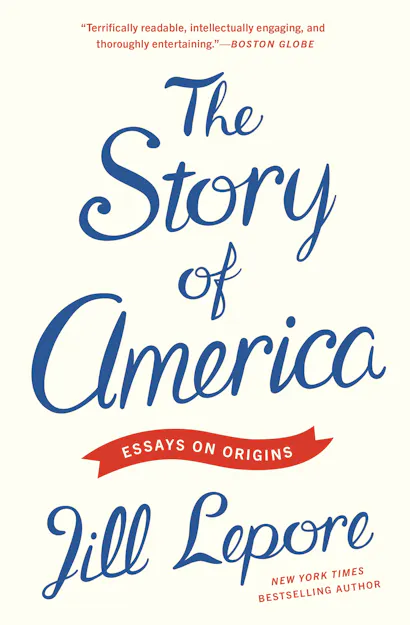
In The Story of America, Harvard historian and New Yorker staff writer Jill Lepore investigates American origin stories鈥攆rom John Smith鈥檚 account of the founding of Jamestown in 1607 to Barack Obama鈥檚 2009 inaugural address鈥攖o show how American democracy is bound up with the history of print. Over the centuries, Americans have read and written their way into a political culture of ink and type.

One of the most vexing questions for the framers of the Constitution was how to create a vigorous and independent executive without making him king. In today鈥檚 divided public square, presidential power has never been more contested. The President Who Would Not Be King cuts through the partisan rancor to reveal what the Constitution really tells us about the powers of the president.

In 1831, at the age of twenty-five, Alexis de Tocqueville made his fateful journey to America, where he observed the thrilling reality of a functioning democracy. From that moment onward, the French aristocrat would dedicate his life as a writer and politician to ending despotism in his country and bringing it into a new age. In this authoritative and groundbreaking biography, leading Tocqueville expert Olivier Zunz tells the story of a radical thinker who, uniquely charged by the events of his time, both in America and France, used the world as a laboratory for his political ideas.
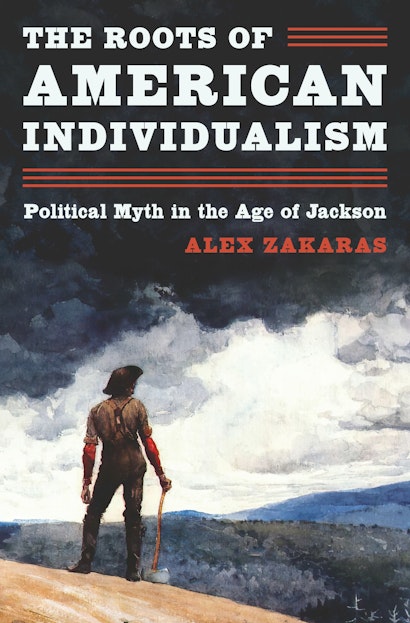
Individualism is a defining feature of American public life. Its influence is pervasive today, with liberals and conservatives alike promising to expand personal freedom and defend individual rights against unwanted intrusion, be it from big government, big corporations, or intolerant majorities. The Roots of American Individualism traces the origins of individualist ideas to the turbulent political controversies of the Jacksonian era (1820鈥�1850) and explores their enduring influence on American politics and culture.
Over the past generation, the Democratic and Republican parties have each become nationally coordinated political teams. American political institutions, on the other hand, remain highly decentralized. Laboratories against Democracy shows how national political conflicts are increasingly flowing through the subnational institutions of state politics鈥攚ith profound consequences for public policy and American democracy.
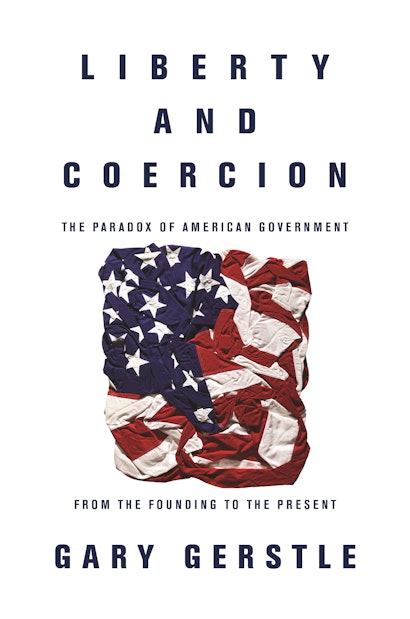
American governance is burdened by a paradox. On the one hand, Americans don鈥檛 want 鈥渂ig government鈥� meddling in their lives; on the other hand, they have repeatedly enlisted governmental help to impose their views regarding marriage, abortion, religion, and schooling on their neighbors. These contradictory stances on the role of public power have paralyzed policymaking and generated rancorous disputes about government鈥檚 legitimate scope. How did we reach this political impasse? Historian Gary Gerstle, looking at two hundred years of U.S. history, argues that the roots of the current crisis lie in two contrasting theories of power that the Framers inscribed in the Constitution.
In this unsettling book, Russell Muirhead and Nancy Rosenblum trace how ungoverning鈥攖he deliberate effort to dismantle the capacity of government to do its work鈥攈as become a malignant part of politics. Democracy depends on a government that can govern, and that requires what鈥檚 called administration. The administrative state is made up of the vast array of departments and agencies that conduct the essential business of government, from national defense and disaster response to implementing and enforcing public policies of every kind. Ungoverning chronicles the reactionary movement that demands dismantling the administrative state. The demand is not for goals that can be met with policies or programs. When this demand is frustrated, as it must be, the result is an invitation to violence.
In this timely book, distinguished historian Thomas Madden explores the people, events, and factors that led to the collapse of some of the world鈥檚 most enduring republics鈥攆rom Carthage to Rome to Venice and beyond鈥攁nd examines the worrying lessons these failures hold for the United States and other democracies today.
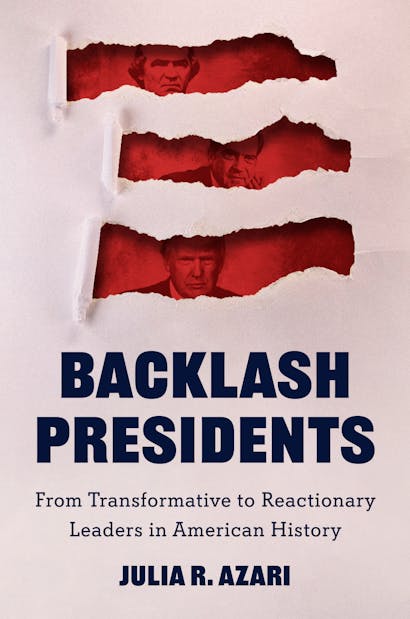
When Barack Obama won the White House in 2008, becoming the nation鈥檚 first Black president, the stage was set for Donald Trump鈥檚 eventual rise to power. Backlash Presidents shows how, throughout American history, administrations that challenge the country鈥檚 racial status quo are followed by presidents who deal in racially charged politics and presidential lawlessness, culminating in impeachment crises.
The Voting Rights Act of 1965 finally made good on the promise of the Fifteenth Amendment, which nearly a century before had granted Black Americans the right to vote. The Voting Rights Act was the crowning achievement of the Civil Rights Movement, which had battled for years against voting laws that made it all but impossible for Black Americans to cast a ballot. The act was a resounding success, bringing Americans of all races and ethnicities into the democratic process. And then, in 2013, the Supreme Court brought this progress to a screeching halt with their decision in Shelby County v. Holder. In this book, Michael Miller and Kevin Morris offer a sweeping history of the Voting Rights Act and the attacks it has suffered.
Drawing on troubling stories of state attempts to disenfranchise military voters, women, African Americans, students, former felons, Native Americans, and others, Richard Hasen argues that American democracy can and should do better in assuring that all eligible voters can cast a meaningful vote that will be fairly counted. He shows how a constitutional right to vote can deescalate voting wars between political parties that lead to endless rounds of litigation and undermine voter confidence in elections, and can safeguard democracy against dangerous attempts at election subversion like the one we witnessed in the aftermath of the 2020 presidential election.
America鈥檚 political parties are hollow shells of what they could be, locked in a polarized struggle for power and unrooted as civic organizations. The Hollow Parties takes readers from the rise of mass party politics in the Jacksonian era through the years of Barack Obama and Donald Trump. Today鈥檚 parties, at once overbearing and ineffectual, have emerged from the interplay of multiple party traditions that reach back to the Founding.
Why have Americans living in different places come to experience politics as a battle between 鈥渦s鈥� and 鈥渢hem鈥�? In Rural Versus Urban, Suzanne Mettler and Trevor Brown argue that political polarization is not just about red states and blue states, or coastal elites who alienate those in fly-over country. Instead, polarization permeates every region and every state鈥攁nd has become organized through a pernicious rural-urban division. Mettler and Brown explain the evolution of this gulf across five decades, charting political trends in both places. Drawing on data on individuals, communities, and members of Congress, as well as interviews with local party leaders and former elected officials, they show how the divide emerged and why it poses a threat to democracy.
Donald Trump is not a big thinker, but his 2016 presidential victory presented a grand opportunity for people who are, and it set off a radicalization and reconfiguration of the American conservative intellectual world. In Furious Minds, Laura Field, who spent close to a decade in conservative academic circles, chronicles the rise of the New Right鈥攖he network of academics, public intellectuals, and influencers who provide ideological fuel to Trumpism. This movement includes figures such as Patrick Deneen, Christopher Rufo, Peter Thiel, and JD Vance. Their agenda is built to last, and it has dire long-term implications for liberal democracy.
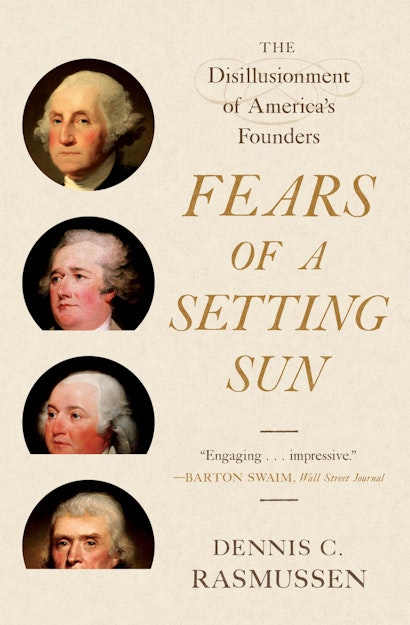
Americans seldom deify their Founding Fathers any longer, but they do still tend to venerate the Constitution and the republican government that the founders created. Strikingly, the founders themselves were far less confident in what they had wrought, particularly by the end of their lives. In fact, most of them鈥攊ncluding George Washington, Alexander Hamilton, John Adams, and Thomas Jefferson鈥攃ame to deem America鈥檚 constitutional experiment an utter failure that was unlikely to last beyond their own generation. Fears of a Setting Sun is the first book to tell the fascinating and too-little-known story of the founders鈥� disillusionment.
After Donald Trump鈥檚 rise to power, after the 2020 presidential election, after January 6, is American politics past the point of no return? New York Times columnist and political reporter Thomas Byrne Edsall fears that the country may be headed over a cliff, arguing that the election of Donald Trump was the most serious threat to the American political system since the Civil War. In this compelling and illuminating book, Edsall documents how the Trump years ravaged the nation鈥檚 politics, culture, and social order. He explains the demographic shifts that helped make Trump鈥檚 election possible, and describes the racial and ethnic conflict, culture wars, rural/urban divide, diverging economies of red and blue states, and the transformation of both the Republican and Democratic parties that have left our politics in a state of permanent hostility.
Long before the pandemic, Ruha Benjamin was doing groundbreaking research on race, technology, and justice, focusing on big, structural changes. But the twin plagues of COVID-19 and anti-Black police violence inspired her to rethink the importance of small, individual actions. Part memoir, part manifesto, Viral Justice is a sweeping and deeply personal exploration of how we can transform society through the choices we make every day.
Elected authoritarians lead governments that persecute minorities and attack the rule of law鈥攁nd yet they claim to be democratic, because they hold elections said to represent the will of the people. In this urgent and revelatory book, Minh Ly challenges these authoritarian claims by proposing a new conception of democracy that is based not on a uniform popular will but on equal accountability: the idea that we must be equally empowered to hold our officials democratically accountable. Equal accountability requires the very rights and institutions鈥攆rom freedom of the press and freedom to protest to independent courts and congressional oversight鈥攖hat elected authoritarians threaten.