
As the United States approaches its 250th anniversary, our series of reading lists is an invitation to reflect on and reckon with the ideas, conflicts, and aspirations that have impacted the nation over two and a half centuries. Freedom of speech has been a cornerstone of American democracy, as well as the focus of ongoing discussion over dissent and the limits of power. This reading list explores the First Amendment and years of debate over who gets to speak, and why it matters.
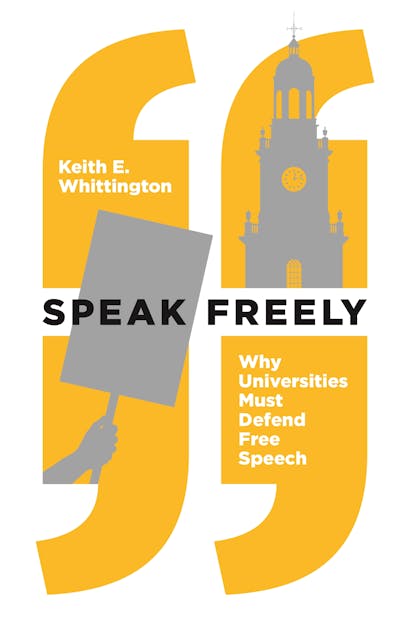
Free speech is under attack at colleges and universities today, as critics on and off campus challenge the value of freewheeling debate. In Speak Freely, Keith Whittington argues that universities must protect and encourage vigorous free speech because it goes to the heart of their mission to foster freedom of thought, ideological diversity, and tolerance. Examining hot-button issues such as trigger warnings, safe spaces, hate speech, disruptive protests, speaker disinvitations, and the use of social media by faculty, Speak Freely describes the dangers of empowering campus censors to limit speech and enforce orthodoxy.
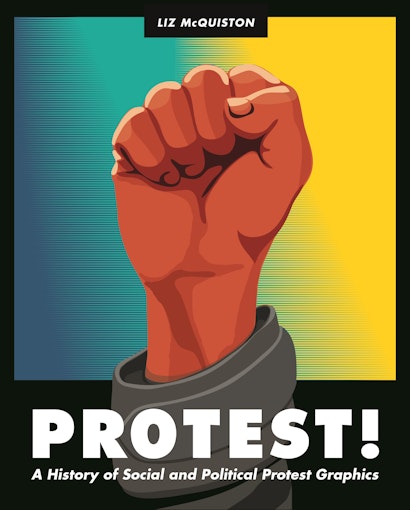
Throughout history, artists and citizens have turned to protest art as a means of demonstrating social and political discontent. From the earliest broadsheets in the 1500s to engravings, photolithographs, prints, posters, murals, graffiti, and political cartoons, these endlessly inventive graphic forms have symbolized and spurred on power struggles, rebellions, spirited causes, and calls to arms. Spanning continents and centuries, Protest! presents a major new chronological look at protest graphics.
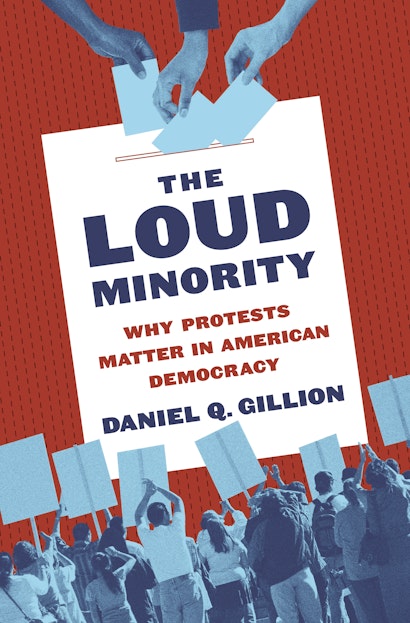
The 鈥渟ilent majority鈥濃�攁 phrase coined by Richard Nixon in 1969 in response to Vietnam War protests and later used by Donald Trump as a campaign slogan鈥攔efers to the supposed wedge that exists between protestors in the street and the voters at home. The Loud Minority upends this view by demonstrating that voters are in fact directly informed and influenced by protest activism. Consequently, as protests grow in America, every facet of the electoral process is touched by this loud minority, benefiting the political party perceived to be the most supportive of the protestors鈥� messaging.
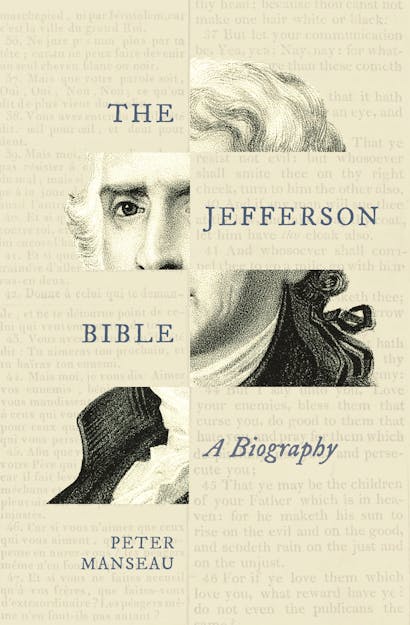
In his retirement, Thomas Jefferson edited the New Testament with a penknife and glue, removing all mention of miracles and other supernatural events. Inspired by the ideals of the Enlightenment, Jefferson hoped to reconcile Christian tradition with reason by presenting Jesus of Nazareth as a great moral teacher鈥攏ot a divine one. Peter Manseau tells the story of the Jefferson Bible, exploring how each new generation has reimagined the book in its own image as readers grapple with both the legacy of the man who made it and the place of religion in American life.

In The Church of Saint Thomas Paine, Leigh Eric Schmidt tells the surprising story of how freethinking liberals in nineteenth-century America promoted a secular religion of humanity centered on the deistic revolutionary Thomas Paine (1737鈥�1809) and how their descendants eventually became embroiled in the culture wars of the late twentieth century.
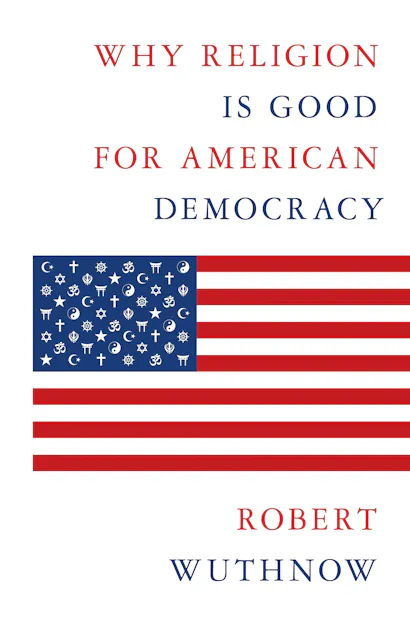
Does religion benefit democracy? Robert Wuthnow says yes. In< Why Religion Is Good for American Democracy, Wuthnow makes his case by moving beyond the focus on unifying values or narratives about culture wars and elections. Rather, he demonstrates that the beneficial contributions of religion are best understood through the lens of religious diversity. The religious composition of the United States comprises many groups, organizations, and individuals that vigorously, and sometimes aggressively, contend for what they believe to be good and true. Unwelcome as this contention can be, it is rarely extremist, violent, or autocratic. Instead, it brings alternative and innovative perspectives to the table, forcing debates about what it means to be a democracy.
A new view of twentieth-century US social movements, Rough Draft of History examines how national newspapers covered social movements and the organizations driving them. Edwin Amenta and Neal Caren identify hundreds of movement organizations, from the Women鈥檚 Christian Temperance Union to Occupy Wall Street, and document their treatment in the news. In doing so, Amenta and Caren provide an alternative account of US history from below, as it was refracted through journalistic lenses.
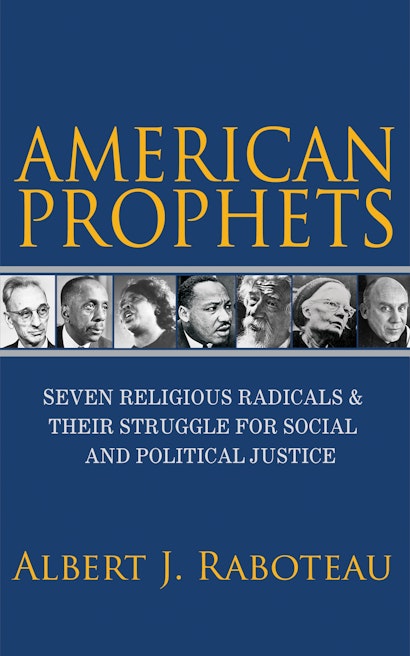
American Prophets sheds critical new light on the lives and thought of seven major prophetic figures in twentieth-century America whose social activism was motivated by a deeply felt compassion for those suffering injustice. In this compelling and provocative book, acclaimed religious scholar Albert Raboteau tells the remarkable stories of Abraham Joshua Heschel, A. J. Muste, Dorothy Day, Howard Thurman, Thomas Merton, Martin Luther King, Jr., and Fannie Lou Hamer鈥攊nspired individuals who succeeded in conveying their vision to the broader public through writing, speaking, demonstrating, and organizing.
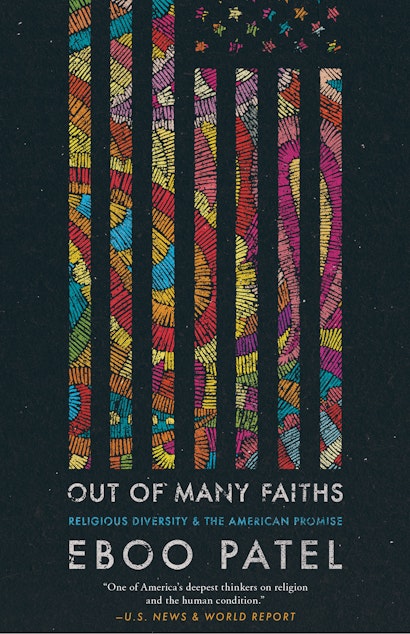
America is the most religiously diverse nation on the planet. In today鈥檚 volatile climate of religious conflict and distrust, how do we affirm that the American promise is deeply intertwined with how each of us engages with people of different beliefs? Eboo Patel, former faith adviser to Barack Obama, provides answers to this timely question. In this thought-provoking book, Patel draws on his personal experience as a Muslim in America to examine the importance of religious diversity in the nation鈥檚 cultural, political, and economic life. He explores how religious language has given the United States some of its most enduring symbols and inspired its most vital civic institutions鈥攁nd demonstrates how the genius of the American experiment lies in its empowerment of all people.