
Shakespeare is a cultural icon: he wrote about universal themes in a way that transformed storytelling and character, and his dynamic works have had an outsized impact on literature and language, even shaping modern English with the introduction of new words and phrases, including 鈥榞loomy鈥�, 鈥榮wagger鈥�, 鈥榳ear your heart on your sleeve鈥�, and of course, 鈥榓ll the world鈥檚 a stage鈥�. His writing is aesthetically complex, treating cultural and political concerns while demonstrating drama鈥檚 flexibility, often blending genres and experimenting with forms. Over four centuries, his plays and poems have been read, performed, edited and debated, with every generation finding new meaning. Dive into a curated selection of our Shakespeare titles.
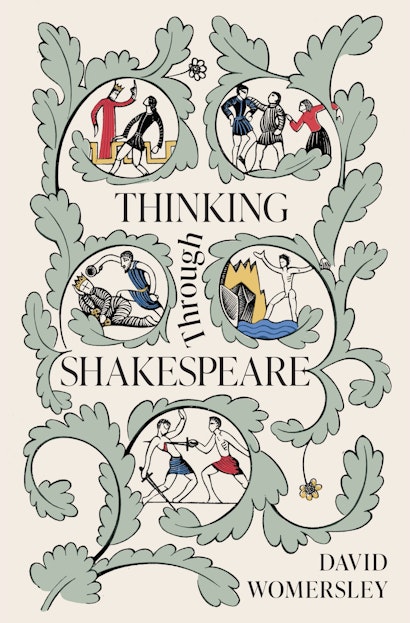
In the eighteenth century, Samuel Johnson famously argued that Shakespeare is enduringly popular because he 鈥渋s above all writers, at least above all modern writers, the poet of nature; the poet that holds up to his readers a faithful mirror of manners and of life.鈥� Johnson鈥檚 view largely prevailed until the late twentieth century, when it was challenged by a growing scepticism about the existence of a general human nature. In Thinking Through Shakespeare, eminent literary critic David Womersley pushes back against this change by exploring how Shakespeare鈥檚 plays think through鈥攁nd invite us to think through鈥攄eep human questions of lasting importance.
Shakespeare was a keen and discerning reader who was mocked by writers who, unlike him, had been to university鈥攕o it鈥檚 not surprising that his portrait of scholarly life is critical. As Sean Keilen shows in this engaging book, Shakespeare鈥檚 scholars lack humility, shun wisdom, underestimate people who are not scholars, and, by keeping aloof from society, fail to see themselves clearly. In examining Shakespeare鈥檚 scholars, Keilen finds parallels in the modern academy.
How to Think like Shakespeare is a brilliantly fun exploration of the craft of thought鈥攐ne that demonstrates what we鈥檝e lost in education today, and how we might begin to recover it. In fourteen brief chapters that draw from Shakespeare鈥檚 world and works, and from other writers past and present, Scott Newstok distills enduring practices that can make learning more creative and pleasurable.
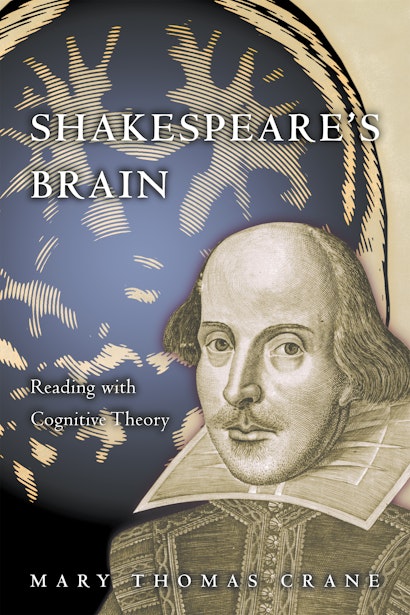
Here Mary Thomas Crane considers the brain as a site where body and culture meet to form the subject and its expression in language. Taking Shakespeare as her case study, she boldly demonstrates the explanatory power of cognitive theory鈥攁 theory which argues that language is produced by a reciprocal interaction of body and environment, brain and culture, and which refocuses attention on the role of the author in the making of meaning. Crane reveals in Shakespeare鈥檚 texts a web of structures and categories through which meaning is created. The approach yields fresh insights into a wide range of his plays, including The Comedy of Errors, As You Like It, Twelfth Night, Hamlet, Measure for Measure, and The Tempest.
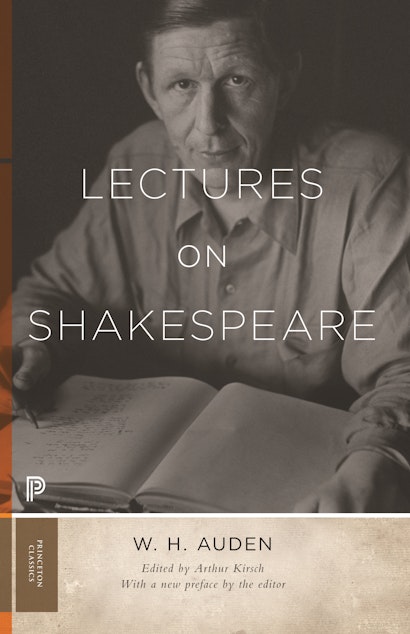
鈥淲. H. Auden, poet and critic, will conduct a course on Shakespeare at the New School for Social Research beginning Wednesday. Mr. Auden 鈥� proposes to read all Shakespeare鈥檚 plays in chronological order.鈥� So the New York Times reported on September 27, 1946, giving notice of a rare opportunity to hear one of the century鈥檚 great poets discuss at length one of the greatest writers of all time. Reconstructed by Arthur Kirsch, these lectures offer remarkable insights into Shakespeare鈥檚 plays and sonnets while also adding immeasurably to our understanding of Auden.
This unique anthology presents more than forty versions of folktales related to eight Shakespeare plays: The Taming of the Shrew, The Comedy of Errors, Titus Andronicus, The Merchant of Venice, All鈥檚 Well That Ends Well, King Lear, Cymbeline, and The Tempest. These fascinating and diverse tales come from Europe, the Middle East, India, the Caribbean, and South America, and include stories by Gerald of Wales, Marie-Catherine d鈥橝ulnoy, Jacob and Wilhelm Grimm, Giambattista Basile, J. M. Synge, Zora Neale Hurston, Italo Calvino, and many more. Organized by play, each chapter includes a brief introduction discussing the intriguing connections between the play and the gathered folktales. Shakespeare and the Folktale can be read for the pure pleasure these lively tales give as much as for the insight into Shakespeare鈥檚 plays they provide.
In Shakespeare鈥檚 Tragic Art, Rhodri Lewis offers a powerfully original reassessment of tragedy as Shakespeare wrote it鈥攐f what drew him toward tragic drama, what makes his tragedies distinctive, and why they matter.