
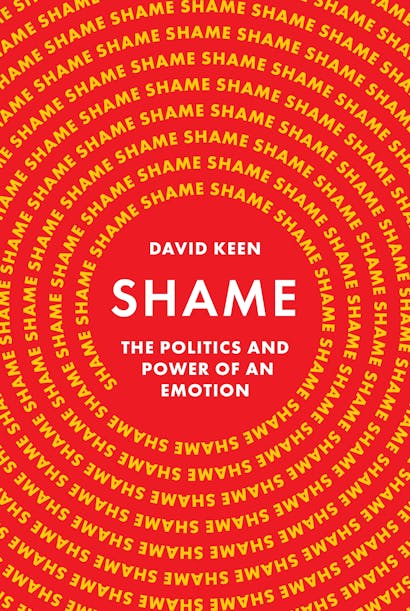
When someone behaves badly, a natural and understandable reaction is to shame them. But perhaps this fails to change their behaviour and they even exhibit a notable shamelessness. The temptation, at this point, is to redouble the shaming in the hope that this will at last produce some reform and remorse.
But what if the problem being addressed—perhaps some mix of violence, racism and authoritarian behaviour—is actually being fueled by shame? And what if the target of our shaming is actively feeding off shame to renew and increase their potency and abuse? In these circumstances, we need to rethink some of our most ingrained assumptions about shame and shaming.
My own interest in shame was stirred when I was doing research in Sierra Leone during the civil war there. Rebels recruited among youth who were aggrieved by poor employment opportunities, disappointed with the failed promise of modernity and often humiliated by village chiefs. One Sierra Leonean aid worker said children who drop out of school early “feel they are a little too enlightened to go back and till the soil! They feel their friends will laugh at them.” But “being a rebel you can loot at will, then you have a sway over your former master, who used to lord it over you, or the others who might have laughed.” In diverse ways, a sense of humiliation was fueling the violence, and when civilians quite naturally turned against both rebels and rogue government soldiers, this in turn fueled the fighters’ anger with civilians and their violence against them.
One young man who managed to live through the occupation of his village by terrifying rebels remembered that the attackers asked why civilians were running away from them and not from West African peacekeepers: “‘What do you see in us that you don’t see in them?’ You have to say ‘OK, I’m with you. I support you. There’s nothing wrong with you’… I was able to use this tool to survive.”
When psychiatrist and prison reformer James Gilligan spent decades working with violent criminals in the United States, he discovered some related dynamics. He found that extreme violence was usually a response to extreme humiliation in the perpetrator’s past, often combined with some perceived and perhaps relatively trivial disrespect in the present. Prison itself was compounding a deep-rooted sense of humiliation.
Whether we are talking about mass violence or individual violence, shaming may be actively counterproductive—and this represents a huge problem for diplomats and human rights organizations (on which, see particularly Rochelle Terman’s insightful book The Geopolitics of Shaming [2023, PUP]). The danger that shame is counterproductive is all the greater when abusive leaders are encouraging and exploiting some kind of nationalist backlash against being internationally shamed.
Today, across diverse regions of the world, a powerful right-wing politics of non-apology is being built on three pillars: the conspicuous shamelessness of its leaders; the strategic deflection of leaders’ and followers’ shame through the high-profile shaming of critics and outgroups; and the rebuttal of shaming—whether domestic or international—for a range of historical and present-day and historical abuses from racism and imperialism to war and genocide. Part of the reason why this emerging politics is so attractive for many—and so frightening for many others—is that it thrives precisely on the criticism it induces. The shaming of both leaders and followers has routinely been harnessed to the project of nationalism and the project of offering an escape from shame. This is possible in large part because of the perceived illegitimacy and hypocrisy of the shamers, something that may conveniently disappear from view when all the focus is on the shamed.
Feeding off (and feeding) political polarization, social media are contributing powerfully to the contemporary reflex of shaming and counter-shaming. As Donovan Schaefer has noted, “Shame saturates contemporary politics. Bodies that once felt like the unchallenged masters of their space—white bodies, male bodies, cis bodies, straight bodies, rich bodies, citizen bodies—are being confronted, more and more, with a demand to respond to the violence trailing in the wake of the comforts and pleasures they enjoy.” In these circumstances, for some, “it becomes easier to repudiate shame altogether than respond to the moral demands placed on them.”
While some of the shame that’s being avoided and exploited centers on oppression, much of it revolves around poverty and individual ‘failure’. In his landmark 1965 book The Paranoid Style in American Politics, Richard Hofstadter suggested that the United States had a built-in ‘status-escalator’ that reflected the opportunities for colonial settlement as well as the opportunities for various groups of immigrants to rise above more recent arrivals. Hofstadter argued that a slowing of this escalator was combining with a general insecurity in relation to one’s status as ‘American’ to create a turn towards ‘status politics’ rather than ‘interest politics’.
In many ways, the American Dream has made things worse. The attractive idea that everyone can succeed if they try hard enough sours when social mobility diminishes: by the same logic, if you have not succeeded, then you were not trying hard enough! In Joe Bageant’s 2007 book Deer Hunting with Jesus—a portrait of his hometown of Winchester, Virginia—the author suggested that “The American bootstrap myth is merely another strap that makes the working poor privately conclude that they must in some way be inferior, given that they cannot seem to apply that myth to their own lives.” And that spells shame. Bageant goes on to argue that if you are white and told you have ‘white privilege’, the shame may be all the greater.
In Strangers in Their Own Land (2018), Arlie Russell Hochschild’s remarkable book on Louisiana, the author stressed that Trumpian politics involved a scapegoating of those held responsible precisely for the failure to achieve the American Dream. Hochschild also linked support for Trump to the ‘struggle to feel seen and honored’. She highlighted a perception of dwindling respect that was linked partly to diminishing job security and partly to the feeling that pride in one’s identity (religion, ethnicity, region, gender, even age) had routinely been replaced by a sense of shame, reflecting not just the receding American Dream but also the perceived scorn of more urban or educated people and of the media. Unlike many Republicans, Trump rarely shamed those on welfare unless linking it to immigration.
In these circumstances, many were attracted to solutions that promised to restore respect—even when these ‘solutions’ offered few tangible benefits. Hochschild stressed that Trump’s unapologetically non-PC speeches thrilled his audiences. Trump, in other words, was never having to say you’re sorry. Accusations like Hillary Clinton’s notorious “basket of deplorables” remark were turned into a badge of pride. And when Silicon valley entrepreneur Sam Alston spoke to 100 Trump supporters in 2017, he received comments like, “the demonization of Trump by calling him and his supporters Nazis, KKK, white supremacists, fascists etc works very well in entrenching Trump supporters on his side.” Meanwhile, Trump has avoided the danger of shaming voters through the surprisingly effective message that he is worse than they will ever be! It is precisely the shamelessness of Trump that makes him so alluring in a shame-riven society.
Psychoanalyst Heinz Kohut (1985) argued that at certain historical moments, feelings of shame and powerlessness are ubiquitous and “individuals seek to melt into the body of a powerful nation (as symbolized by a grandiose leader) to cure their shame and provide them with a feeling of enormous strength, to which they react with relief and triumph.” Further: the “power of the gifted leader can be effectively engaged only in the area in which the fantasies and wishes of the masses are like his own.”
Political manipulators of shame tend to ramp up the underlying shame and then offer an escape. In Trump’s case, we may say that shame is to him what fear is to the Mafia. In Trump’s 2016 Presidential campaign, he proclaimed “Our infrastructure is like that of a third world country… Our police are underfunded… and Hillary Clinton basically accuses our police of all being racist…” To boost the shame even more, Trump injected laughter into the mix: “Hillary’s Korea deal, South Korea, cost us another 100,000 jobs… and South Korea, like almost every other country, is laughing at how stupid we are.”
That mention of South Korea laughing is important (and we might remember that fear of being laughed at in Sierra Leone). Trump likes to talk about those who laughed at him when he made predictions that turned out to be correct, and Farage harped on a similar theme before the European parliament after he won the Brexit vote. We know, of course, that Hitler notoriously stressed that the Jews were laughing at his predictions but would not be laughing soon. One senses with Trump that so long as you are laughing with him and laughing at someone he is deriding, then you cannot be laughing at him. And other people cannot be laughing at you.
Part of exploiting the desire to escape from being shamed is to incite that shaming in the first place. Notably, if you perpetrate abuse (as in Trump’s policy of mass expulsion), it attracts shame, then you can shame the shamers and bond around this just as you can do in relation to historical abuses. In fact, the original abuse can become a form of what Hannah Arendt called ‘action as propaganda’, generating an ever-wider circle of ‘enemies including critics in the media and Republican ‘traitors’ and reinforcing the sense that ‘the establishment is against us’. In the UK, Reform Party leader Nigel Farage seems headed in the same direction with his attacks on the BBC in the wake of widespread allegations of racism at school.
While Trump does seem remarkably shameless and while he has made remarkable use of this perception, we should hesitate before we label him as entirely shameless. Indeed, several things would appear to be deeply shameful for Trump—including weakness, losing, apologizing, and not knowing or predicting. Revealingly, Trump showed astonishing contempt for what he called ‘the losers’ who have died fighting for America. Nor could he accept his own electoral defeat in 2020.
Alongside what appears to be a personal aversion to being shamed, Trump seems to enjoy humiliating others. After imposing his sweeping import tariffs, Trump appeared to be reveling as various leaders tried to persuade him to reduce the damage: “These countries are calling us up, kissing my ass. They are, ‘Please, please, sir, make a deal. I’ll do anything. I’ll do anything.” The function of humiliating others to escape his own shame was rarely as clear as when Trump, confronted about the “Hollywood Access” groping tape during 2016 Presidential debates, said: “Yes, I’m very embarrassed by it. I hate it. But it’s locker-room talk, and it’s one of those things. I will knock the hell out of ISIS.” He quickly went on to attack the Clintons.
We tend to imagine that the purpose of shaming is to change someone’s behaviour. But particularly when it becomes clear that this is not working and when we persist with shaming nonetheless, we need to explore the possibility that the shaming is serving some other function. It may be an expression of anger and frustration, for example, or it may serve to affirm our membership of a particular group—not least by underpinning a collective sense of self-righteousness. Given the way shaming and counter-shaming keeps us locked into social media, persistent shaming can also be deeply profitable.
Most importantly, shaming may be a way to avoid our own responsibility. The near-unanimous shaming of the ‘animal’ rebels in Sierra Leone served as useful cover for the shameful behaviour of government troops and for an international community that supported an abusive military government. That mechanism extends much more widely to the collective shaming of any number of demonized rebel and indeed terrorist groups whose cruelty does not diminish the damaging impunity that comes from focusing exclusively on their abuses. Meanwhile, in the United States, the shaming of Trump and his supporters—understandable as it may be—often serves as convenient cover for the exploitative and corrupt system that gave rise to Trump while simultaneously playing into the hands of this arch-manipulator of shame.
David Keen is professor of conflict studies in the Department of International Development at the London School of Economics and Political Science. He is the author of The Benefits of Famine, Conflict and Collusion in Sierra Leone, Endless War?, Complex Emergencies, Useful Enemies, and When Disasters Come Home.