
Read or listen to the news and the world seems like a violent place. The Russian invasion of Ukraine, the razing of Gaza, and the ongoing US-Israel assault on Iran may garner the most attention in the Western press, but they鈥檙e merely the most prominent in a depressingly long list of current conflicts. There鈥檚 also genuine concern among international lawyers and ethicists that legal and moral norms intended to regulate war and to impose some level of restraint are being eroded.
Some social scientists 鈥� most famously Steven Pinker in The Better Angels of Our Nature (2011) 鈥� have argued that humanity is becoming less violent; if true, war casualties remain disturbingly high. In fact, many historians and anthropologists dispute Pinker鈥檚 findings, stressing that the historical data is insufficient to draw any firm conclusions. Rates of interpersonal violence during peacetime have almost certainly declined, but the claim that modern humans are less violent or fighting fewer wars is less convincing. It matters whether one is concerned with absolute or relative rates of violence. More people died as a result of war during the twentieth century than in any previous century, but there were also a hell of a lot more humans on the planet in 1940 CE than in 1940 BCE. So it鈥檚 true that, even though the number of global wartime casualties remains high, the relative number of casualties amongst a human population of over 8 billion is dropping. Indeed, as long as casualties of war increase at a slower rate than total population growth, it can be argued that wars are becoming 鈥榣ess violent鈥�. This may feel like something of a hollow victory.
If we can鈥檛 necessarily claim to be less violent or warlike, can we at least claim to be more morally righteous? Are we becoming more confident about why we fight in the first place? Is the current assault on international legal norms merely a blip in an otherwise civilizing process? Well, this depends on two very old and very difficult questions: What do we think is worth killing for? And, just as importantly, what do we think is worth dying for? In pondering this, it鈥檚 useful to reflect on whether the two questions produce the same answers, and whether these answers would chime with those of friends and family, fellow citizens, or the citizens of other nations. And if they don’t, why is that?
The truth is that humans have been struggling to answer these two questions for hundreds of generations. We continue to struggle with them today, and we鈥檒l continue to do so for the foreseeable future. Indeed, I鈥檇 argue that they鈥檙e part-and-parcel of the human condition. The great intellectual challenge of war is that it plays havoc with everyday ethics and laws. Complex societies flourish by limiting interpersonal violence within the political community: how else can hundreds, thousands, or even millions of individuals live together peacefully? We possess laws prohibiting and punishing manslaughter and robbery, arson and rape. Such laws began to be codified around 4,000 years ago and probably existed in customary law long before that.
The problem with war is that it requires 鈥� indeed, it commands 鈥� the violation of these social norms. It tells people to ignore what they鈥檝e been taught since childhood; to put aside much of their social conditioning. Maiming and killing suddenly becomes acceptable, even laudable. Soldiers win praise for demonstrating their expertise in taking enemy lives and destroying enemy infrastructure. Frequently, soldiers must put their own lives at risk in order to do so, and the greater the risk, the louder the praise.
The psychological shift from peacetime rules and expectations to wartime rules and expectations can be extremely challenging. The trauma of the battlefield can easily bleed into the everyday lives of combatants. Soldiers often talk about the difficulty of readjusting to civilian life after returning home from combat theatres. The starkly different physical circumstances are part of what makes this difficult (from high stress to low stress environments), but the radical change of ethical expectations regarding their behaviour also plays an important role. How the soldier is expected to act in war is totally at odds with how society expects that same individual to act when they return home. When soldiers fail to readjust, bringing the values of the combat theatre home with them, they become socially ostracised.
My research into the ancient origins of the so-called 鈥榡ust war tradition鈥� has convinced me that the earliest ethics of war evolved as a type of psychological coping mechanism for warriors who spent most of their time as farmers or artisans. Such men (it was typically men) were required to rapidly unlearn and relearn a powerful set of ethical values and social norms pertaining to peacetime and wartime behaviour. However, the ethics of war reassured people that breaking cultural taboos concerning violence and killing was, under specific circumstances, acceptable and forgivable. This system of ethics continues to do so today.
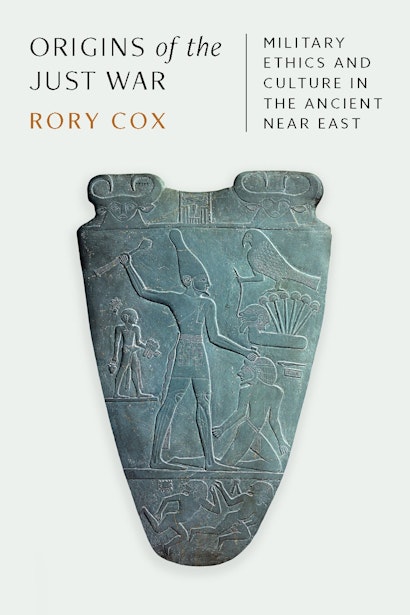
Just as importantly, the emergence of just war doctrines in the ancient Near East 鈥� from as early as c. 3000 BCE 鈥� helped early states convince their subjects that certain abstract ideals were worth sacrificing their lives for. Needless to say, this greatly benefitted the prosperity of monarchs and elites, who profited most from war plunder, territorial expansion, or simply the continuing survival of the kingdom. All the evidence points to the fact that just war doctrines emerged as state-sponsored ethical systems intended to further the interests of the political state.
Some wars are undoubtedly justified. Many, assuredly, are not. But those societies involved in conflict have, historically, proven themselves rather poor at providing an impartial judgement vis-脿-vis the relative merits of their cause. The tragedy is that for every just war there is, almost by necessity, an unjust war. That鈥檚 because wars always have two (or more) sides. The tricky question is: whose side is 鈥榡ust鈥�?
Ultimately, every individual wants to think of themselves as good. And, because societies are merely collections of individuals, this desire to see oneself (and to be seen by others) as morally righteous extends to societies as well. Thus, it鈥檚 a truism that every side believes its own wars to be just. Unfortunately, it鈥檚 just as true that individuals and societies disagree about things. For as long as these two axioms exist, there will always be human conflict and there will always be someone ready to justify it.
Rory Cox is a senior lecturer in history at the University of St Andrews, where he is also an associate research fellow at the Handa Centre for the Study of Terrorism and Political Violence. A fellow of the Royal Historical Society, he has published extensively on the history of ethics and violence, and is the author of John Wyclif on War and Peace.