
As part of our longstanding Farmington River Archaeological Project, my field crew initiated an intensive search for sites in Peoples State Forest in 1985. Peoples is a heavily wooded state park consisting of about 3,000 acres located in the northwest Connecticut hill town of Barkhamsted. Toward the end of a ten-week search conducted through the excavation of small test pits, we encountered a series of irregular cellar holes on a flat terrace at the foot of Ragged Mountain, a spot overlooking the Farmington River at the western margin of the park. In the vicinity of the cellar holes鈥攕ome lined with foundation stones, some roughly demarcated by earth berms鈥攚e recovered quite a few nineteenth-century ceramic sherds, rusty iron nails, bottle glass, and the fragmentary stems of white clay smoking pipes.
Intrigued, we quickly determined that we had chanced upon the remnants of the 鈥淟ighthouse鈥� community, a predominately Native American village given its name by late eighteenth- and early nineteenth-century stagecoach drivers. Those drivers viewed the hearth fires in the wilderness village鈥檚 houses as a metaphorical beacon leading them safely along their route from Albany, New York to, ultimately, Boston, Massachusetts.
The people of the Lighthouse
As we delved more deeply into the history of the village we determined that it had been founded sometime in the mid-eighteenth century by James Chaugham, a Narragansett Native man from Block Island in Long Island Sound and his white wife, Molly Barber. Interestingly, I noticed a couple of patterns in newspaper stories about the family. First, though the matriarch of the community was a Euroamerican, the descendants of James and Molly identified themselves as Native. Second, when a descendant of the founding couple died in the mid- and late nineteenth century, about a hundred years after the founding of the community, the writer would describe them as 鈥渢he last of the Lighthouse Tribe.鈥� The implication was that the 鈥渢ribe,鈥� which included various Native People along with individuals of European and African descent who had married into the founding family, had sadly become extinct with the passing of the final descendant.
We returned to more fully excavate the Lighthouse village site in 1990 and 1991, recovering material objects鈥�more ceramics, nails, smoking pipes, bottle glass, and also gunflints (used in flint-lock weapons), buttons, and even coins. All of these artifacts had been part of the lives of James and Molly, their eight children, grandchildren, and great grandchildren many of whom grew up in the community at the base of Ragged Mountain. This visceral element of archaeology, the ability to hold, examine, and study what Howard Carter, the excavator of King Tut鈥檚 tomb, called the 鈥渨onderful things鈥� made and used by people in the past is, I must admit, a significant part of the allure of the science to which I have devoted all of my professional life.
Generations speeding onward[1]
The story of the Lighthouse people and our archaeological investigation of their village was considered of sufficient significance to warrant a couple of human interest stories aired by TV news stations in Hartford. The day after the airing of one of those news reports, a red pickup truck barreled into the gravel parking area located at the bottom of the mountain and adjacent to East River Road while we were having lunch. I was sitting on the ground when the burly driver of the truck exited his vehicle, ordered his dog, Rags, to stay in the cab, whereupon he walked over directly to where I was seated, put his hands on his hips, and loomed over me, staring.
It was disconcerting, to say the least. I didn鈥檛 recognize him and I jokingly wondered, 鈥淒o I owe this guy money?鈥� I stood up and meekly asked 鈥淐an I help you?鈥� He glared at me for a brief moment that seemed an eternity, then thrust his arm toward me commanding: 鈥淪hake my hand!鈥� Needless to say, I did. He smiled broadly in response and pointed with his left hand in the direction of the remains of the village, saying: 鈥淵ou just shook hands with one of them. I am a descendant of Jimmy Chaugham.鈥� And, indeed, he was. Mr. Raymond Ellis was, in fact, a seventh generation descendant of James and Molly, a member of a family that pretty clearly was not extinct.
Since that time, I have met more than a hundred living, breathing descendants of James and Molly, members of a vibrant family proud especially of their native heritage, specifically Narragansett, Mohegan, and Tunxis. In fact, less than a week ago as I write this in mid-July 2025, I attended their family reunion in Barkhamsted where I provided them a tour of the site where their ancestors lived, died, and were buried.

The lesson of the Lighthouse
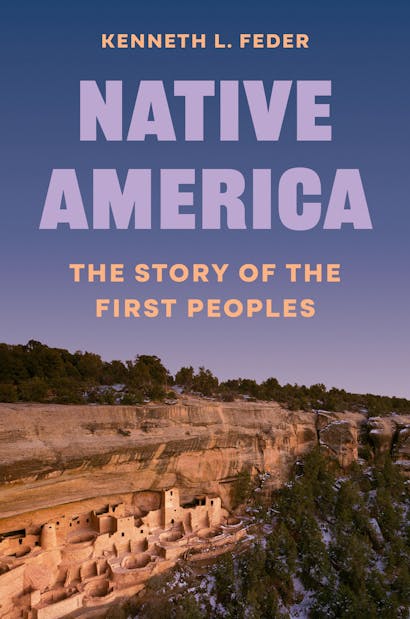
The lesson for me of this 鈥渆xtinct鈥� tribe who was anything but, is a potent one and is a central theme of my book Native America: The Story of the First Peoples. Native Americans, including the people of the Lighthouse, are not an extinct people. They do not exist only as specimens in museum displays and dioramas. They are not fossils frozen in time or insects preserved in amber. They are not an antique people and I even try to avoid calling them 鈥減rehistoric鈥� because they are literally not a people from 鈥渂efore history.鈥� Of course they have a history, but it is one largely written, not in hieroglyphs painted onto papyrus scrolls or words inked by scribes on sheets of paper. Their history, at least much of it, is recorded variously: through oral tradition; in exquisitely crafted stone spear and arrow points; in copper tools, wood carvings, and clay pots; in whimsical adobe castles ensconced in caves and enormous, multistory pueblos that housed hundreds; in great pyramids of earth that served as gigantic platforms for the houses of rulers who in death were buried in a splendor worthy of a pharaoh; and in pictographs (paintings) and petroglyphs (images etched, scratched, and pecked) located on the soaring walls of sandstone cliffs, reflecting artistic traditions that tell stories, record history, and that are themselves acts of worship.
The history those sources tell is one of courageous exploration of a new world beginning more than 20,000 and perhaps as much as 30,000 years ago. Those sources tell of perseverance in the face of changing environments, and reflect a vast diversity of adaptations to the vast diversity of habitats Native People encountered as they spread across North America. And they tell the stories of people like: the Cherokee; the Din茅 (Navajo), A鈥檚hiwi (Zuni), and Tule River People; the Haudenosaunee (Iroquois), Tunxis, Pequot, and Mohegan; the Inuit (Eskimo) and the Cree; the Lakota, Crow, and Arapaho; the Tlingit, Haida, Salish, and Chinook; the Mandan, Hidatsa, and Arikara. These all are living and vibrant groups of modern peoples, with cultures and traditions that are deeply rooted in the lives of their ancestors. It is their living history that I explore and strive to tell on the pages of Native America: The Story of the First Peoples.
Kenneth L. Feder is professor emeritus of anthropology at Central Connecticut State University. His books include Frauds, Myths, and Mysteries: Science and Pseudoscience in Archaeology, The Past in Perspective: An Introduction to Human Prehistory, and Native American Archaeology in the Parks: A Guide to Native Heritage Sites in Our National Parks and Monuments.
Notes
[1] This phrase was used by the author and historian Lewis S. Mills in his book The Legend of Barkhamsted Light House, published in 1952.