
Set in 19th-century Macedonia, this film opens with a witchy woman, caring for a colicky baby. She is plagued by a fleet of young children from the village, who are playing hide-and-seek. She runs them off, cursing them by wishing the 鈥渨olf-eateress鈥� to find them. So, we鈥檙e already in Monstrous Bitch territory, complete with the baby or child-eating canine dynamic.[1] The woman appears to be alone, somewhat feckless (like, can鈥檛 make a good cooking and heating fire in her home), and extremely weary of her ever-sobbing baby. But suddenly, the mother feels something, a presence in her house. She turns around and sees a naked woman with full-body horrific burn scars all over her, sitting at the base of the baby鈥檚 bed.
The mother sinks to her knees and begs mercy. She begs to keep her baby, to watch her 鈥済row a bit.鈥� The mother eventually pledges to give the baby to Old Maid Maria鈥攖he name of this witchy burned woman鈥攚hen the baby is sixteen years old. To seal the 鈥渃ovenant,鈥� the witch slashes the inside of the baby鈥檚 throat with her long, Erichtho-like, scraggly fingernail. In doing so, she permanently robs the baby of a voice. The witch鈥攁 鈥渨olf-eateress,鈥� or 惫辞濒办辞箩补诲补膷办补鈥攍eaves the agonized but uncrying baby behind with her bereft mother.
Panicked, the mother takes the baby girl to a sacred cave, and leaves her there, to grow up in isolation, but in a place where the wolf-eateress Maria cannot find her. We telegraph forward about sixteen years, and the girl鈥擭evena鈥攊s still there, being brought food by her mother. Her teeth are rotten. Her fingernails are dirty. Her hair is out of control unkempt. She spends her days rolling around in piles of leaves, looking up at openings in the cave ceiling through which light comes. She clicks stones together maniacally, as a way of trying to be heard on the outside, since, of course, she can鈥檛 speak. Her teeth start falling out through malnutrition. Her mother comes to bring her bread, and to wipe her off with a wet cloth, in a frankly pathetic simulacrum of any kind of adequate nourishment or hygiene. When Nevena tries to leave the cave, her mother beats her, warning of 鈥渄evils鈥� outside who want to hurt her. 鈥淭hey would tear you to pieces outside these walls! Do you know what I go through for you?鈥� she screams, squeezing Nevena鈥檚 face between her hands like a vice.
This is a folk horror witch film about severe, abject child abuse. And as we鈥檒l also see, it鈥檚 about resistance to that kind of abuse, and the desire to find meaning and beauty in life, even with the knowledge that horrific, monstrous evil exists.
Finally, on her 16th birthday, Nevena sees a black eagle in the cave with her. When her mother sees it, she attempts to shoo it away, believing it to be old Maid Maria. And of course, she鈥檚 right. Maria kills Nevena鈥檚 mother and then assumes her form, and now dressed in her mother鈥檚 clothes and headscarf, she ushers Nevena outside. Out of the cave, seemingly for the first time since her infancy, Nevena is overwhelmed. Everything is so bright, so large, so expansive and airy, she cringes and blocks her eyes for a long time. Her 鈥渕other鈥� the witch takes her to hovel some distance from the cave. Once there, the brutally slashes Nevena鈥檚 body with her fingernails. Then she anoints Nevena and her wounds with donkey blood, magically burns her wounds so that they heal, and performs a spell that transforms Nevena into a witch herself.
Once this is done, the witch removes Nevena鈥檚 mother’s entrails from her chest cavity鈥攖his, evidently, is how witches shapeshift, by killing someone or something and putting its guts in their chests鈥攁nd resumes her old, burned form from the opening scene. Nevena is horrified but has no choice but to follow along.
At first, it appears that Maria treats Nevena better than her mother had. She cleans her up gently in a stream. She doesn鈥檛 yell at her or throw her around. She allows her to roam through the world. And Nevena is enthralled by all the beauty she sees. But eventually, Maria becomes disappointed that Nevena hasn鈥檛 inherited her or her biological mother鈥檚 capacity for violence and cruelty. Maria tells Nevena she is a 鈥渨aste.鈥� So, the abuse comes surging back, at first in verbal form, and quickly as physical battery: Maria hits Nevena constantly.
Even so, Nevena is happy that there are no walls around her now, and that she can explore the natural world essentially unimpeded. And pretty soon, Nevena is totally unimpeded, because the witch grows so disgusted with her weakness that she abandons her. Now, Nevena can just exist.
Nevena winds up in a small village, wherein she kidnaps a baby, and is found by the mother, who, understandably, pulls Nevena away from her infant. Nevena, without meaning to, extends her magical witchy nails into the woman鈥檚 abdomen, and kills her. So, now Nevena herself is decisively in the long, long tradition of Lamashtu, Lamia, or the Monstrous Bitch: she鈥檚 a scraggly-haired, long-nailed murderess who preferentially targets babies and young mothers. In an aggressively gross scene, she rips open her own chest, rips out the dead mothers鈥� innards, and buries the innards in her own chest; in so doing, she is able to shape-shift into looking like the baby鈥檚 real mother. She is, for a shining moment, entranced with her new form.
But almost immediately, the dead woman鈥檚 husband sees her, naked and covered in blood, assumes she鈥檚 done something indecent and slaps her across the face, real hard. So, if you鈥檙e keeping track, she鈥檚 been abused by her mother, her adoptive mother, and a strange man who believes he is her husband. Nevena鈥檚 world, like the worlds of so many human women, is full of pain, violence, and brutality.
Nevena is helped by the dead woman鈥檚 mother-in-law, who cleans her up and tells her that her son (who is Nevena鈥檚 鈥渉usband鈥�) is a bad man, trained into violence by his father, and whom God should smite. This scene, whispered and urgent, is the first true scene of care-taking Nevena has ever experienced in her life: we see her eyes rolling in delight as her 鈥渕other-in-law鈥� soothes her. But it鈥檚 also a very upsetting scene, because the 鈥渕other-in-law鈥� encourages her to be passive, not to 鈥渇ight back鈥� against the abusive 鈥渉usband.鈥� So, the cost of comfort, for Nevena in her new body, is acquiescing to further violence.
Like I said: it鈥檚 a film about child abuse, cloaked by a (really excellent) folk horror witch story.
Nevena learns how to sweep, how to hang laundry, how to dry peppers. Her 鈥渕other-in-law鈥� helps her along but is confused by what she perceives as a serious regression in her 鈥渄aughter-in-law鈥檚鈥� competency. As the women of the village gather to do chores and gossip, they mourn that this woman has lost all her speech, thinking it鈥檚 because of all the violence her husband has inflicted on her. They shake their heads in sympathy with the now-mute woman who has forgotten how to keep house, but they do nothing to help her, beyond allowing her in their company. Which, of course, is far, far, far more than Nevena has ever been able to enjoy before.
Not long after, Old Maid Maria finds her and says she鈥檚 not surprised that Nevena (whom she can easily still recognize) has chosen 鈥減rison鈥� rather than freedom. Maria leaves again, in disgust that her adoptive offspring can鈥檛 see that this domestic life is worse than a life out in the woods, feeding on animals.
The film is not just about abuse, it鈥檚 making a claim that witchcraft, historically, was a response to unliveable domestic situations for women. Which, as it turns out, is pretty historically accurate.[2]
Back at home, Nevena is raped by her 鈥渉usband,鈥� but she quickly eviscerates him, without even really meaning to鈥攖hose long nails, which kind of go quiet in her shape-shifted form, are still very much in play in an emergency. Nevena then kills a dog and puts its entrails inside her: now she is, truly and literally, a monstrous bitch, and she鈥檚 able to hide from her murdered husband’s relatives in a totally unsuspicious form.
Her conversion into a full-on Monstrous Bitch mode correlates with her seducing and killing a male lover鈥攕he鈥檚 not only a baby-snatching, mother-slaying witch, but also a seductress. Though we quickly realize she didn鈥檛 seduce him because she wanted him; she seduced him because she wanted to be him. She takes on his body, as she had taken on that of the dead mother. And it鈥檚 a revelation. As a man, she gets to wash with hot water for the first time. She gets to work in the fields. She gets fed. And even though people start to understand that 鈥渉e鈥� was seduced by a 惫辞濒办辞箩补诲补膷办补, and even though they perform exorcisms, to try to purge 鈥渉im鈥� of the hex that seems to be on 鈥渉im鈥� now, even through this process, Nevana receives so much loving attention from the old women of the village鈥攕o many worried, tender caresses, so many hugs, so many gentle looks鈥攖hat it鈥檚 pretty clearly the best part of her life so far. The part in which she gets to pass as a man. In this body, she experiences sexual pleasure for the first time. She is allowed to eat what she wants. She is in a position to help others鈥攍ike a little boy whose father beats him; as a man, she鈥檚 strong enough to do all the boy鈥檚 chores, sparing him the fist. Nevena鈥檚 first real taste of human happiness among other humans is as a man.
But nothing, it turns out, nothing compares to the joy Nevena experiences when she shape-shifts into a little girl who fell from a rock and died. Returned home to the little girl鈥檚 family, Nevena experiences the love of a mother, true maternal love and tenderness, for the first time. She experiences play, relaxation, sociality with other children, free time. But what the camera most wants us to see is how she relaxes into the love of a kind mother, who braids her hair, teachers her to forage, lets her play with the farm animals, and encourages her to have friends. I freely admit that I cried really hard during these scenes. Watching someone who鈥檚 whole life has been about the denial of autonomy, freedom, pleasure, and love receive all of those things? This film is beautiful.
One night, listening to the old women tell stories, Nevena learns Old Maid Maria鈥檚 backstory. And it is harrowing, culminating in her being burned as a witch, even though, for most of her life, she had been pious, good, kind, and desperately lonely, and despite the fact that she was ritually sexually abused by her in-laws before she grew sick from a disease she contracted from her husband. Old Maid Maria had a bad, bad life, a life of suffering and abuse; was she really deserving of death for having drunk the blood of a cow, which was the crime for which she was burned? The film thinks not: witchcraft, again, is clearly understood as a backformation of abuse. It may harbor somewhere, in some old, ancient, reservoir of femaleness. But it arises and moves incarnated through the world only in the wake of extreme abuse.
Nevena spends many years in this form, eventually falling in love with and marrying her childhood friend, Jovan. They have a lovely, sweet, charming marriage: tender, kind, mutual, erotic. Until Old Maid Maria shows up, blind with jealousy, and gores Jovan to death in her boar form. But there is some consolation: Nevena is pregnant, and she has her own child, a daughter. Old Maid Maria eventually comes for this baby, too, incorrigible, raging 惫辞濒办辞箩补诲补膷办补 that she is. But Nevena converts the baby into a witch, to protect her from Maid Maria, and then, somewhat shockingly, because Maid Maria had seemed to totally indomitable to this point, Nevena summarily kills her, ending the cycle of abuse.
But, crucially, leaving two witches still alive in the logic of the film. That is my second favorite thing about this film (my favorite is the love Nevena experiences as a little girl and then a grown woman with Jovan): the witches are not coded as monstrous because they are witches, but only when they are cruel and abusive, like Old Maid Maria. When they are just witches living their lives, they are coded as our empathic anchors, our proxies, our friends, and our heroines.
This is essay is adapted from a piece that originally published on .
Notes
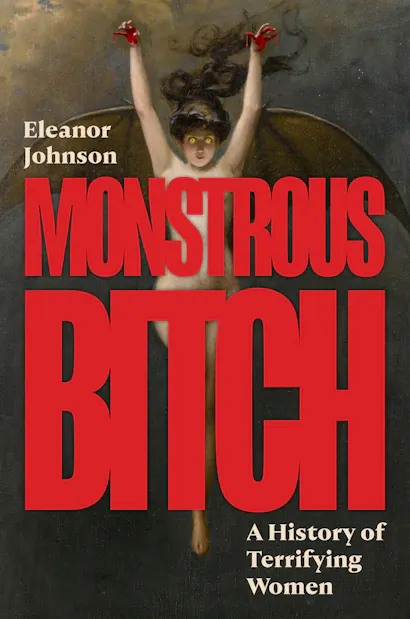
[1] For the full theorization of this idea of the Monstrous Bitch, see my forthcoming book Monstrous Bitch: A History of Terrifying Women (快色直播, Fall 2026).
[2] See Sylvia Federici, Caliban and the Witch, esp. the first chapter; see also Saintly Women: Medieval Saints, Modern Women, and Intimate Partner Violence, ed. Nancy Nienhuis and Beverly Mayne Kienzle (New York: Routledge, 2018), around p. 110.
Eleanor Johnson is professor of English and comparative literature at Columbia University. Her books include Scream with Me: Horror Films and the Rise of American Feminism (1968鈥�1980); Waste and the Wasters: Poetry and Ecosystemic Thought in Medieval England; Staging Contemplation: Participatory Theology in Middle English Prose, Verse, and Drama; and Practicing Literary Theory in the Middle Ages: Ethics and the Mixed Form in Chaucer, Gower, Usk, and Hoccleve.