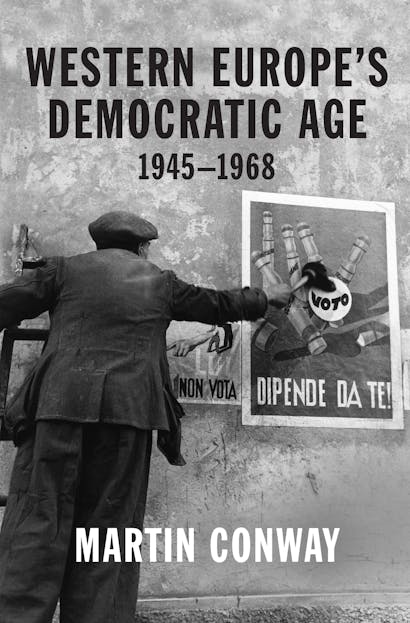
Western Europe鈥檚 Democratic Age: 1945鈥�1968
Hardcover
Paperback
ebook (EPUB via app)
- Sale Price:
- $40.60/拢33.60
- Price:
-
$58.00/拢48.00 - ISBN:
- Published:
- Jun 30, 2020
- Copyright:
- 2020
- 10 b/w illus.
30% off with code PUP30
ebook (PDF via app)
- Sale Price:
- $40.60/拢33.60
- Price:
-
$58.00/拢48.00 - ISBN:
- Published:
- Jun 30, 2020
- Copyright:
- 2020
- 10 b/w illus.
30% off with code PUP30
-
Audio and ebooks (EPUB and PDF) purchased from this site must be accessed on the
快色直播 app. After purchasing, you will receive an email with
instructions to access your purchase.
About audio and ebooks - Request Exam Copy
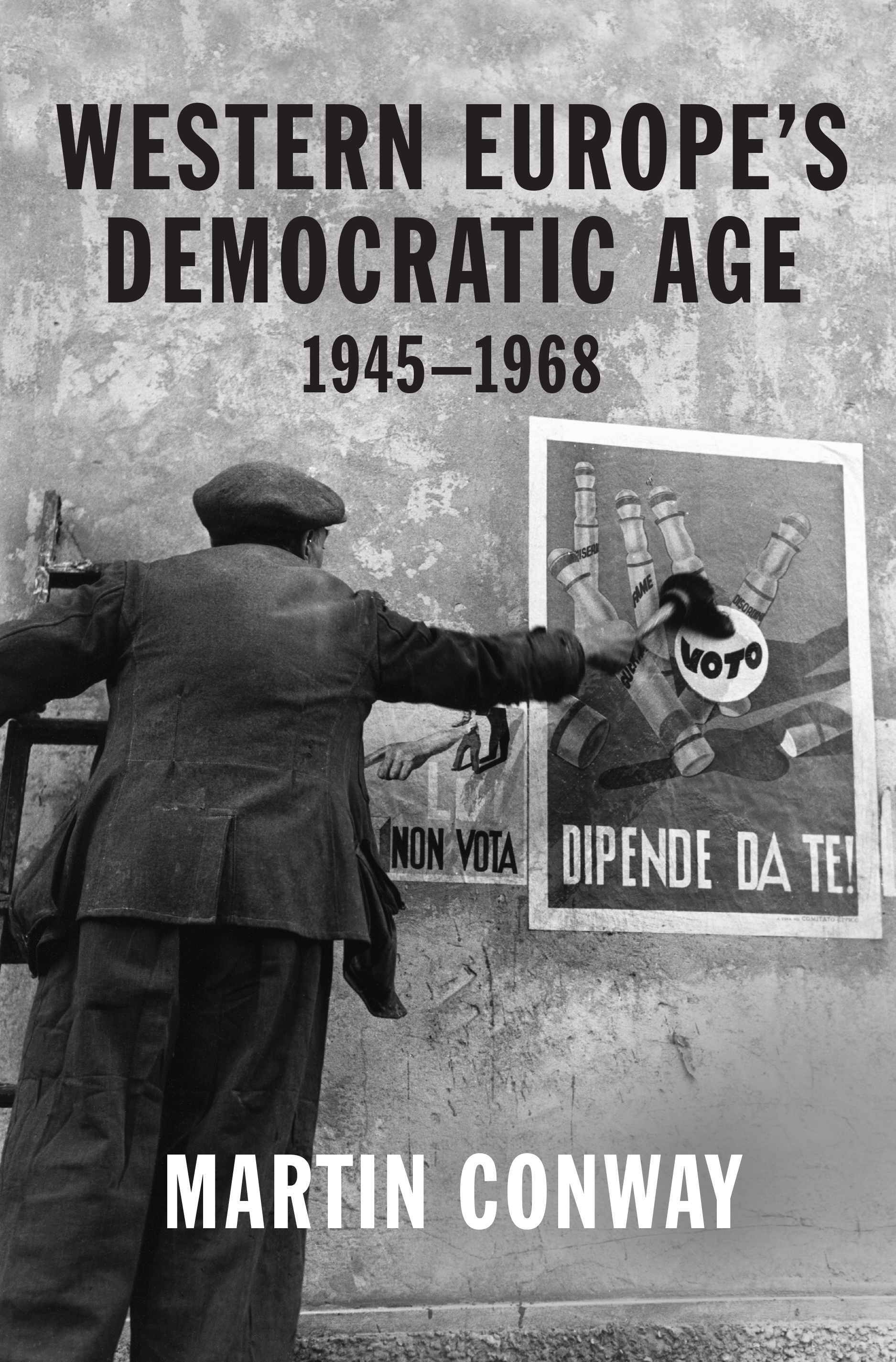
What happened in the years following World War II to create a democratic revolution in the western half of Europe? In Western Europe’s Democratic Age, Martin Conway provides an innovative new account of how a stable, durable, and remarkably uniform model of parliamentary democracy emerged in Western Europe鈥攁nd how this democratic ascendancy held fast until the latter decades of the twentieth century.
Drawing on a wide range of sources, Conway describes how Western Europe’s postwar democratic order was built by elite, intellectual, and popular forces. Much more than the consequence of the defeat of fascism and the rejection of Communism, this democratic order rested on universal male and female suffrage, but also on new forms of state authority and new political forces鈥攑rimarily Christian and social democratic鈥攖hat espoused democratic values. Above all, it gained the support of the people, for whom democracy provided a new model of citizenship that reflected the aspirations of a more prosperous society.
This democratic order did not, however, endure. Its hierarchies of class, gender, and race, which initially gave it its strength, as well as the strains of decolonization and social change, led to an explosion of demands for greater democratic freedoms in the 1960s, and to the much more contested democratic politics of Europe in the late twentieth century.
Western Europe’s Democratic Age is a compelling history that sheds new light not only on the past of European democracy but also on the unresolved question of its future.