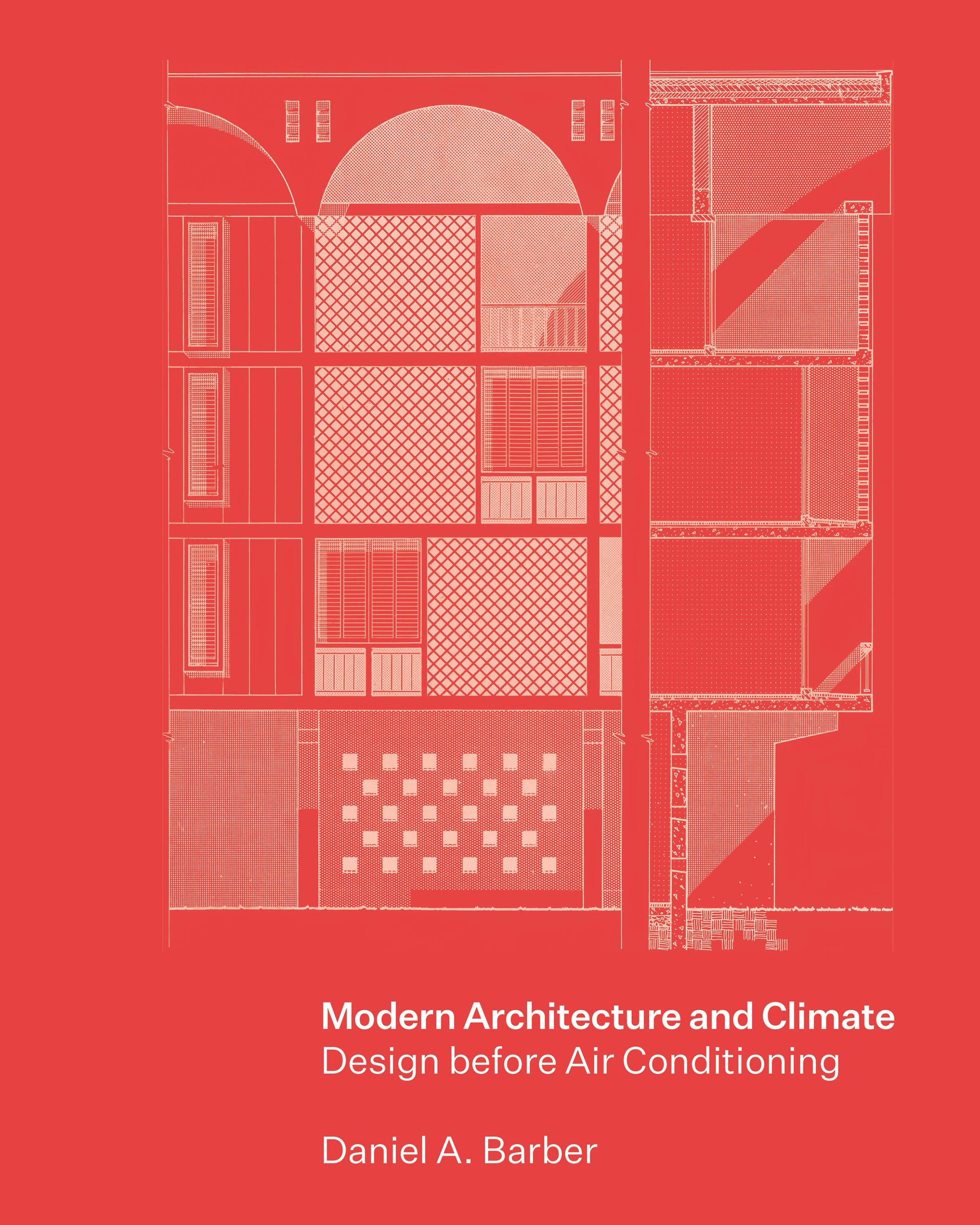
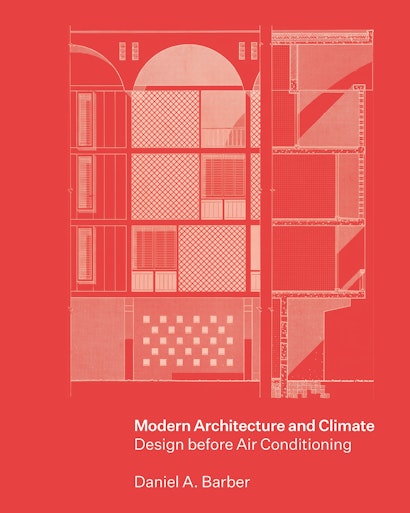
Modern Architecture and Climate explores how leading architects of the twentieth century incorporated climate-mediating strategies into their designs, and shows how regional approaches to climate adaptability were essential to the development of modern architecture. Focusing on the period surrounding World War II鈥攂efore fossil-fuel powered air-conditioning became widely available鈥擠aniel Barber brings to light a vibrant and dynamic architectural discussion involving design, materials, and shading systems as means of interior climate control. He looks at projects by well-known architects such as Richard Neutra, Le Corbusier, L煤cio Costa, Mies van der Rohe, and Skidmore, Owings, and Merrill, and the work of climate-focused architects such as MMM Roberto, Olgyay and Olgyay, and Cliff May. Drawing on the editorial projects of James Marston Fitch, Elizabeth Gordon, and others, he demonstrates how images and diagrams produced by architects helped conceptualize climate knowledge, alongside the work of meteorologists, physicists, engineers, and social scientists. Barber describes how this novel type of environmental media catalyzed new ways of thinking about climate and architectural design.
Extensively illustrated with archival material, Modern Architecture and Climate provides global perspectives on modern architecture and its evolving relationship with a changing climate, showcasing designs from Latin America, Europe, the United States, the Middle East, and Africa. This timely and important book reconciles the cultural dynamism of architecture with the material realities of ever-increasing carbon emissions from the mechanical cooling systems of buildings and offers a historical foundation for today鈥檚 zero-carbon design.
Awards and Recognition
- Winner of the inaugural Architecture Book of the Year Award, Technical Category
"A rare opportunity to look closer at modernists鈥� environmental ethics and not just their aesthetics 鈥� and a timely reference for our worsening climate crisis."鈥擠iana Budds, Curbed
"The premise of [Modern Architecture and Climate] is this: The battle for the supremacy of air conditioning above all other solutions for climate mitigation was, in fact, a battle . . . [it] spanned continents, political ideologies, and architectural discourses鈥hat makes Barber鈥檚 book so interesting is not only the meticulous documentation of鈥limate-control alternatives and their practitioners, but the tension between their goals and their underlying ideologies. . . . The lesson from Barber鈥檚 book is not to replicate the conditions that begat yesterday鈥檚 missed opportunities, but to change them for the better."鈥擪ate Wagner, The Architect鈥檚 Newspaper
"It鈥檚 easy to think of Modernism as inseparable from air conditioning, simply because we are surrounded by so much of it that is. A valuable reminder that this wasn鈥檛 always the case is provided in Daniel A. Barber鈥檚 Modern Architecture and Climate: Design Before Air Conditioning, which outlines the story of the febrile, flexible, and often-forgotten early experiments in climate control."鈥擜nthony Paletta, Metropolis
"[Modern Architecture and Climate] offers . . . the most comprehensive and concise corrective to the reigning histories of Modernism that have tended to exclude, or at least consider only superficially, environmental context."鈥擱ussell Fortmeyer, Architectural Record
"[An] erudite work鈥eavily illustrated and deeply researched. . . . Academics, urban planners, and environmental designers will most appreciate this thought-provoking and detailed volume."鈥�Publishers Weekly
"Modern Architecture and Climate is a fresh and original history that chronicles the intense research undertaken by designers to adapt modernist architecture to various climate conditions, as modernism鈥檚 political and aesthetic influence reached across the globe. . . . Barber鈥檚 work is a welcome addition to the history of architectural modernism, and is particularly pertinent in our current circumstances. It demonstrates the profound impact that our expectations of a uniform interior have had on the planet we share. But its examples also offer an inspiring model for challenging assumptions about the role of building form in mitigating climate extremes."鈥擩avier Zeller, Canadian Architect
"Barber's book is not simply a technological history, but ultimately also an impassioned lament for our collective carbon footprint as planetary temperatures increase鈥rchitects, engineers, and students interested in systematic and environmentally friendly approaches to indoor cooling will find inspiration in Modern Architecture and Climate鈥�.In a time of an airborne pandemic, Modern Architecture and Climate, with its rigorous examination of open interiors, airflow, and ventilation, will serve well those readers who have the grit to absorb the author's intensive approach and sobering message."鈥擯aul Glassman, ARLIS/NA Reviews
"[Daniel] Barber鈥檚 thorough account, written in the distanced expert voice of a historian, shines when it dispels established beliefs . . . [Modern Architecture and Climate] does an excellent job of documenting the subjects it cover."鈥擱oss Wienert, Rice Design Alliance
"[An] exhaustively researched book . . . [in Modern Architecture and Climate] Barber makes a well-supported argument that through the propagation of this very specific set of cultural and Modern Architecture and Climate comfort ideals, modern architecture became an instrument for globalization, economic development, and postwar colonialism."鈥擪ristin Schuster, Texas Architect Magazine
"I鈥檝e waited years for a book like this鈥� What Modern Architecture and Climate suggests is an alternative reckoning with modernism鈥檚 legacy鈥攊ts ideas, strategies, and practitioners. With the urgency of our global climate crisis, many of these concerns are once again central鈥arber鈥檚 book points us in the right direction."鈥�Arris
"Daniel Barber's historical narrative is fascinating and holds many useful lessons for a contemporary audience."鈥擝rian Ford, The Plan Journal
"Richly illustrated. . . . For the academic and the architect, this valuable volume encourages more careful consideration of climatic modernism as both history and limit. It is thought-provoking, giving us pause to consider the passionate attempts that architects have made to mediate their environment. The tales gathered here trace a lineage that situates design within the planetary. . . . Barber鈥檚 constant and learned skepticism warns us to maintain an informed but critical distance from the pursuit of immediate comfort."鈥擧annah Le Roux, Journal for the Society of Architectural Historians
"A thoroughly researched and superbly illustrated discussion of some of the most important connections between architecture and technology in the twentieth century, essential reading for anyone interested in the discourse around modern architecture in the light of current challenges."鈥擣lorian Urban, Architectural History
"[A] deeply researched and richly illustrated volume. . . . [Modern Architecture and Climate] takes the material mediation of local climate through architecture as its path and sheds light on some of the (built and written) genealogies of questions pertaining to thermal comfort, solar heating, and passive cooling."鈥擜nna-Maria Meister, Isis: A Journal of the History of Science Society
"This is a vitally important work of historical scholarship. . . . a landmark study."鈥擬arcus Colla, German History
"Modern Architecture and Climate is theoretically and visually rich, with many wonderful full-page illustrations that allow the reader to pick apart the layouts and diagrams of many mid-century publications and buildings. It is also an optimistic book, one that shows that the homogenous airconditioned interior wasn鈥檛 an inevitability, and still need not be."鈥擠aniel J. Ryan, Traditional Dwellings and Settlements Review
"This extraordinarily timely and welcome book traces vivid episodes in the history of modern architecture's engagement with climate control in the decades before energy-intensive air conditioning arrived on the scene. Barber reveals architecture's deep entanglement with technical, environmental, and geopolitical concerns at a moment when architects are increasingly called upon to take responsibility for the violent impact of climatic instabilities."鈥擣elicity D. Scott, author of Outlaw Territories: Environments of Insecurity/Architectures of Counterinsurgency
"Daniel Barber breaks new ground in analyzing how architecture manages and makes climates, offering a genealogy of the climate-controlled environments that most of us live and work in. At a moment when we are faced with critical challenges concerning climate change and need new ideas and imaginaries for the future of human life and built environments, this book provides inspiration."鈥擮rit Halpern, author of Beautiful Data: A History of Vision and Reason since 1945
"Imagine you are gliding through one of the great modernist masterpieces of a Le Corbusier, Niemeyer, or Neutra. The steel and glass lines inspire a sense of protection, clarity of purpose, cool anonymity, perhaps heroic optimism. Barber throws an environmentalist wrench into such familiar fantasies, showing how twentieth-century case studies in gracious living were actually prototypical fortresses against the vagaries of climate. He points toward possible futures when 'inside' and 'outside' will no longer hold against the coming emergency."鈥擪aren Pinkus, author of Fuel: A Speculative Dictionary
"Barber raises important issues regarding modern architecture and its relationship with climate control. This is a book that every architect, architectural historian, and interior designer should read."鈥擣ernando Luiz Lara, coauthor of Modern Architecture in Latin America: Art, Technology, and Utopia
"This book is a significant contribution to architectural history and theory. Through his close and innovative rereading of buildings by familiar figures such as Le Corbusier and Richard Neutra, Daniel Barber casts a new light on the canonical history of modern architecture. He also introduces us to lesser-known but equally significant figures such as the Roberto brothers and the Olgyay brothers, expanding the canonical history both geographically and theoretically through sophisticated engagement with interdisciplinary theories on environmental humanities."鈥擩iat-Hwee Chang, author of A Genealogy of Tropical Architecture