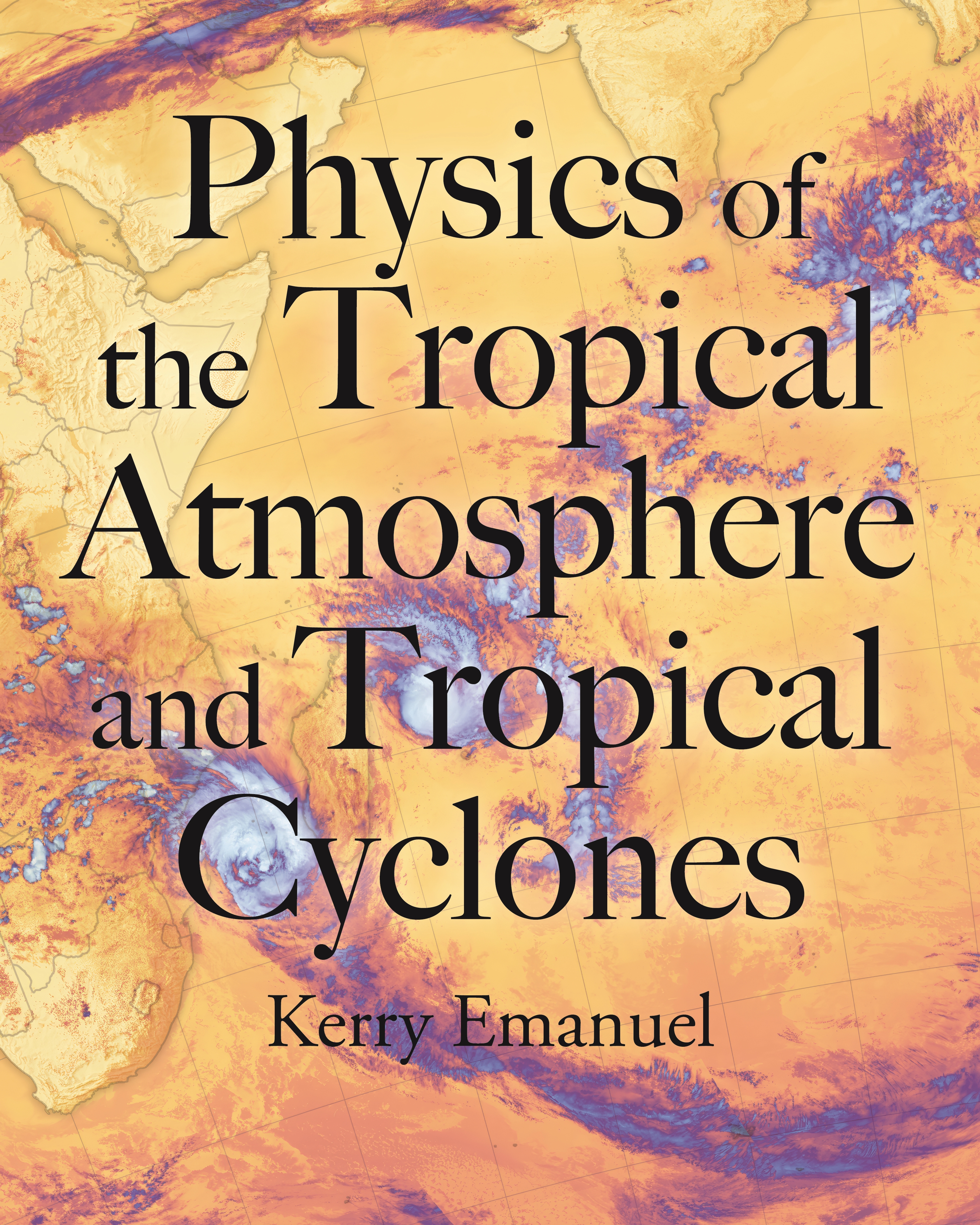
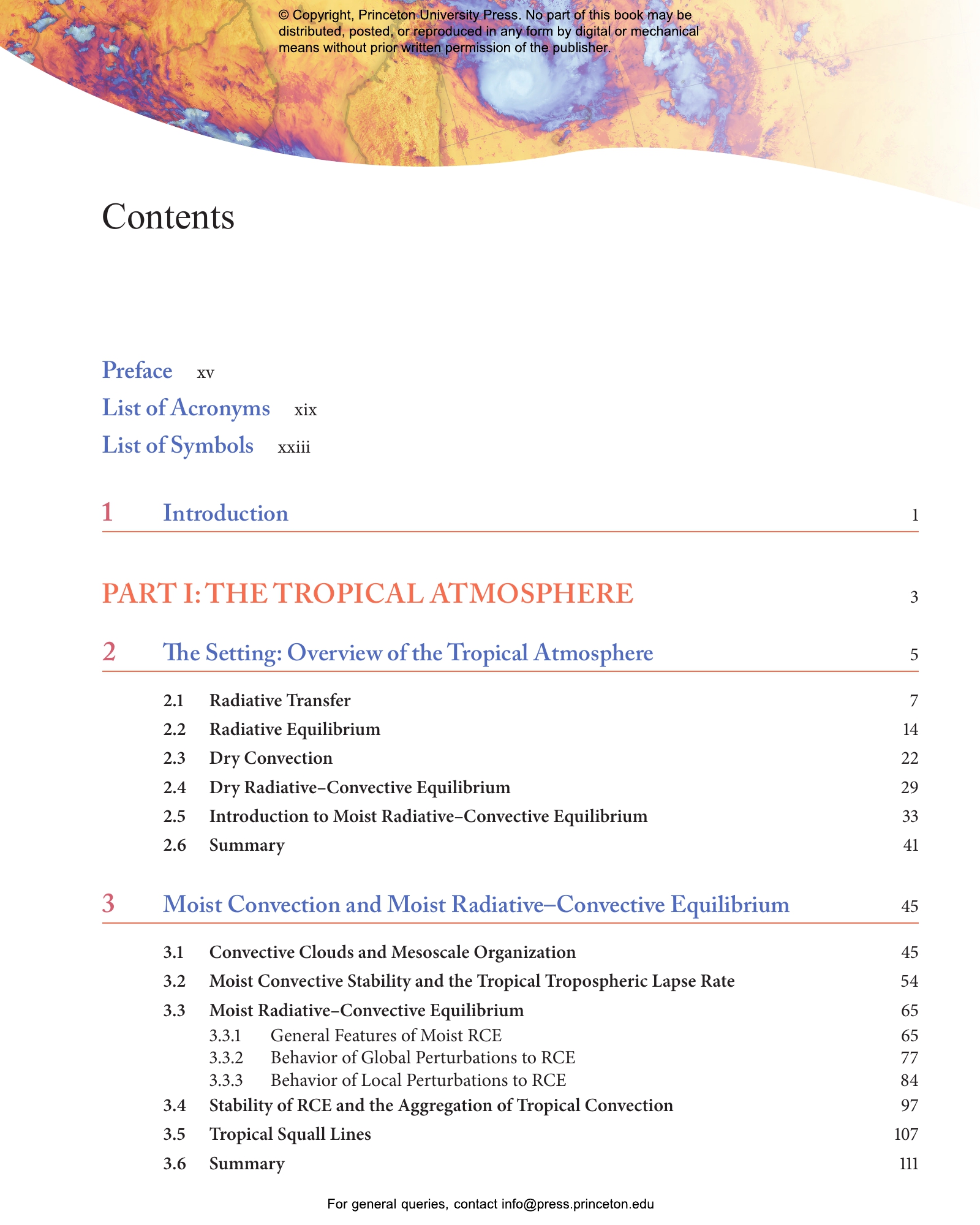
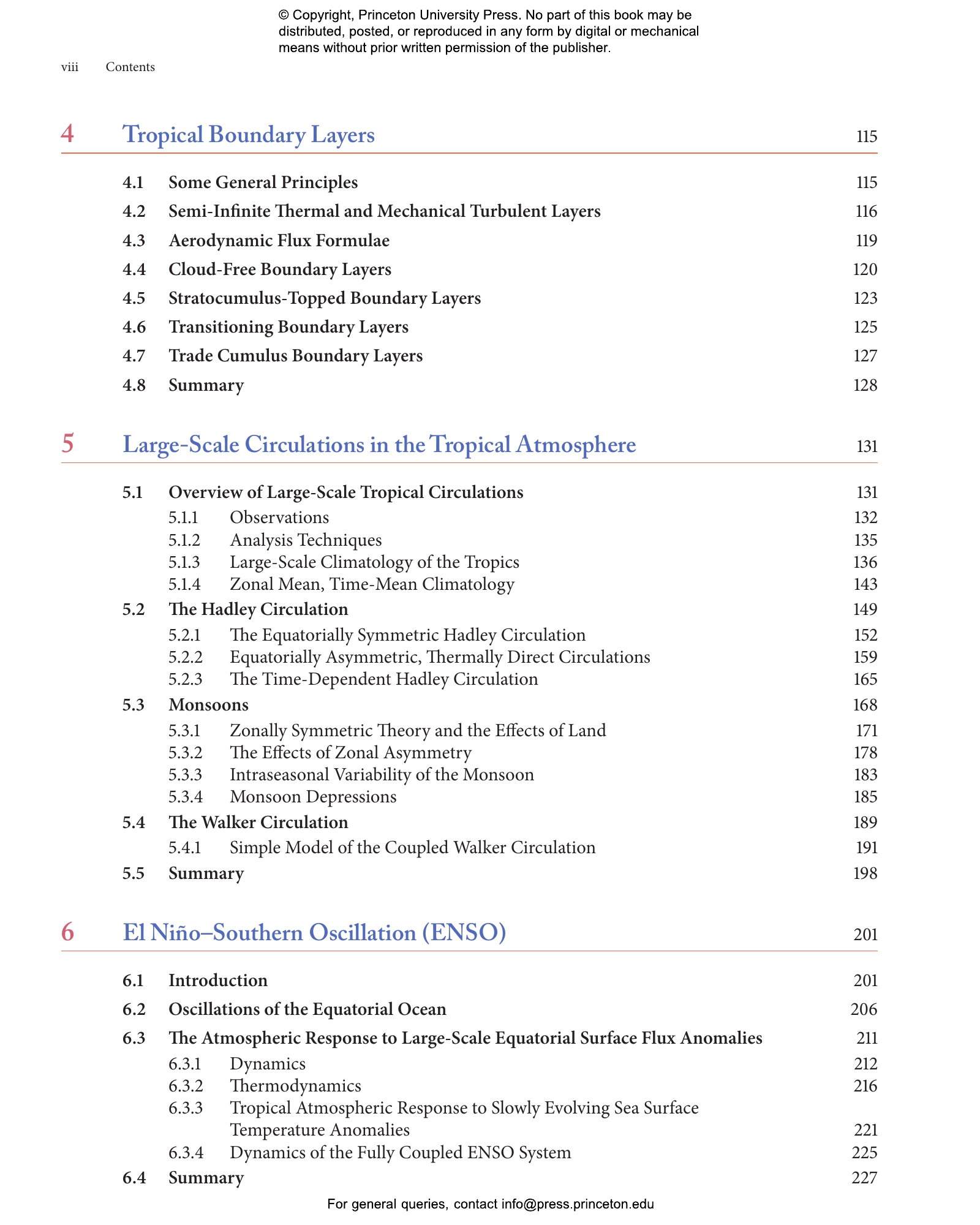
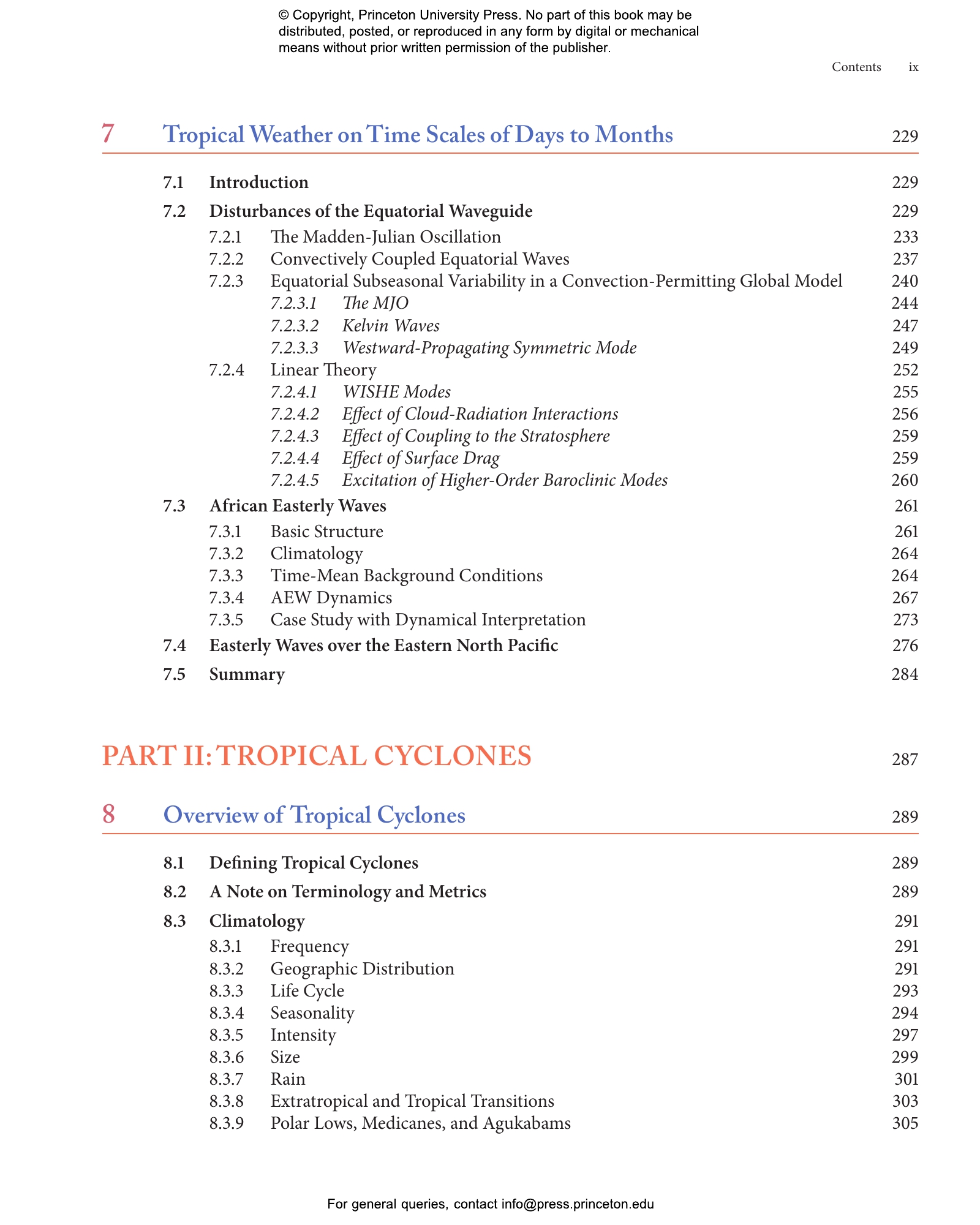
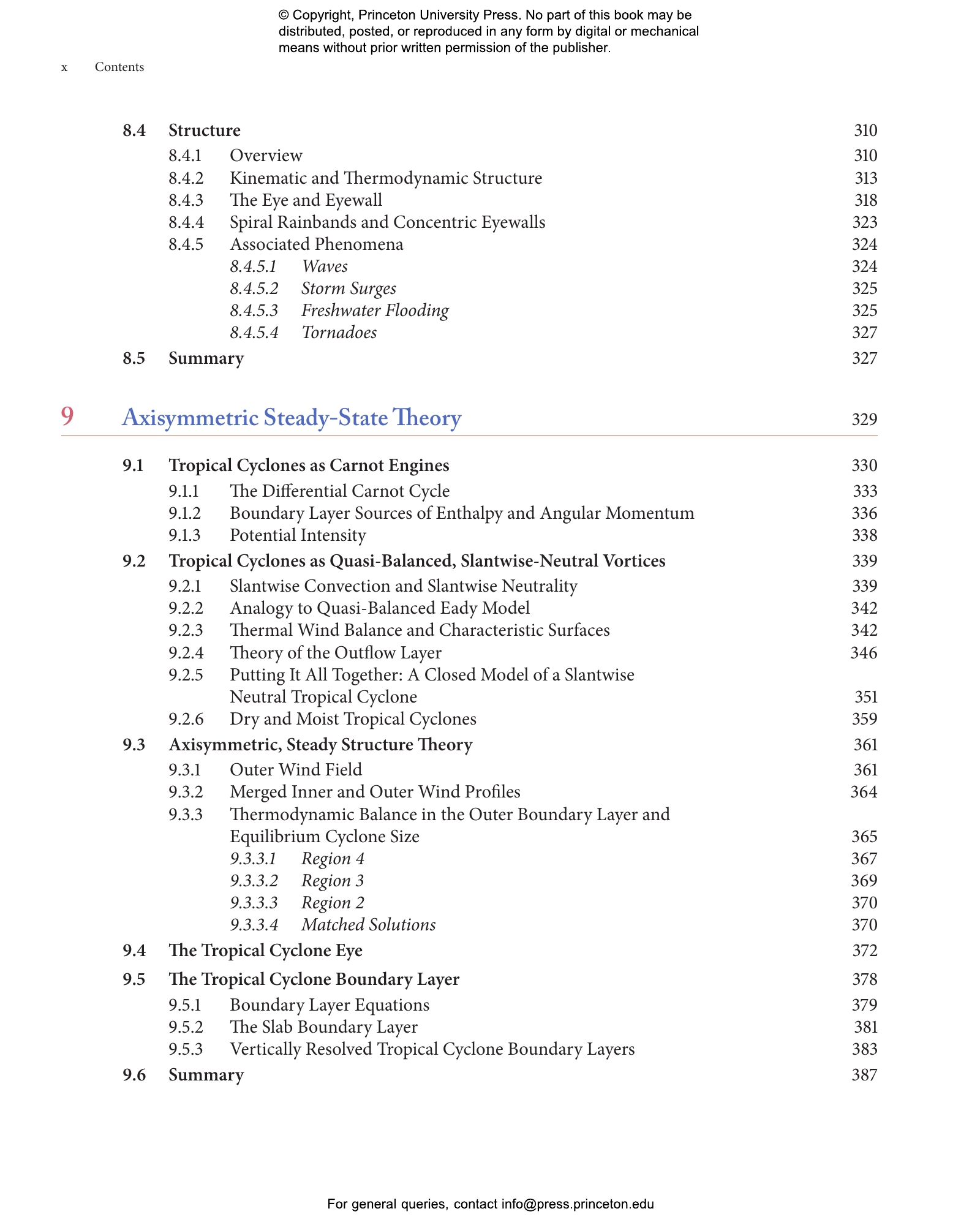
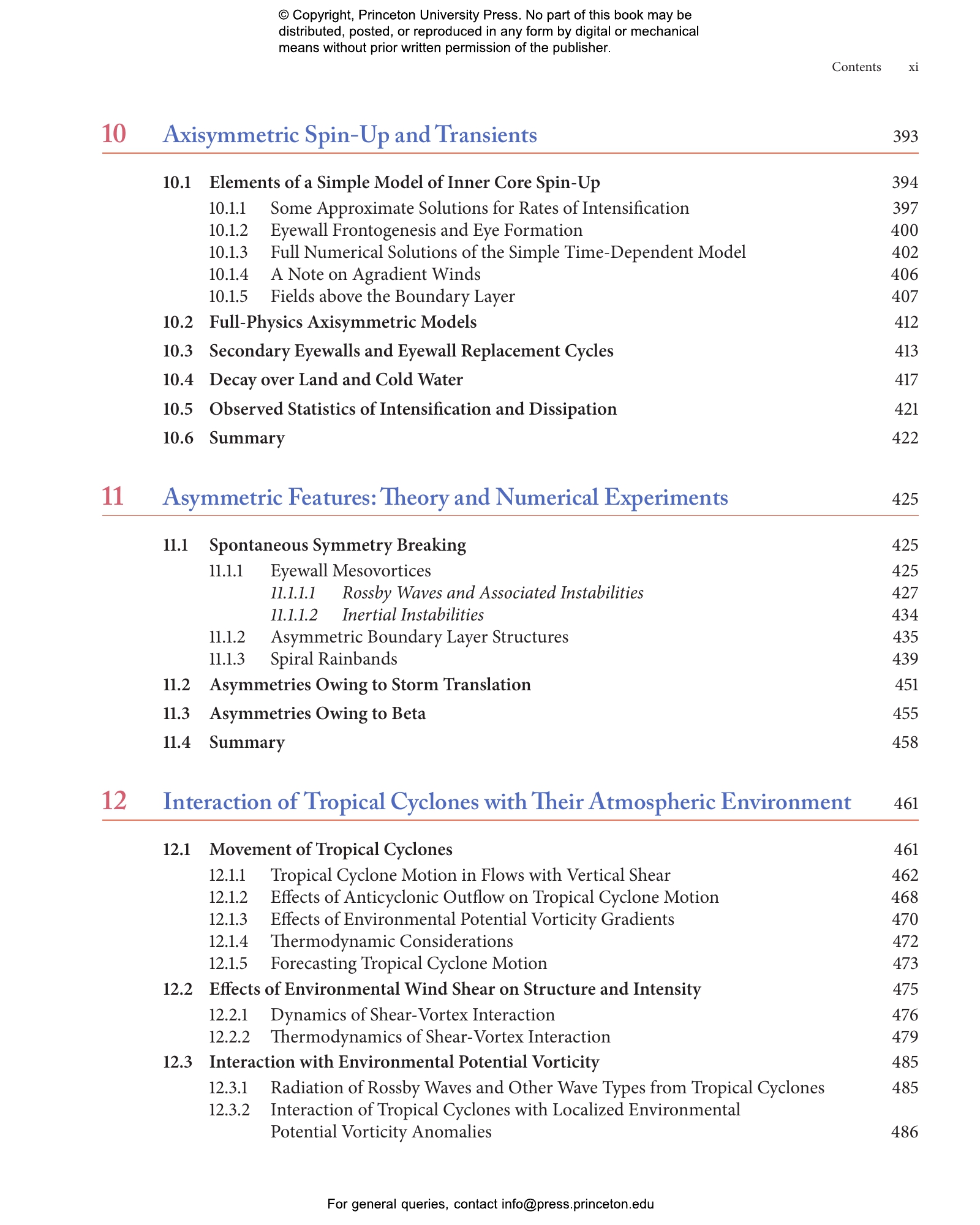
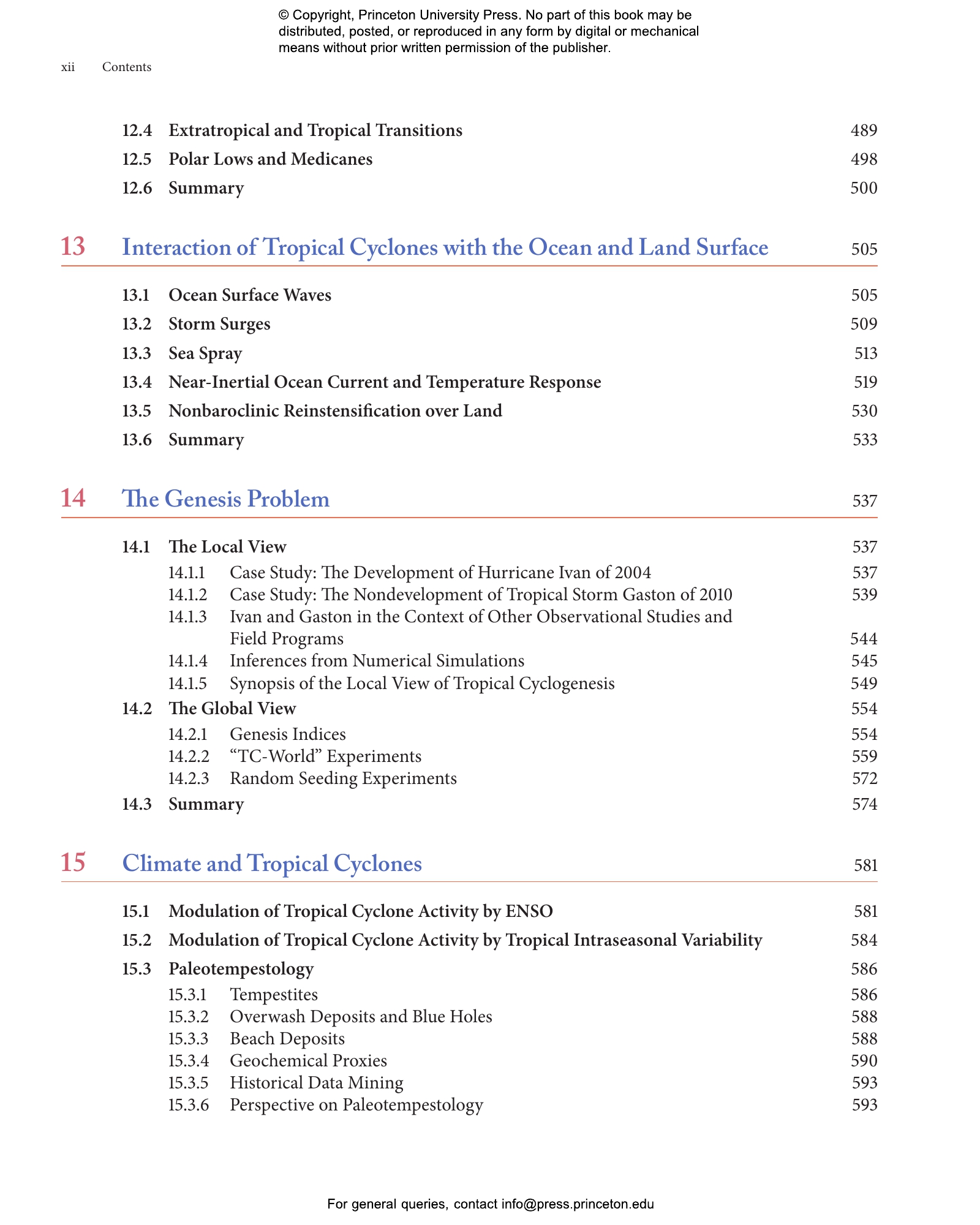
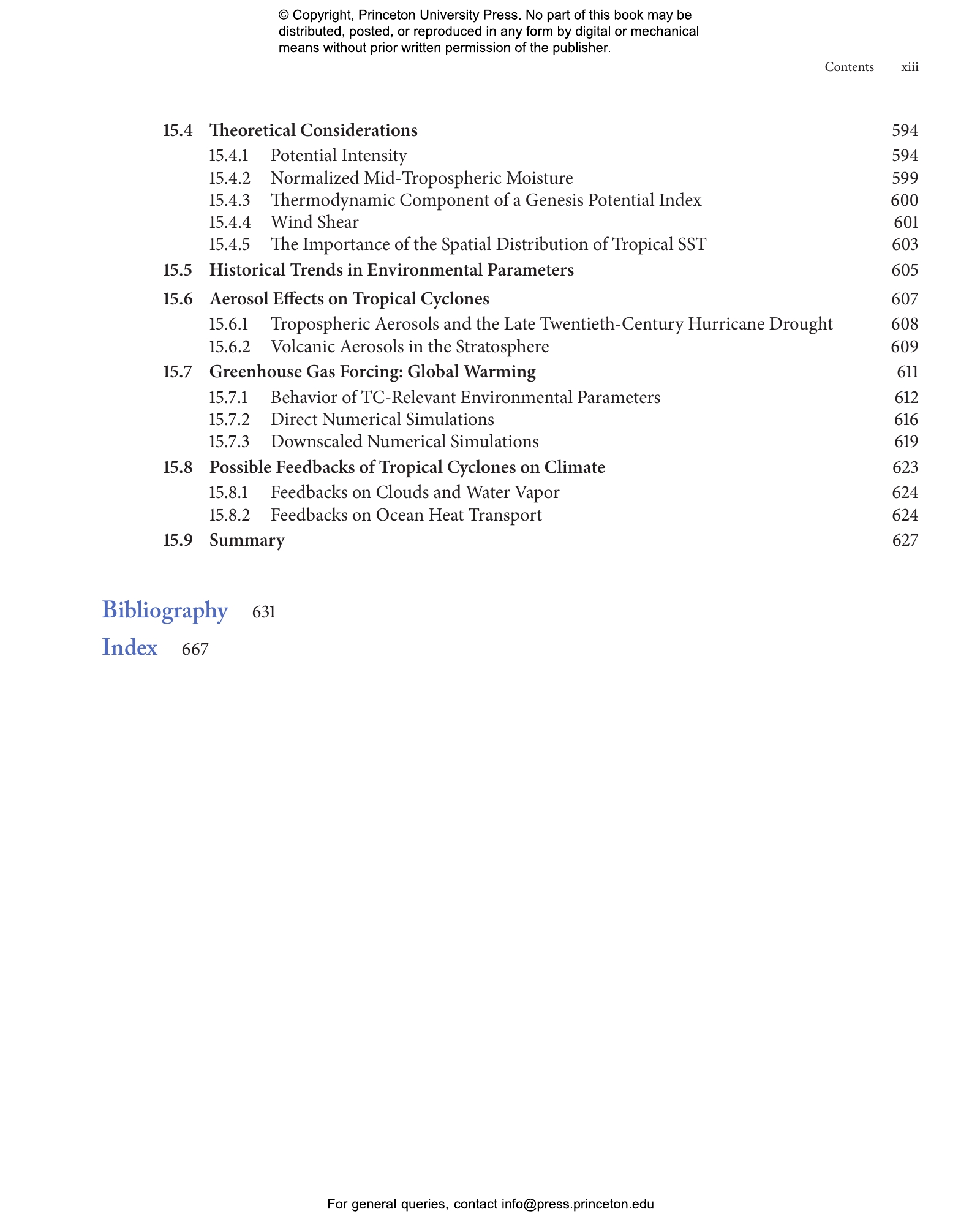
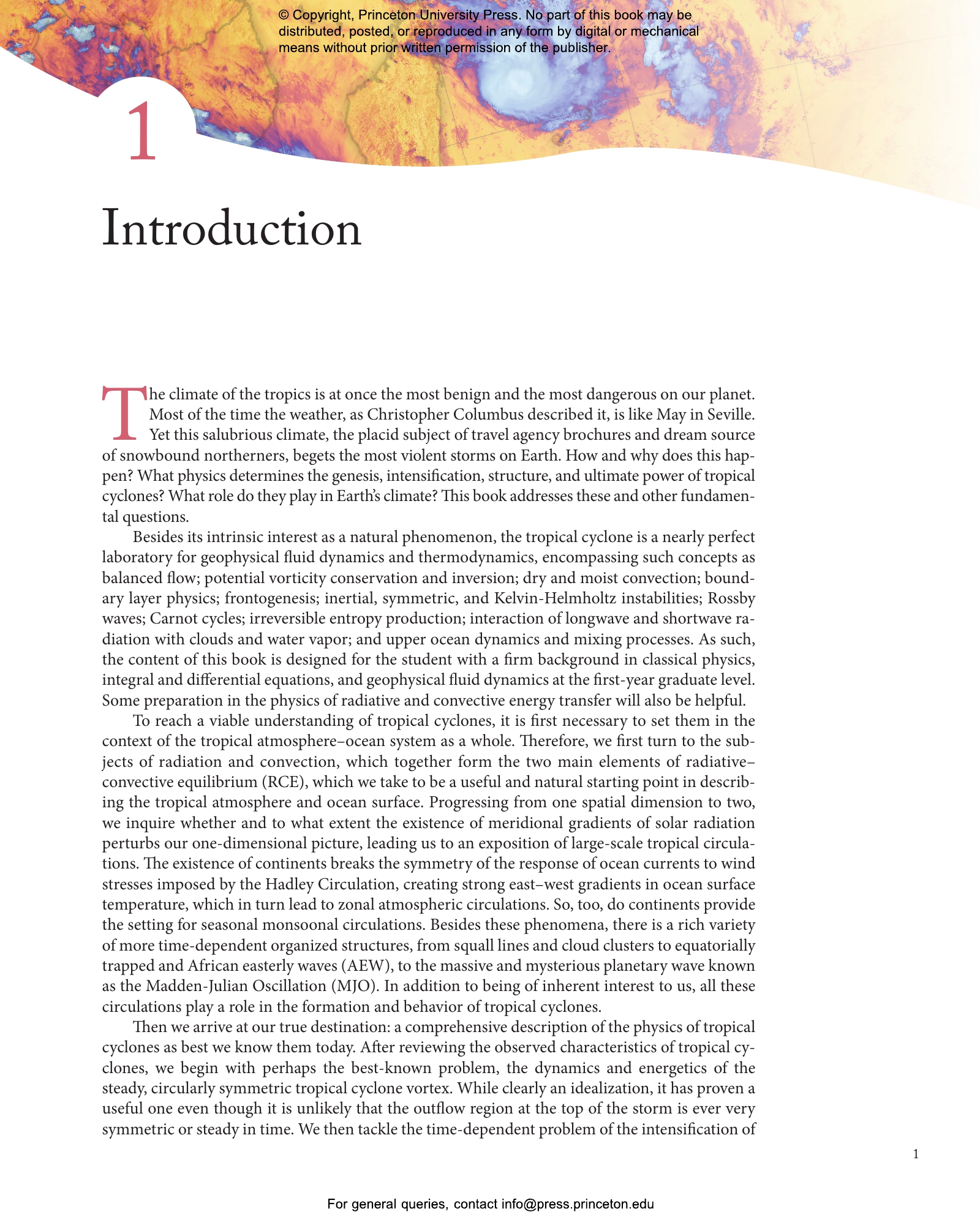
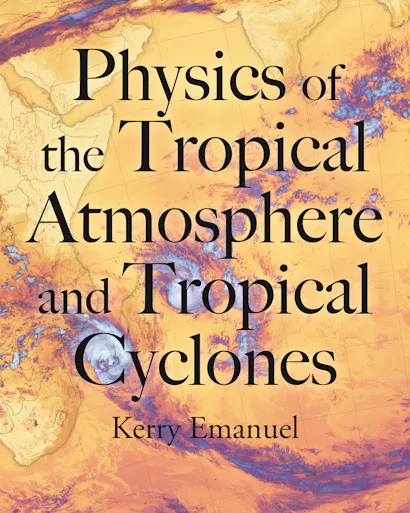
Physics of the Tropical Atmosphere and Tropical Cyclones provides readers with a firm grounding in the observations, theory, and modeling of tropical weather systems and tropical cyclones. How and why do tropical cyclones form? What physics underpins their genesis, intensification, structure, and power? This authoritative and accessible book tackles these and other questions, providing a unifying framework for understanding most tropical weather systems. It emphasizes the importance of understanding the dynamics and thermodynamics of the tropical atmosphere, developing a conceptual foundation through the application of key approximations such as the maintenance of moist adiabatic temperature profiles and critical gradients of density on isobaric surfaces by the Hadley and Walker circulations and monsoons. It treats latent heat release as a fast process that can be absorbed into the definition of entropy and locates the cause of circulations larger than squall lines in radiation and surface heat fluxes. Tested in the classroom, this is an ideal textbook for young scientists and an essential reference for seasoned practitioners.
- Provides a comprehensive and quantitative entr茅e to tropical meteorology, offering a framework for understanding most tropical weather systems
- Covers the Hadley and Walker circulations, El Ni帽o-Southern Oscillation, monsoons, equatorial waves, easterly waves, squall lines, aggregated convection, and tropical cyclones
- Includes challenge questions in every chapter and codes that run simple models of radiative-convective equilibrium, Hadley and monsoon circulations, linear equatorial models, and tropical cyclones
- Prepares students to tackle important questions about the effects of climate change on hurricanes
- An illustrations package is available for instructors
Kerry Emanuel is the Cecil and Ida Green Emeritus Professor of Atmospheric Science at the Massachusetts Institute of Technology. His books include Divine Wind: The History and Science of Hurricanes and What We Know About Climate Change.
“Physics of the Tropical Atmosphere and Tropical Cyclones reflects Emanuel’s deep insight and physical intuition into tropical atmospheric dynamics and thermodynamics, all conveyed through his masterful writing. This book offers a rigorous yet accessible exploration of tropical atmospheric dynamics, presenting a comprehensive view of the fundamental processes at play. Emanuel skillfully connects theory with observed structures and phenomena, making complex concepts both clear and relevant. This work is sure to become one of the essential references in my library.”—Gabriel A. Vecchi, 快色直播 University
“An authoritative, groundbreaking, and much-needed text from a truly peerless expert.”—Adam H. Sobel, Columbia University
“The clarity of the writing helps to lead us through many challenging concepts in tropical meteorology. Reading this book was like being transported back to the classroom with Emanuel.”—David S. Nolan, University of Miami
“Emanuel provides graduate students and researchers a nice reference on tropical meteorology and tropical cyclones, featuring original insights and some of previously unpublished findings. This comprehensive and well-structured volume will be an essential resource for early-career scientists in our field for many years to come.”—Yuqing Wang, University of Hawai‘i at M膩noa
“A treatment of the tropical atmosphere from the ground up, starting with how radiation leads to convection and then to organized circulations from the mesoscale to planetary scales.”—George Kiladis, Physical Sciences Laboratory, National Oceanic and Atmospheric Administration
“The tropical atmosphere has been the graveyard of ideas applicable to mid-latitude weather. Kerry Emanuel provides the tools needed to understand this subtle and fascinating region.”—David Raymond, New Mexico Institute of Mining and Technology
“This well-written and rigorous textbook is a major step forward in the aggregate understanding of tropical meteorology, including tropical cyclones. While it focuses on the physics of the topic, it necessarily delves into the fluid dynamics and occasionally climate needed to truly understand these phenomena that often cross the vague historical boundaries of physical, dynamic, and synoptic meteorology. In addition to his own career-long works on the topic, Emanuel appropriately invokes the relevant work of his peers, mentors, and many young scientists who likely will be using this book to teach.”—Robert Hart, Florida State University
This publication has been produced to meet accepted Accessibility standards and contains various accessibility features including concise image descriptions, a table of contents, a page list to navigate to pages corresponding to the print source version, elements such as headings for structured navigation, and math formulas in accessible format. Appearance of the text and page layout can be modified according to the capabilities of the reading system.
Accessibility Features
-
WCAG v2.2
-
WCAG level AA
-
Table of contents navigation
-
Single logical reading order
-
Short alternative textual descriptions
-
Print-equivalent page numbering
-
Next / Previous structural navigation
-
Landmark navigation
-
Index navigation
-
Epub Accessibility Specification 1.1
-
ARIA roles provided
-
All non-decorative content supports reading without sight
-
Accessible math content as MathML
-
No known hazards or warnings