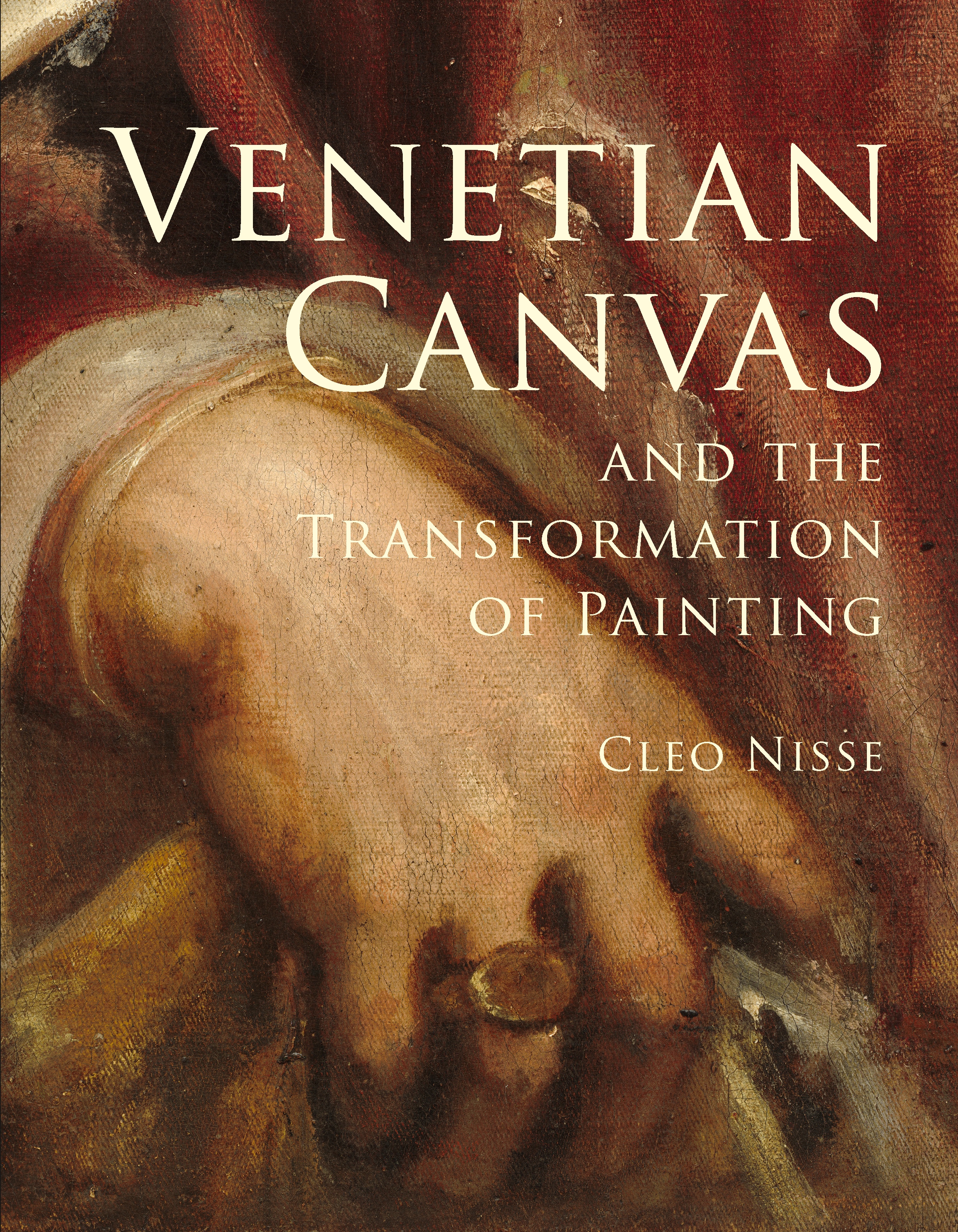
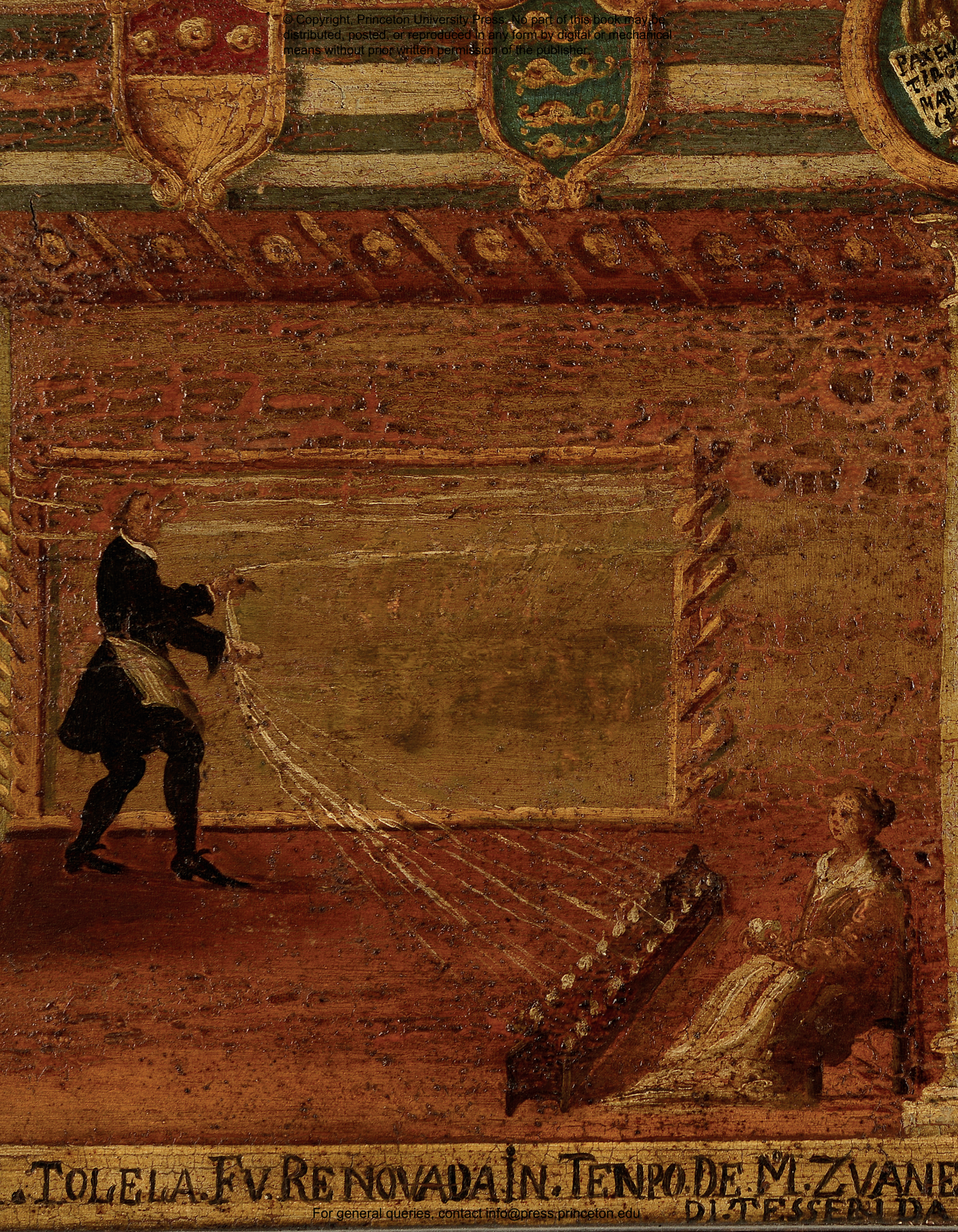
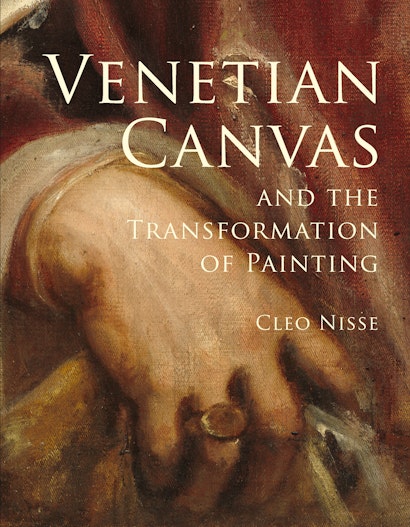
Between the fifteenth and early seventeenth centuries, European painting underwent a profound transformation as artists increasingly painted on canvas instead of wood or walls. Nowhere was more important to this shift than Venice, where painters experimented with canvas with remarkable creativity and innovation. In Venetian Canvas and the Transformation of Painting, Cleo Nisse investigates why Venetian artists adopted canvas and how it revolutionized their art between 1400 and 1600.
Intertwining approaches from art history and art conservation, and featuring stunning new photographs that show details as never before, the book presents groundbreaking research based on close study of Venetian artworks, archival sources, art-making treatises, and early modern art criticism. It sheds new light on the materiality of early modern canvas, its production and supply, and the influence of climate on its use. The book offers fresh interpretations of iconic works and important concepts such as pittura di macchia and non finito, and demonstrates how canvas contributed to the radical new style of painters such as Titian, Tintoretto, and Veronese. But above all else, it shows how canvas changed the making and meaning of paintings.
Cleo Nisse is assistant professor of early modern European art history at the University of Groningen, the Netherlands. She is the coeditor of Titian’s Poetics: Selected Essays by David Rosand. In addition to a PhD in art history from Columbia University, she holds a postgraduate degree in painting conservation from the Courtauld Institute.
"The prestige of Venice’s painters brought with it the triumph of canvas, more suited to the damp Venetian climate than plaster, and cheaper and easier to transport than wood. But how did artists like Titian, Veronese and Tintoretto actually use this new material?. . . . Cleo Nisse has provided a whole new way of looking at these innovations in Venetian Canvas and the Transformation of Painting."鈥擩.S. Marcus, The Art Newspaper
“This gorgeous book delivers a rigorous history of canvas and a long-overdue poetics of this transformative material in Venetian Renaissance painting. Weaving together insights from art history, social history, material studies, and conservation studies, Cleo Nisse tackles the urgent, animating questions: How do materials make meaning? How did canvas come to signify modernity in the sixteenth century? She demonstrates—persuasively and passionately—that artworks themselves function as material and visual archives, holding histories that written documents can’t fully capture.”—Maria H. Loh, author of Titian’s Touch: Art, Magic, and Philosophy
“In this excellent book, Cleo Nisse explores why and how canvas became the primary support for painting in sixteenth-century Venice. She presents close analyses and significant new research with clarity and eloquence, offering new insights into materials, techniques, and the pictorial transformations they helped inspire.”—Rebecca Zorach, author of Blood, Milk, Ink, Gold: Abundance and Excess in the French Renaissance
This publication has been produced to meet accepted Accessibility standards and contains various accessibility features including concise image descriptions, a table of contents, a page list to navigate to pages corresponding to the print source version, and elements such as headings for structured navigation. Appearance of the text and page layout can be modified according to the capabilities of the reading system.
Accessibility Features
-
WCAG v2.2
-
WCAG level AA
-
Table of contents navigation
-
Single logical reading order
-
Short alternative textual descriptions
-
Print-equivalent page numbering
-
Landmark navigation
-
Index navigation
-
Epub Accessibility Specification 1.1
-
ARIA roles provided
-
All non-decorative content supports reading without sight
-
No known hazards or warnings