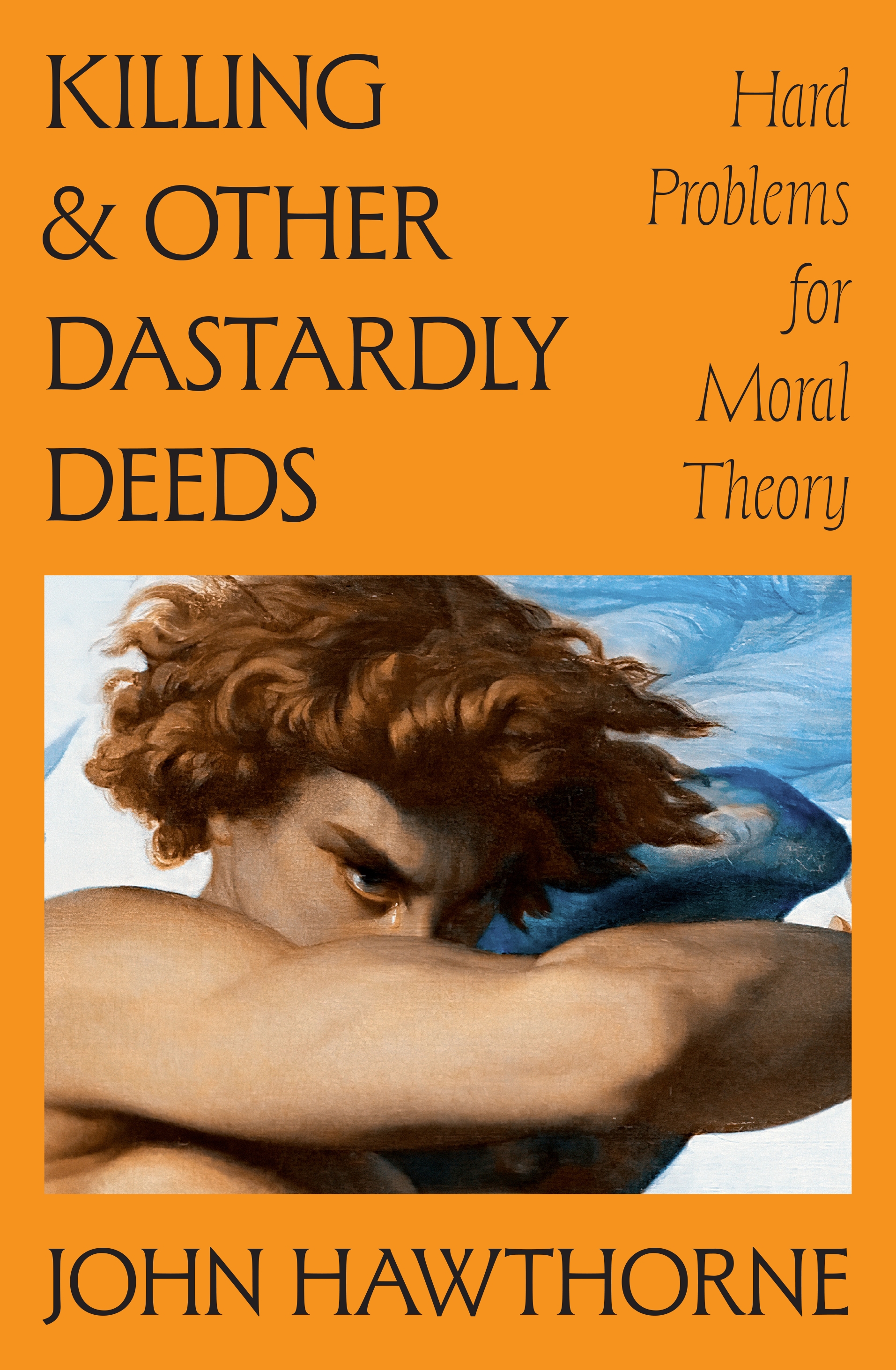
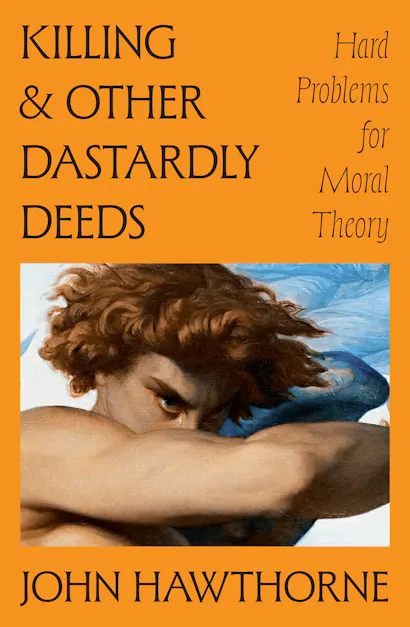
In Killing and Other Dastardly Deeds, eminent philosopher John Hawthorne rigorously probes the commonsense morality of killing and other serious harms, exposing troubling issues at the foundations of ethical thought.
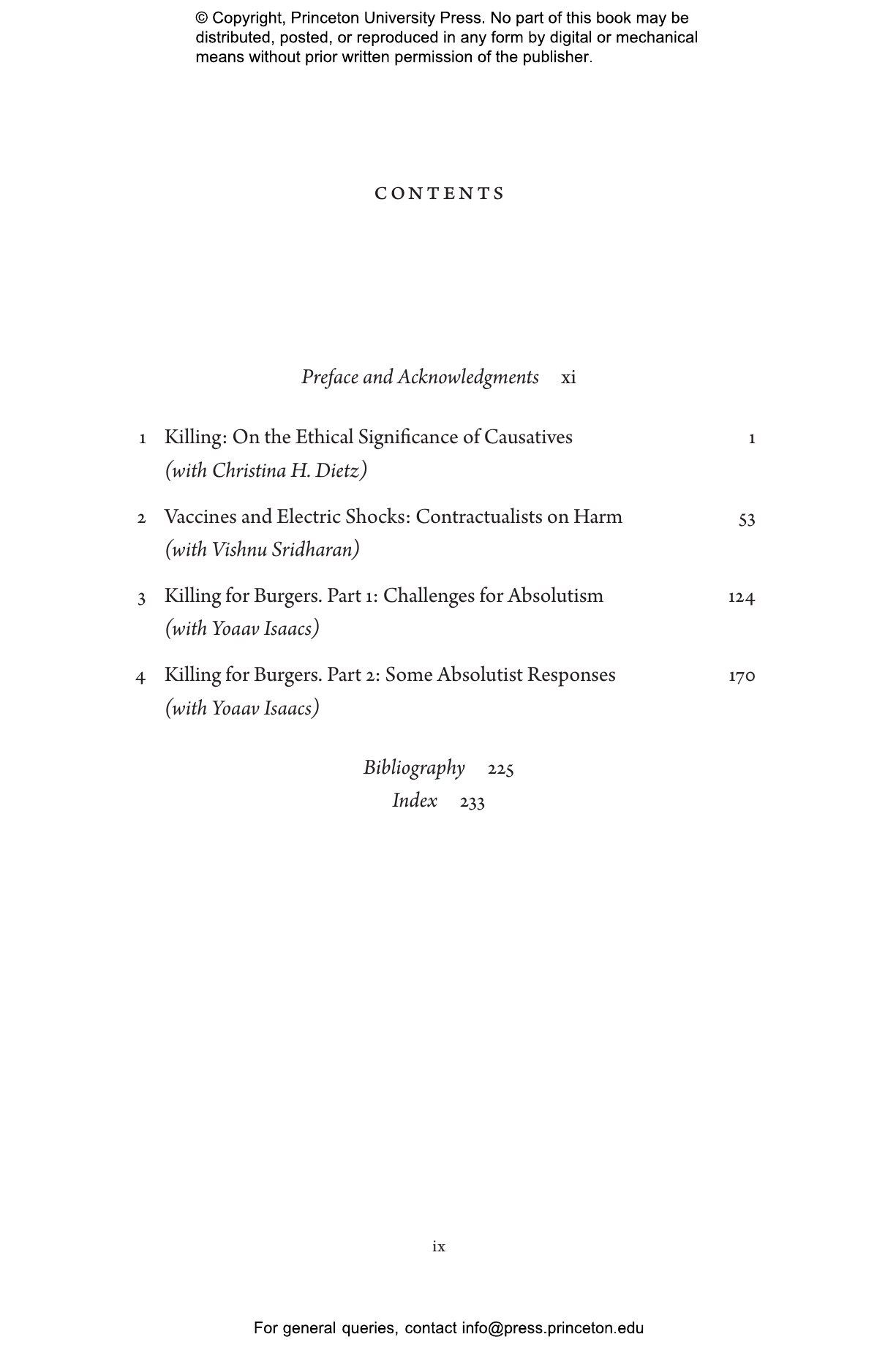
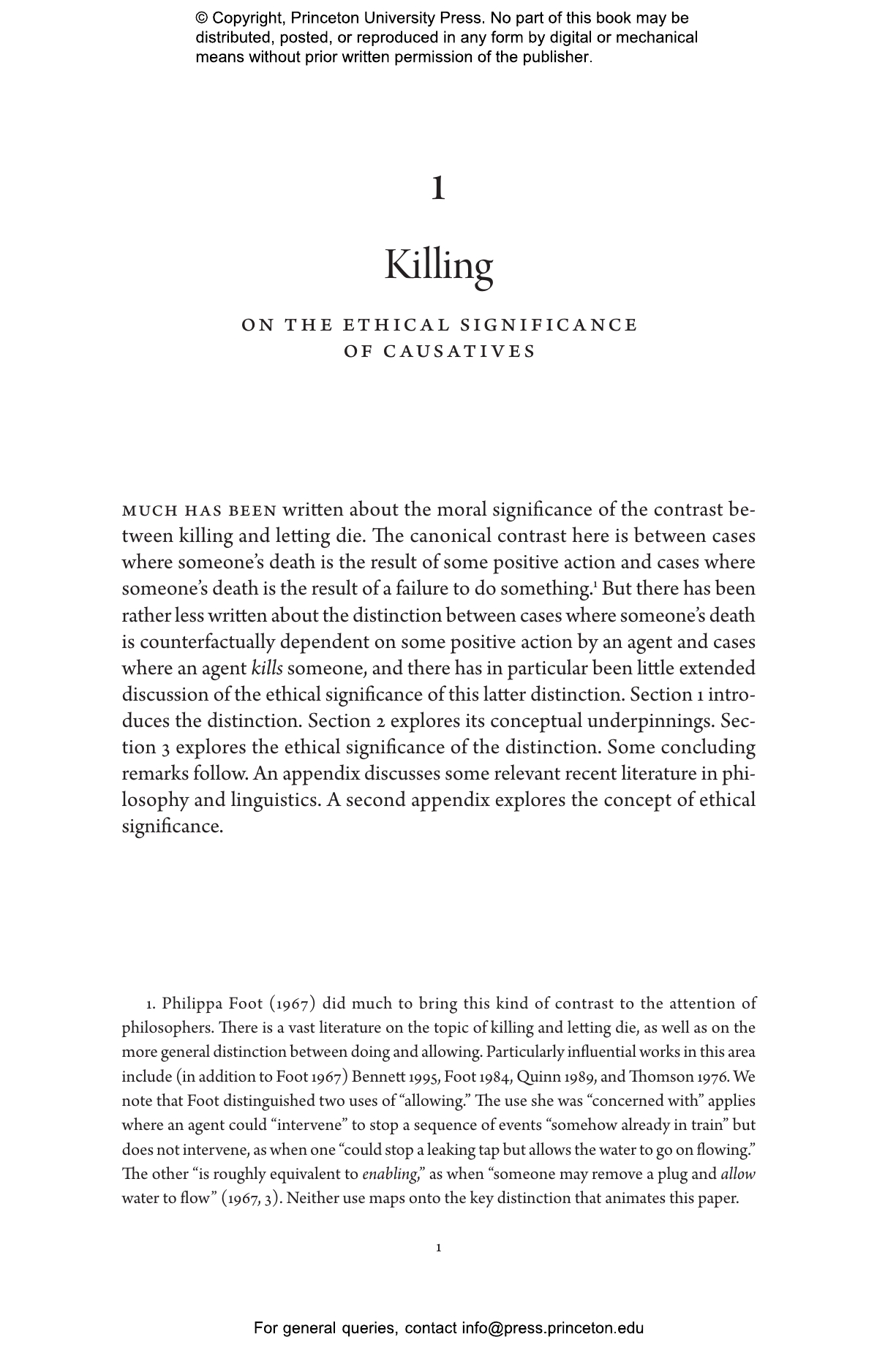
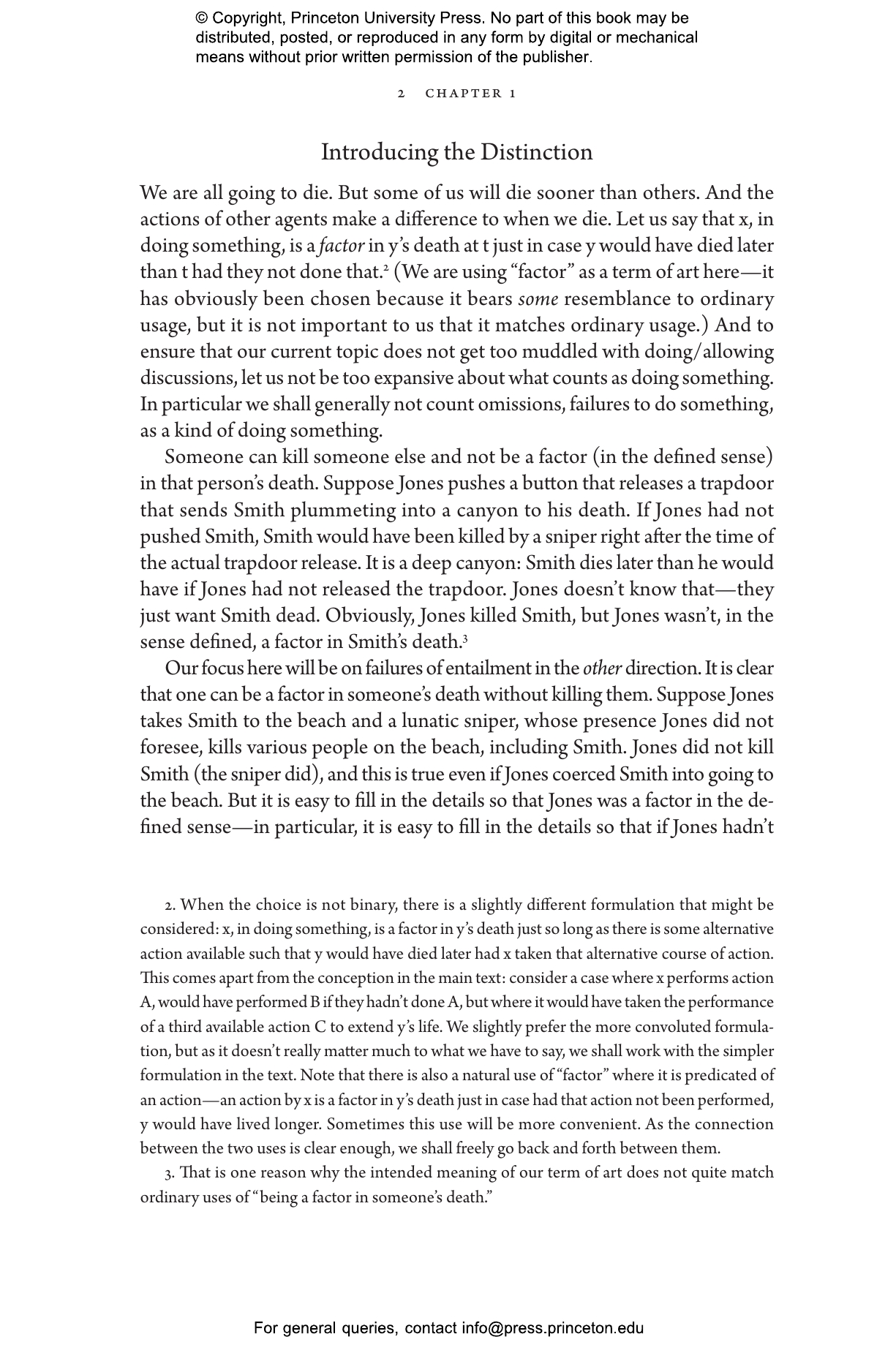
The book addresses the ethical significance of causatives, focusing on the contrast between actions that are killings and those that aren鈥檛 killings, but which hasten death. It offers an extensive critique of popular contractualist treatments of the wrongness of harming people. It also investigates the popular absolutist idea that one should never perform an action that will with certainty kill someone when the only upside is an array of trifling goods. Along the way, readers learn just how difficult it is to embed various standard ethical ideas into a sensible normative theory of decision making.
Drawing many connections with areas of philosophy beyond ethics, and making important contributions at the intersection of ethics and decision theory, Killing and Other Dastardly Deeds is an insightful critique of absolutist prohibitions on killing.
John Hawthorne is Provost Professor of Philosophy and the Linda MacDonald Hilf Chair in Philosophy at the University of Southern California. He is the author of Metaphysical Essays and Knowledge and Lotteries and the coauthor of The Bounds of Possibility, Narrow Content, The Reference Book, and Relativism and Monadic Truth.
鈥淛ohn Hawthorne is widely and rightly regarded as one of the leading philosophers of our time, and in this book, he turns his formidable intelligence to ethics. Carefully considering ingenious hypothetical cases and drawing on a deep knowledge of other areas of philosophy, Hawthorne and his coauthors offer searching examinations of central topics in normative ethics. The result is a work that is at once challenging, illuminating, and engaging.鈥�鈥擳homas Kelly, author of Bias: A Philosophical Study
鈥淭his is a terrific book, in which John Hawthorne鈥檚 characteristic combination of verve, insight, and rigor is on full display. It probes, in great depth and detail, important aspects of commonsense morality, finding crucial distinctions that have been too often overlooked, intuitions whose sources have been misdiagnosed, hypotheses that have been motivated by a limited diet of cases, and troubling inconsistencies in our ordinary moral thinking.鈥�鈥擩acob Nebel, 快色直播 University
鈥淭his great book is jam-packed with new insights and compelling arguments, with a striking combination of creativity and rigor throughout.鈥�鈥擝rian Hedden, Massachusetts Institute of Technology
This publication has been produced to meet accepted Accessibility standards and contains various accessibility features including a table of contents, a page list to navigate to pages corresponding to the print source version, and elements such as headings for structured navigation. Appearance of the text and page layout can be modified according to the capabilities of the reading system.
Accessibility Features
-
WCAG v2.2
-
WCAG level AA
-
Table of contents navigation
-
Print-equivalent page numbering
-
Next / Previous structural navigation
-
Landmark navigation
-
Index navigation
-
Epub Accessibility Specification 1.1
-
ARIA roles provided
-
All non-decorative content supports reading without sight
-
No known hazards or warnings