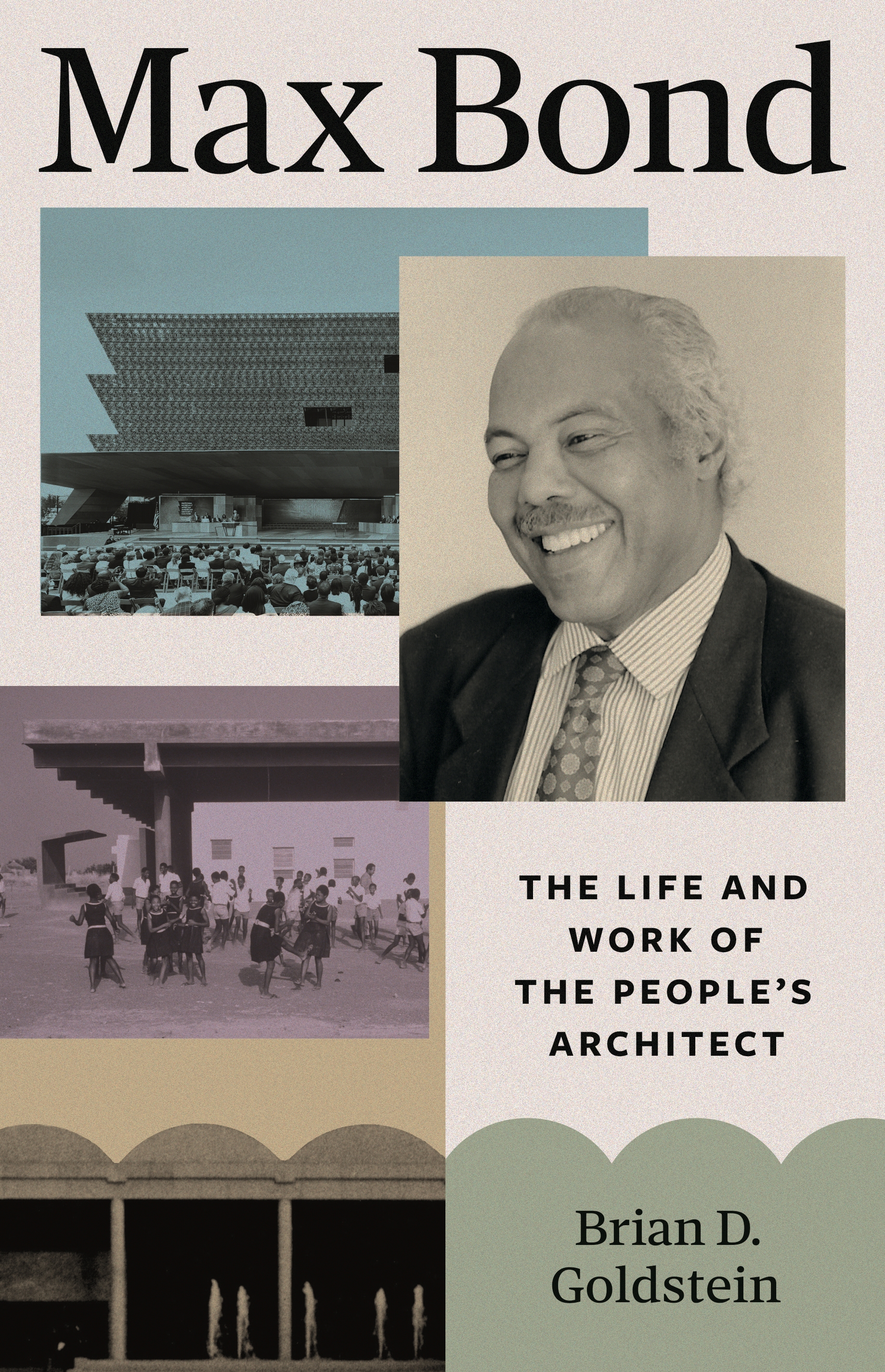
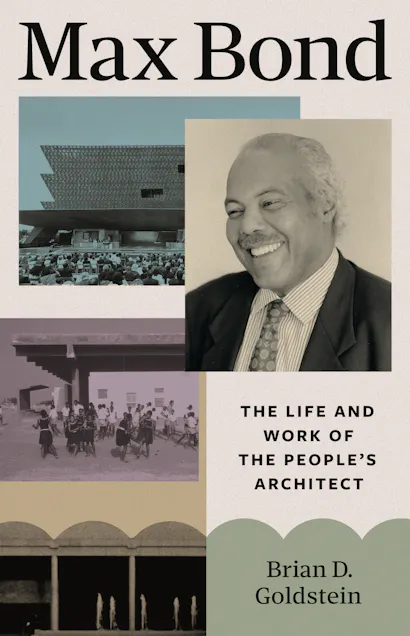
J. Max Bond Jr. (1935鈥�2009) was a civil rights activist, educator, and architect who shaped such iconic structures as the King Center for Nonviolent Social Change in Atlanta, the Smithsonian鈥檚 National Museum of African American History and Culture in Washington, DC, and the 9/11 Memorial & Museum in Manhattan. Driven by the concerns of the civil rights movement, he insisted on a practice centered on deep social engagement during years when his profession became preoccupied with celebrity and spectacle.
Harvard educated and son of an eminent African American family, Bond designed housing, cultural institutions, community centers, and campuses amid an era of sweeping changes in architecture, urbanism, and American culture. He expressed an architectural vision that was democratic and inclusive, international in orientation, and celebratory of cities and their diverse residents. Yet his work has often been overlooked. Award-winning historian Brian Goldstein renders it visible.
Beautifully illustrated, Max Bond is the definitive biography of one of the most important architects of our time, whose aspiration toward an architecture by and for the people was as urgent in his day as it remains in our own.
Brian D. Goldstein is associate professor of architectural history in the Department of Art and Art History at Swarthmore College. He is the author of The Roots of Urban Renaissance: Gentrification and the Struggle over Harlem (快色直播).
"A deeply researched and timely examination. . . . Max Bond is destined to become the definitive account of an architect whose quiet influence has long exceeded his recognition. The book avoids reducing Bond’s story to one of struggle alone. Instead, it emphasizes his creativity, leadership, and determination to expand the possibilities of the profession. More than a biography, it is a work of historical recovery that restores a crucial figure to his rightful place in American architectural history. It offers valuable insights for architects, historians, urban planners, and anyone interested in the relationship between design and democracy."鈥擬ark Gardner, Architectural Record
"A meticulous diagram of socially progressive architecture practice from mid-century nearly to today, with all of its evolutions, victories, and disappointments. . . . The book is an impressive feat of research. . . . The writing is measured and at times lyrical."鈥擹ach Mortice, Oculus
“A deeply researched and illuminating account of Bond’s life and work, revealing connections between the built environment and our social values that still resonate today. Max Bond is an outstanding contribution to the architectural history canon.”—Brent Leggs, President and CEO of the National Trust for Historic Preservation
“Brian Goldstein’s totally engrossing study of Max Bond, peerless architect of a human-centered built environment, ranges widely in space, ideals, and achievement. Fascinating, sobering, enlightening.”—Nell Irvin Painter, author of The History of White People and I Just Keep Talking
“‘In the life of a building, our moment is brief,’ Max Bond once wrote. Goldstein’s eloquent history of Bond’s remarkable ‘moment’ reveals its profound reverberations on architecture, cities, students, and a broad public. Goldstein sheds light on the changing culture that Bond helped to advance, even if the book leaves readers aware that so much hard work remains.”—Sarah Whiting, Josep Llu铆s Sert Professor and dean, Harvard University Graduate School of Design
“An impressively researched account of the career of Max Bond, one of the most distinguished Black American architects of the twentieth century. Goldstein convincingly argues that Bond was unusually successful in advancing social issues during the civil rights era through architecture.”—Eric Mumford, author of Designing the Modern City: Urbanism Since 1850
“Goldstein crafts a wholly absorbing narrative of Max Bond’s life and work, capturing the joys and difficulties of designing while Black in America. This book advances a multifaceted argument about Blackness and modern architecture that serves as a monument to an architect who championed social responsibility and racial diversity.”—Peter L’Official, author of Urban Legends: The South Bronx in Representation and Ruin
This publication has been produced to meet accepted Accessibility standards and contains various accessibility features including concise image descriptions, a table of contents, a page list to navigate to pages corresponding to the print source version, and elements such as headings for structured navigation. Appearance of the text and page layout can be modified according to the capabilities of the reading system.
Accessibility Features
-
WCAG v2.2
-
WCAG level AA
-
Table of contents navigation
-
Single logical reading order
-
Short alternative textual descriptions
-
Print-equivalent page numbering
-
Landmark navigation
-
Index navigation
-
Epub Accessibility Specification 1.1
-
ARIA roles provided
-
All non-decorative content supports reading without sight
-
No known hazards or warnings