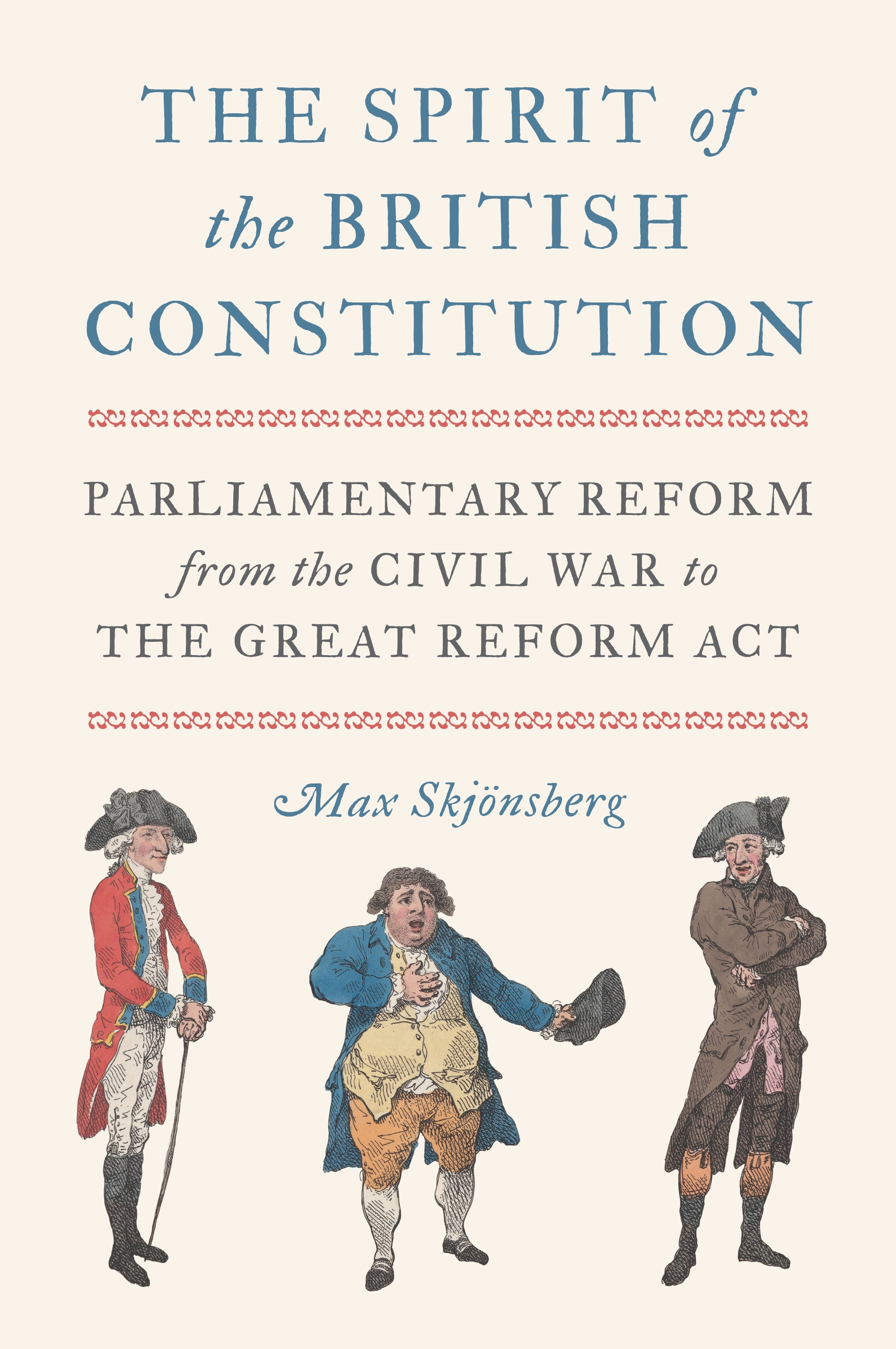
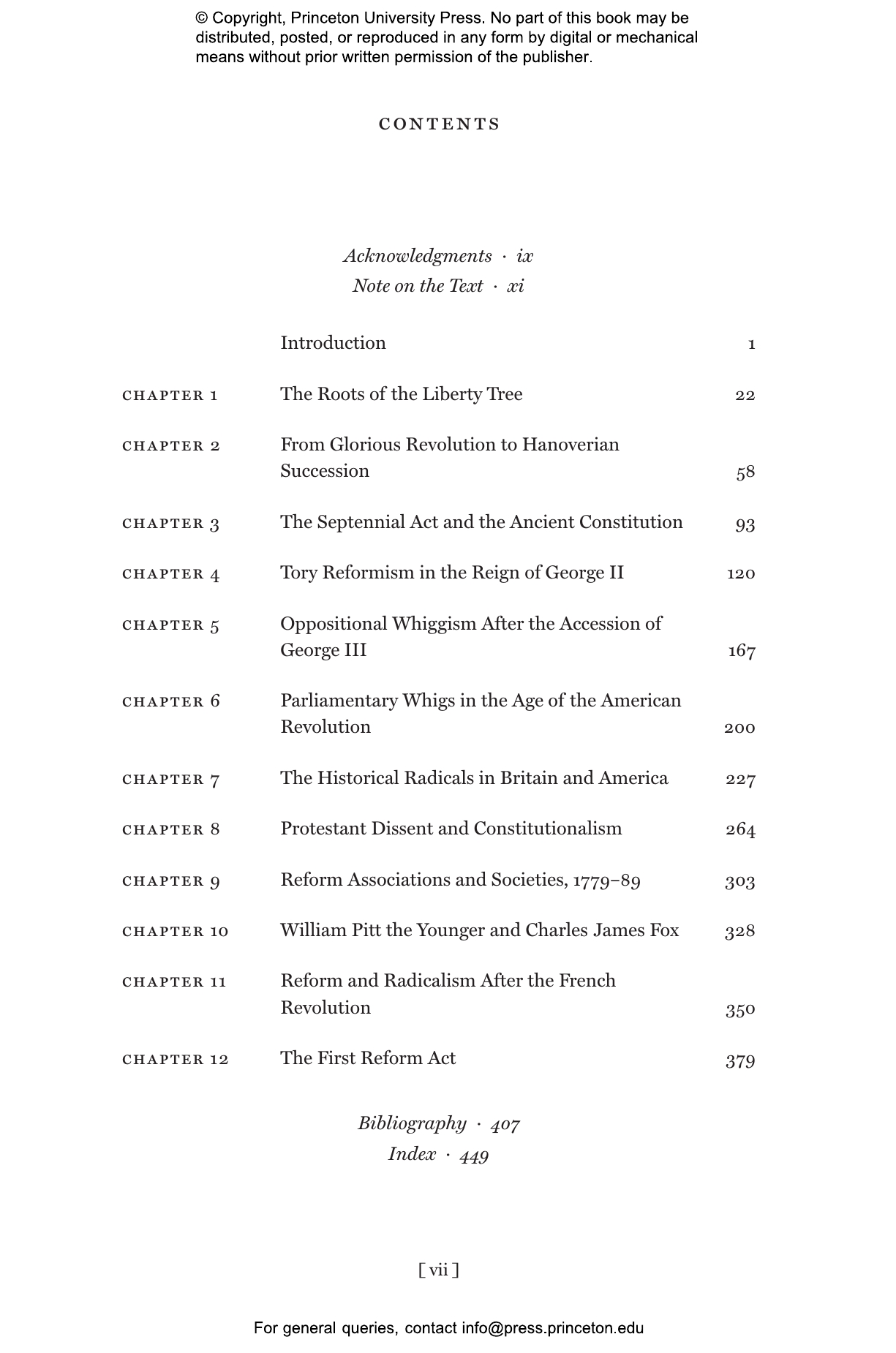
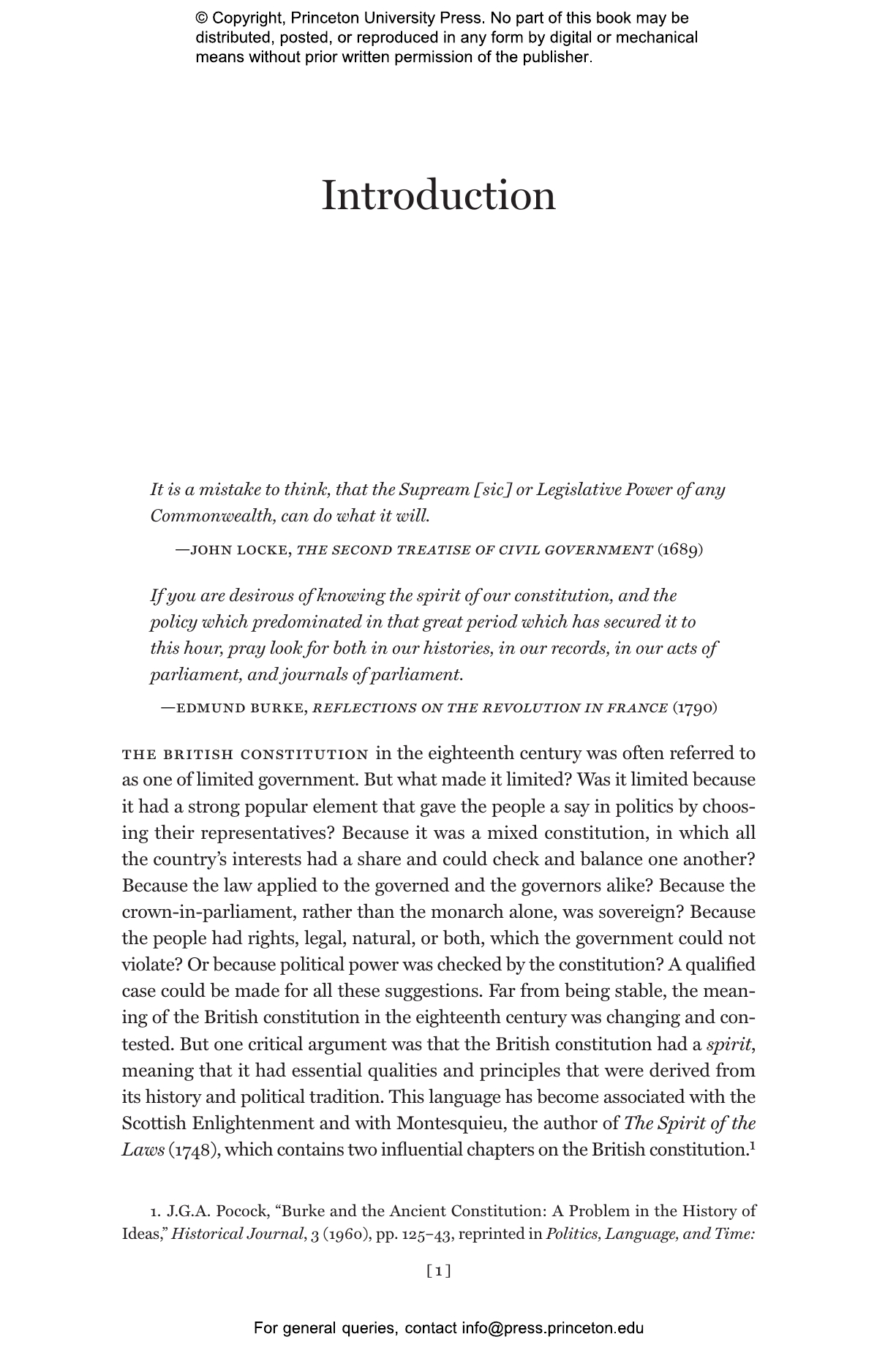
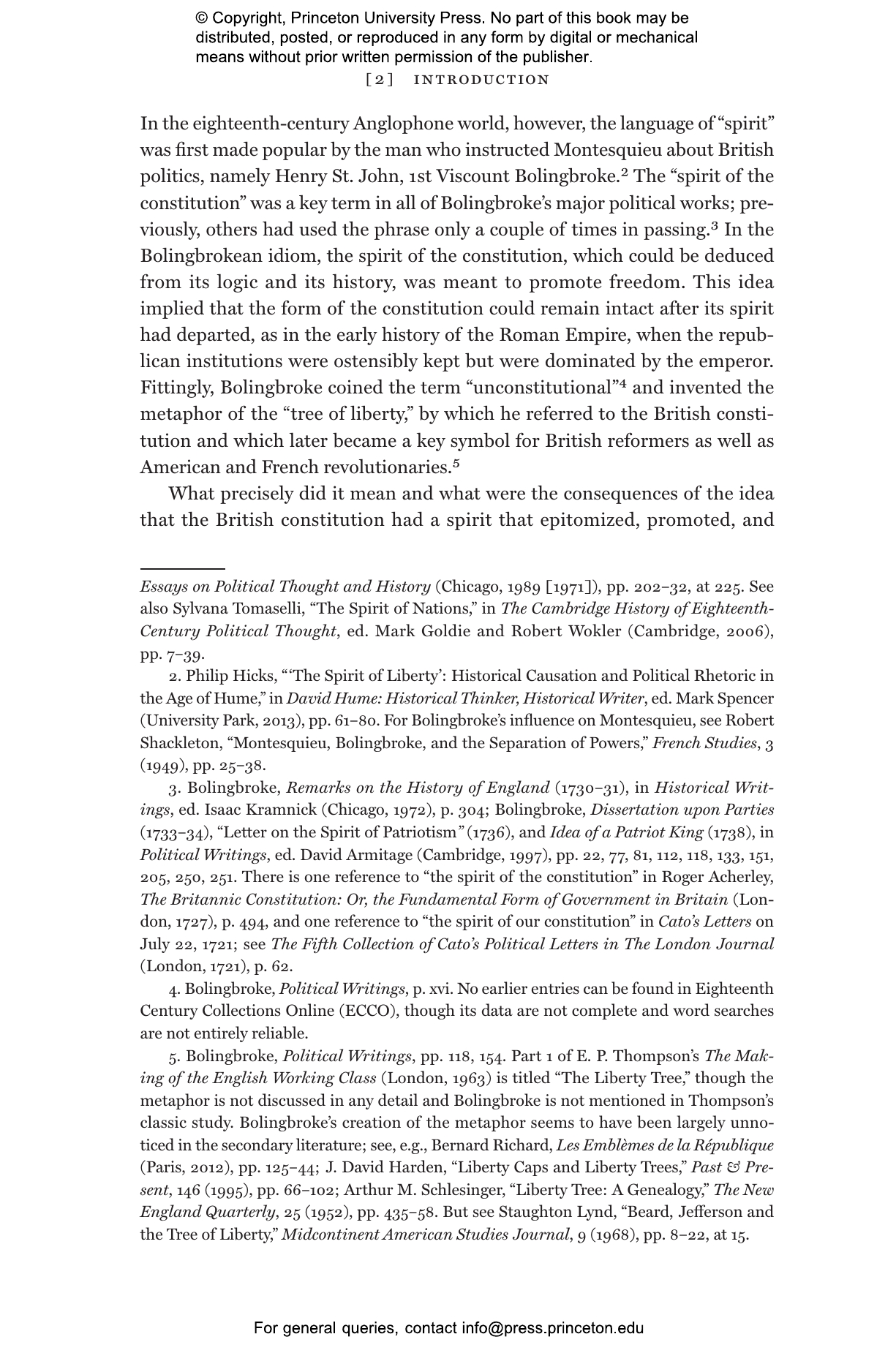
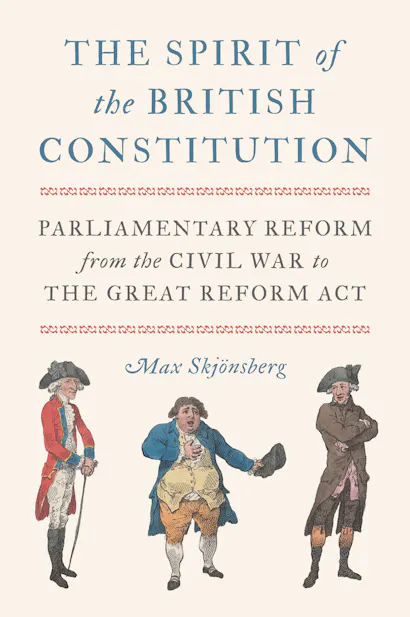
Eighteenth-century Britain was ruled by landed Protestant gentlemen who were united in their embrace of the country鈥檚 constitution, common law, and system of rights that had been confirmed by milestones such as Magna Carta in 1215, the Petition of Right in 1628, and the Glorious Revolution in 1688. Yet the British elite and the public at large were divided on fundamental political questions, such as how the constitution should work in practice and what reforms, if any, were needed to make reality cohere with theory.
In this panoramic book, Max Skj枚nsberg provides the most comprehensive study to date of the history of parliamentary reform in Britain from the seventeenth century to the First Reform Act in 1832. At the heart of the book is the idea of the spirit of the British constitution, which was invoked by widely different political actors and thinkers throughout this period to argue for an array of reforms for the security of liberty. What this precisely entailed was deeply contested, with key figures such as Bolingbroke, Edmund Burke, Catharine Macaulay, William Pitt the Younger, and William Cobbett interpreting the spirit of the constitution in diverse ways, all the while seeking to remain within a constitutional framework.
A landmark account of the English political and constitutional tradition, The Spirit of the British Constitution challenges us to rethink eighteenth-century history as well as the relationship between tradition, history, and freedom.
Max Skj枚nsberg is associate professor of humanities in the Hamilton School at the University of Florida. He is the author of The Persistence of Party: Ideas of Harmonious Discord in Eighteenth-Century Britain and the editor of Catharine Macaulay: Political Writings.
“Max Skj枚nsberg has written an indispensable book for historians, political theorists, and anyone who is interested in that fundamental question, ‘What does it mean to be free?’ A fascinating read, The Spirit of the British Constitution will go down as a classic of intellectual history.”—Gregory Conti, 快色直播 University
“The Spirit of the British Constitution amounts to a new history of British liberty, the most contested concept of the long eighteenth century, with all the fears, fanaticisms, and unanticipated triumphs richly portrayed by Max Skj枚nsberg. This is a major work of scholarship and synthesis, a vital read for everyone interested in freedom and reform.”—Richard Whatmore, author of The End of Enlightenment
“Since the United Kingdom is still unique in retaining an unwritten constitution, the contours of which recede into the mists of time, Max Skj枚nsberg’s impressively accomplished and up-to-date study of the key centuries of struggle to define its spirit shows why that struggle is unlikely to end until the state itself does.”—John Dunn, University of Cambridge
“Max Skj枚nsberg’s reconstruction of the ‘spirit’ of the constitution as it was argued over between the Restoration and the Great Reform Act is an indispensable account of British history in the period as well as making a vital contribution to constitutional theory. At once comprehensive and surgical in its analysis, it will transform our understanding of reform as an engine of political change.”—Richard Bourke, University of Cambridge
“The Spirit of the British Constitution provides the most comprehensive study to date of the history of parliamentary reform in Britain from the seventeenth century to 1832. This is an extremely impressive piece of scholarship.”—Robin Douglass, author of Mandeville’s Fable: Pride, Hypocrisy, and Sociability
“This is an excellent book, displaying great depth of knowledge and research. Written with the ease and confidence of a scholar at the height of his powers, The Spirit of the British Constitution will surely become the go-to volume on the subject.”—Ross Carroll, author of Uncivil Mirth: Ridicule in Enlightenment Britain
This publication has been produced to meet accepted Accessibility standards and contains various accessibility features including concise image descriptions, a table of contents, a page list to navigate to pages corresponding to the print source version, and elements such as headings for structured navigation. Appearance of the text and page layout can be modified according to the capabilities of the reading system.
Accessibility Features
-
WCAG v2.2
-
WCAG level AA
-
Table of contents navigation
-
Single logical reading order
-
Short alternative textual descriptions
-
Print-equivalent page numbering
-
Landmark navigation
-
Index navigation
-
Epub Accessibility Specification 1.1
-
ARIA roles provided
-
All non-decorative content supports reading without sight
-
No known hazards or warnings