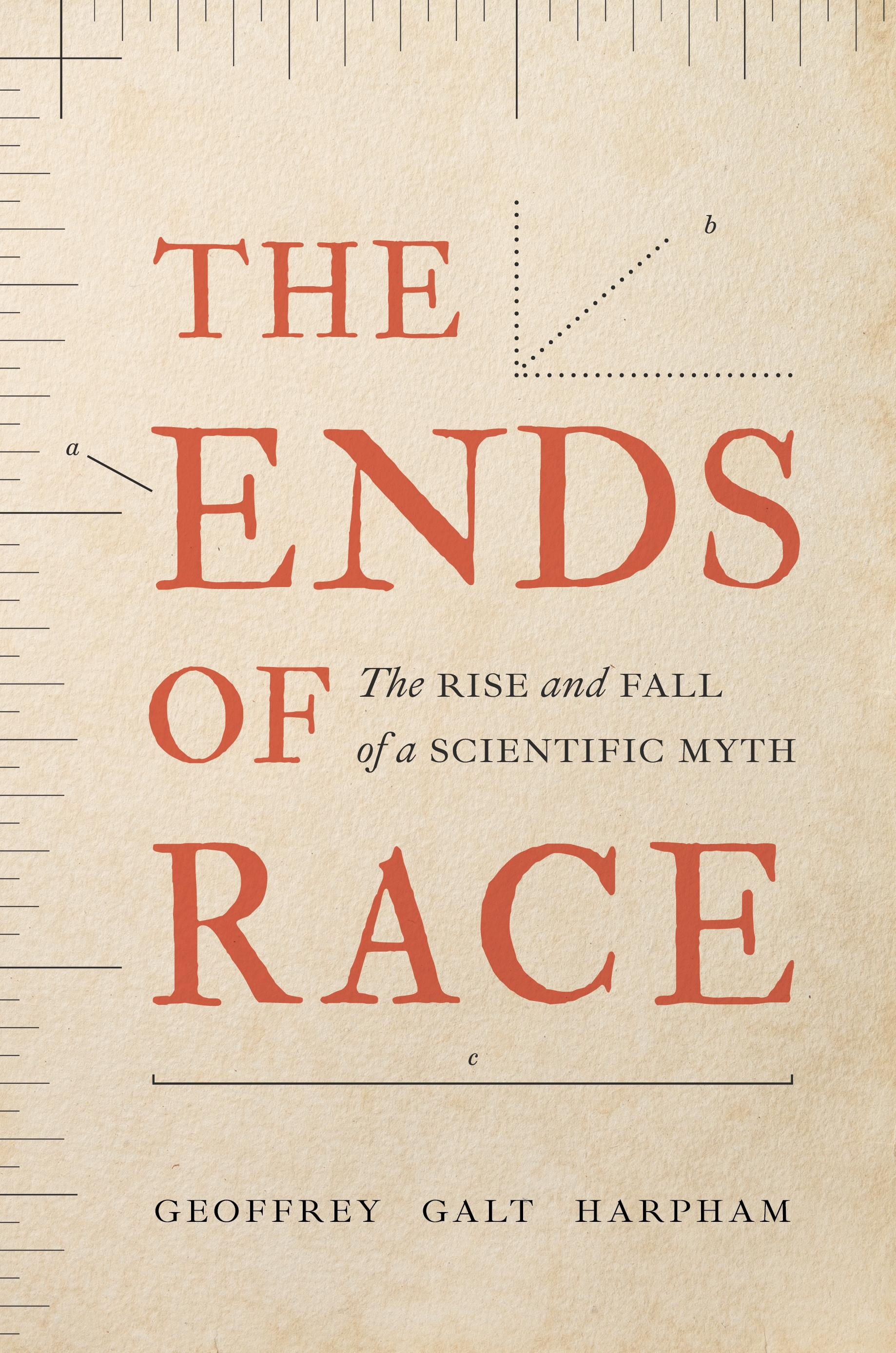
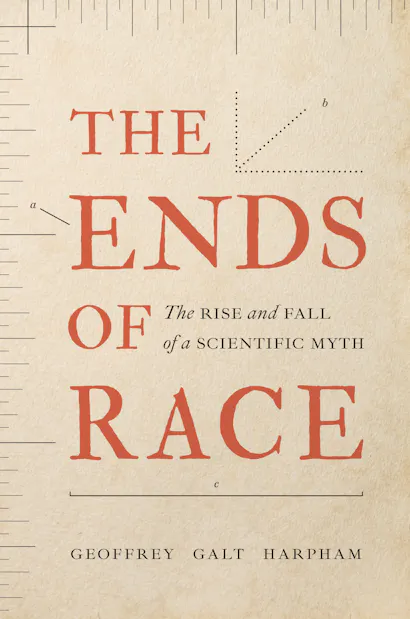
The attempt to define the concept of race in the eighteenth and nineteenth centuries is often described as a corrupt 鈥減seudo-science,鈥� but in this strikingly original account, Geoffrey Galt Harpham describes the inquiry into race as a serious scientific project undertaken by some of the leading figures of the time. In a 鈥渟keletal history鈥� of this project, Harpham tracks the rise and fall of racial science, focusing on the central role played by craniology, or the study of skulls, in key debates in Germany, the United States, and France.
Emerging at the end of the eighteenth century as a way of thinking about human variation, the concept of race became entangled in an extraordinarily wide range of scientific, philosophical, theological, and political debates about issues ranging from the place of humanity in the natural world to the rationales for colonization and slavery. But at the end of the nineteenth century, a number of prominent scientists came together to announce the failure of the century-long attempt to define race or even to locate racial markers in the human body鈥攐nly to see the concept taken up by others, including W.E.B. Du Bois, who sought to preserve the concept as essential to the nonscientific ends of solidarity and identity.
With this probing and vivid narrative account of the scientific inquiry into human variation, Harpham provides a new way of approaching the history of race, introduces a host of previously little-known figures, explores the larger contexts and inner dynamics of the discourse on race, and questions the ends that the concept of race serves today.
Geoffrey Galt Harpham is the author of Scholarship and Freedom, Citizenship on Catfish Row: Race and Nation in American Popular Entertainment, and What Do You Think, Mr. Ramirez?: The American Revolution in Education. He is also the creator of the website Theories of Race. He has taught at the University of Pennsylvania, Tulane University, and Duke University, and was Director of the National Humanities Center from 2002 to 2015.
“The double story, written with elegance and wit, of the rise and fall of racial science, 1780–1900; and of the doggedly entrenched concept of race itself, which just will not go away.”—J. M. Coetzee
“In this wonderfully readable narrative, Harpham makes brilliantly clear the degree to which the repeated failure to show what a race was or even to define the term has turned out (catastrophically) to be a feature rather than a bug, leaving us to this day with incoherent mixes of biology and culture that preserve the idea of fundamental differences between groups that don’t actually exist.”—Walter Benn Michaels, coauthor of No Politics But Class Politics
“Geoffrey Galt Harpham has crafted an elegant and revelatory book on the emergence, development and demise of so-called racial science in the late eighteenth and nineteenth centuries. Its distinctive contribution is to get inside the heads of those persons whom scholars most often regard as the pioneers and chief proponents of racial science. Many of them come across as loathsome (“supremely repulsive”) individuals, but a few, Johann Friedrich Blumenbach in particular, though deeply flawed, emerge from Harpham’s pages as tragic figures whose ideas were twisted by rivals and disciples alike. Harpham’s effort at evenhandedness in writing about such an emotion-roiling subject as race is admirable and his insights masterful. All scholars at work on the genealogy of modern racialist theories will have to reckon with his brilliant account.”—William C. Jordan, 快色直播 University
“Was race science necessarily pseudoscience? In this thought-provoking book, Geoffrey Galt Harpham explains why we must understand the history of racial thought not simply as a justification of racism but also as a legitimate outgrowth of eighteenth- and nineteenth-century scientific culture. The Ends of Race explains why prominent scientists and thinkers attempted to study race as a rational system of inquiry, why these efforts failed, and why racial ideas persisted even as many scientists disavowed their usefulness. This book is a major contribution to the growing body of scholarship about the social construction of race, its curious history and stubborn longevity, and its often deadly consequences.”—Henry Louis Gates, Jr., Harvard University
“In this engaging and erudite study covering centuries and continents, Geoffrey Galt Harpham probes deeply across disciplines into the intense scholarly preoccupation with the critical analysis and theorization of race, inclusive of its multiplicity of shifting and contested meanings for human designation and human outcomes. Ultimately Harpham provides not merely a compelling intellectual history of the sciences and social sciences but a haunting legacy for the conceptual conundrum of race and its effects in our own time.”—Evelyn Brooks Higginbotham, Harvard University
“The Ends of Race draws our attention to what the author calls ‘exercising the vast but concealed power of the translator’ in (re)reading the writings, the scholarships, the arguments, and the interpretations embodying our search for when and how race became an object of knowledge. Harpham’s meticulous, detailed and often nuanced historicized account gives a much-needed fresh breeze to the project of grappling with the complexities, sophistication, and tenets in the body of knowledge on the rise and fall of a scientific myth. Indeed, Harpham treats us to a powerful, must-read account of the paradox of the ends of race and the fall and rise of race."—Edward K. Kirumira, Stellenbosch University
This publication has been produced to meet accepted Accessibility standards and contains various accessibility features including concise image descriptions, a table of contents, a page list to navigate to pages corresponding to the print source version, and elements such as headings for structured navigation. Appearance of the text and page layout can be modified according to the capabilities of the reading system.
Accessibility Features
-
WCAG v2.2
-
WCAG level AA
-
Table of contents navigation
-
Single logical reading order
-
Short alternative textual descriptions
-
Print-equivalent page numbering
-
Landmark navigation
-
Index navigation
-
Epub Accessibility Specification 1.1
-
ARIA roles provided
-
All non-decorative content supports reading without sight
-
No known hazards or warnings