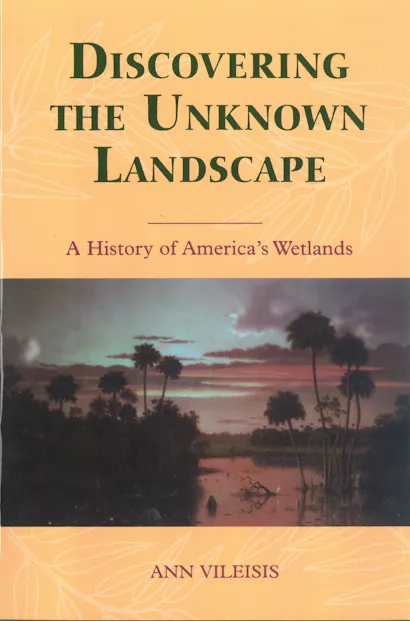
Discovering the Unknown Landscape: A History Of America's Wetlands

ebook (EPUB via app)
- Sale Price:
- $32.90/拢28.00
- Price:
-
$47.00/拢40.00 - ISBN:
- Published:
- Sep 26, 2012
- Copyright:
- 1997
- Size:
- 6 x 9 in.
30% off with code PUP30
ebook (PDF via app)
- Sale Price:
- $32.90/拢28.00
- Price:
-
$47.00/拢40.00 - ISBN:
- Published:
- Sep 26, 2012
- Copyright:
- 1997
- Size:
- 6 x 9 in.
30% off with code PUP30
-
Audio and ebooks (EPUB and PDF) purchased from this site must be accessed on the
快色直播 app. After purchasing, you will receive an email with
instructions to access your purchase.
About audio and ebooks - Request Exam Copy
The rapidly disappearing wetlands that once spread so abundantly across the American continent serve an essential and irreplaceable ecological function. Yet for centuries, Americans have viewed them with disdain. Beginning with the first European settlers, we have thought of them as sinkholes of disease and death, as landscapes that were worse than useless unless they could be drained, filled, paved or otherwise 鈥渋mproved.鈥� As neither dry land, which can be owned and controlled by individuals, nor bodies of water, which are considered a public resource, wetlands have in recent years been at the center of controversy over issues of environmental protection and property rights.
The confusion and contention that surround wetland issues today are the products of a long and convoluted history. In Discovering the Unknown Landscape, Anne Vileisis presents a fascinating look at that history, exploring how Americans have thought about and used wetlands from Colonial times through the present day. She discusses the many factors that influence patterns of land use — ideology, economics, law, perception, art — and examines the complicated interactions among those factors that have resulted in our contemporary landscape. As well as chronicling the march of destruction, she considers our seemingly contradictory tradition of appreciating wetlands: artistic and literary representations, conservation during the Progressive Era, and recent legislation aimed at slowing or stopping losses.
Discovering the Unknown Landscape is an intriguing synthesis of social and environmental history, and a valuable examination of how cultural attitudes shape the physical world that surrounds us. It provides important context to current debates, and clearly illustrates the stark contrast between centuries of beliefs and policies and recent attempts to turn those longstanding beliefs and policies around. Vileisis’s clear and engaging prose provides a new and compelling understanding of modern-day environmental conflicts.