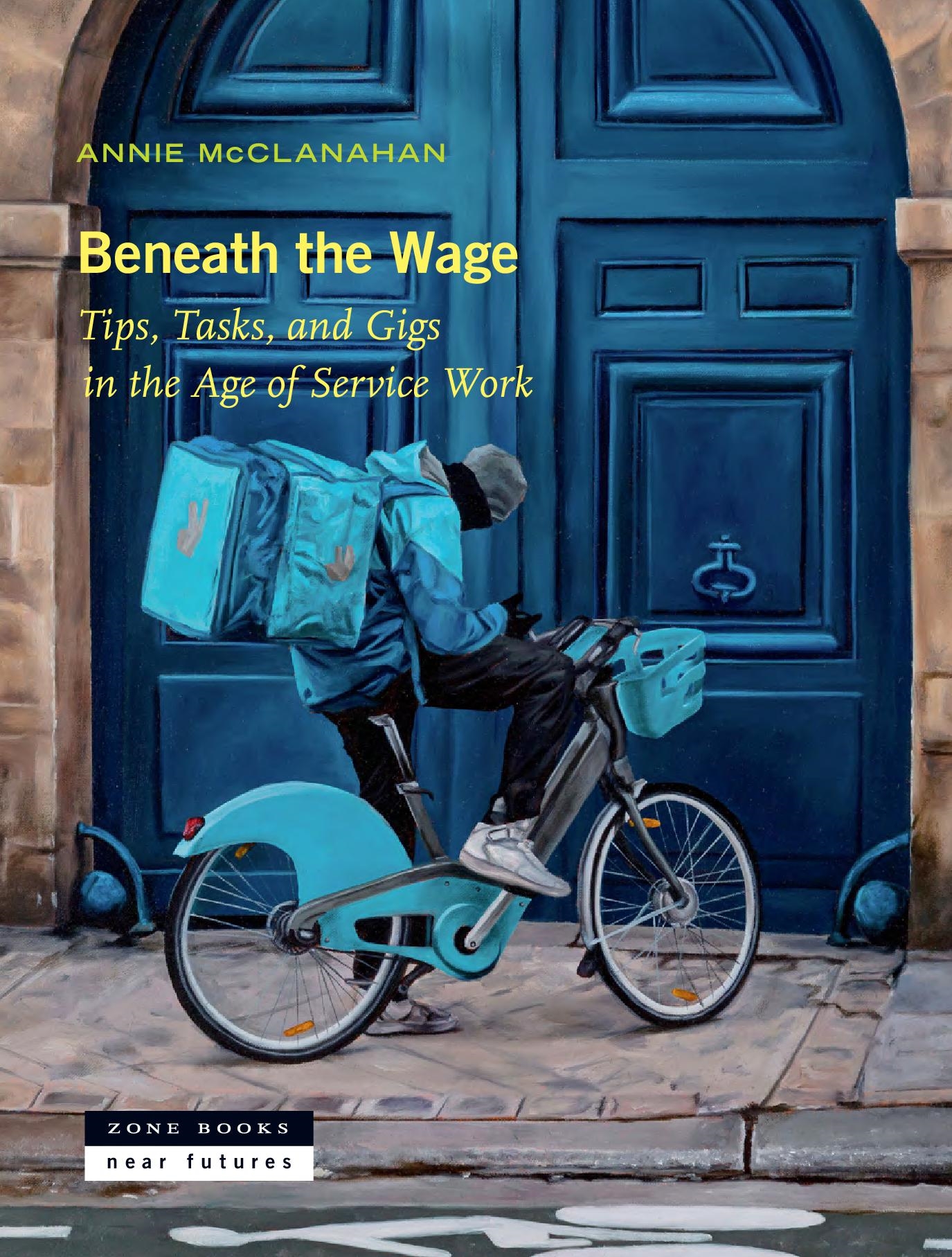
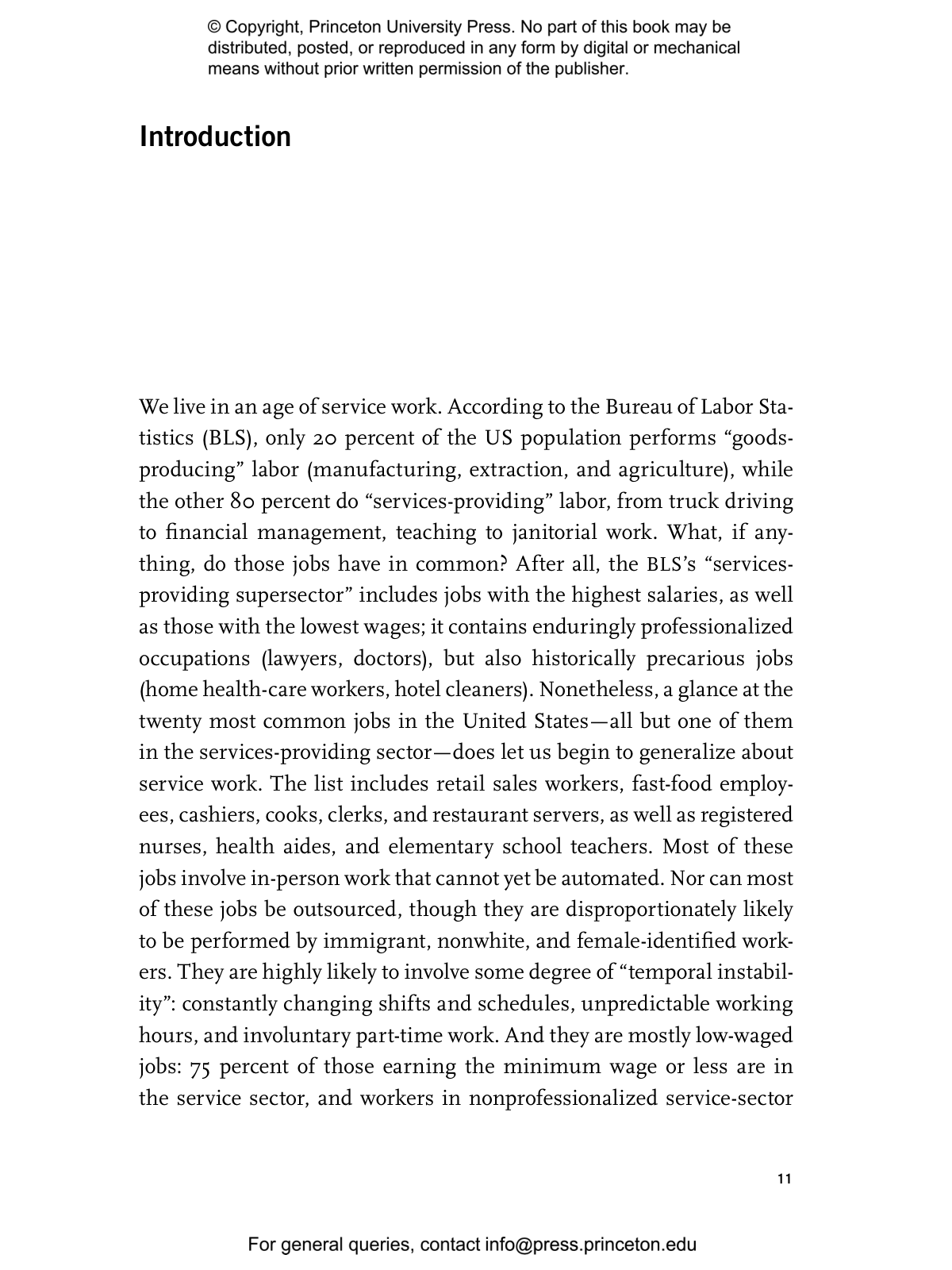
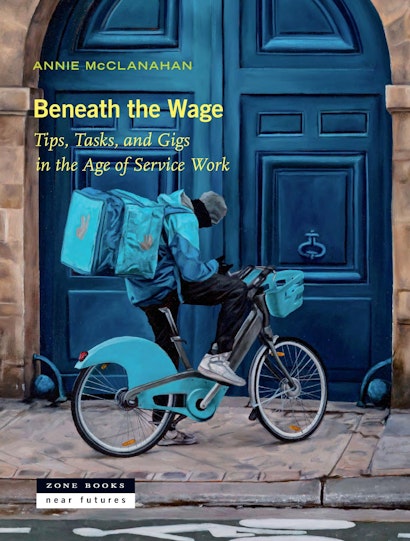
Today, 80 percent of U.S. workers do service work, from delivering takeout to mopping floors to teaching. Each time we are handed a bag of groceries or a cup of coffee, call for a cab or have our homework graded, we confront both the enormity and the intimacy of the contemporary service sector.
Do these jobs have anything in common? Who is doing this work? And what kind of labor politics does it generate?
If service work has often been treated as a footnote to modern capitalism, Beneath the Wage reveals it as crucial to understanding how exploitation functions today. Uncovering a history that runs from eighteenth-century servants to present-day gig workers, Annie McClanahan retheorizes capitalism from the perspective of the service economy, challenging conventional assumptions about how work is waged, regulated, managed, and automated.
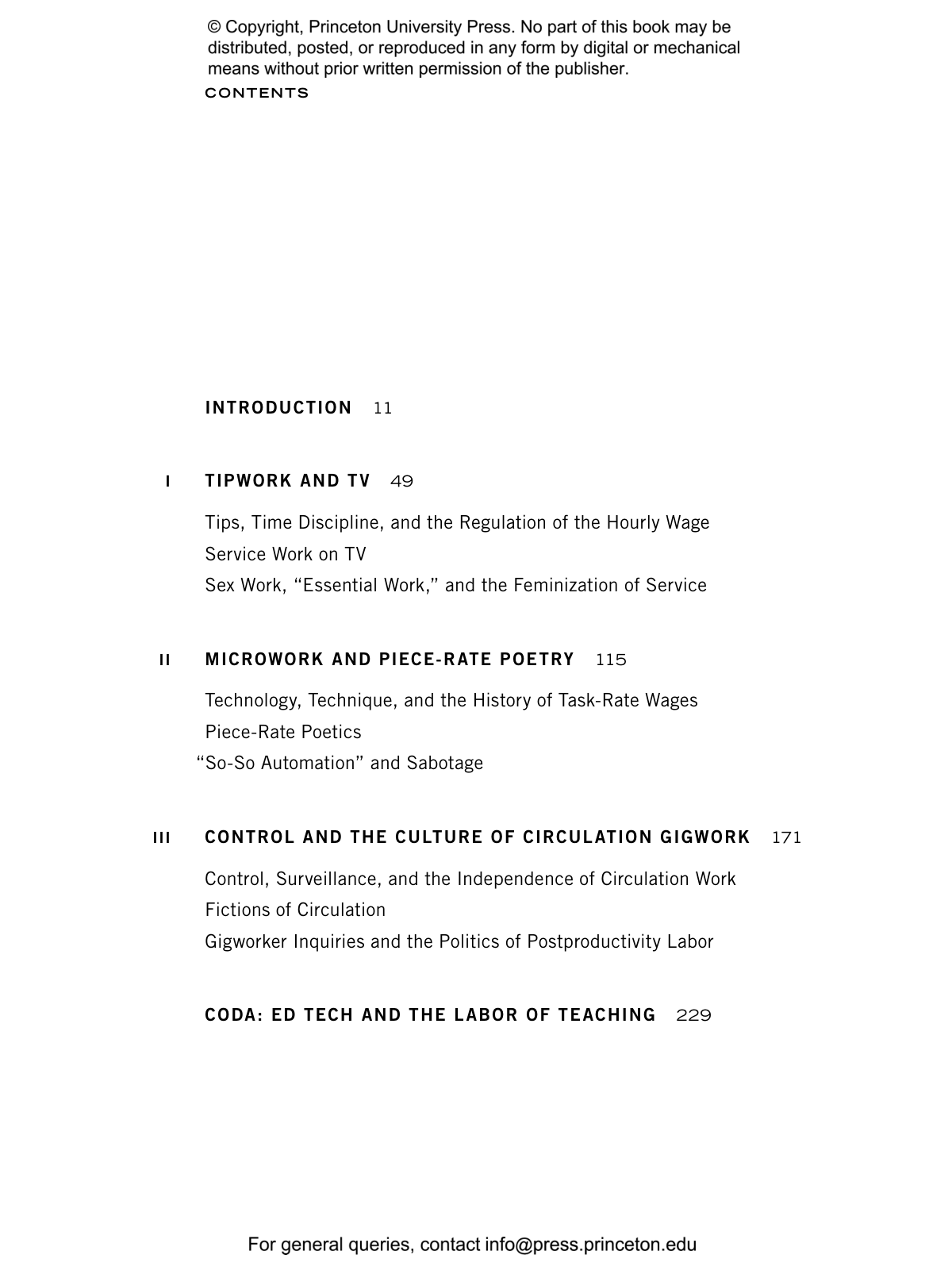
Assembling a diverse set of sources for understanding and reimagining service work鈥攆rom reality television and conceptual poetry to novels and workers鈥� own descriptions of what they do鈥擬cClanahan explores three paradigmatic types of contemporary service labor: superexploited tipwork, deskilled clerical microwork, and informalized gigwork. She shows how work done 鈥渂eneath the wage鈥� depends on racialized and gendered forms of economic domination, is often excluded from labor organizing and regulation, and yet has begun to generate a new politics of social reproduction and solidarity.
Annie McClanahan is an Associate Professor of English at University of California, Irvine. She is the author of Dead Pledges: Debt, Crisis, and Twenty-First-Century Culture.
"Intelligent and timely, [Beneath the Wage] illuminates the often-hostile economic and cultural landscape of modern capitalism. An eye-opening look at today’s service work and the forms of solidarity that have emerged to meet it."鈥�Kirkus Reviews
"The field of analysis is so full that we are ready for a history of the nearly twenty years of Marxist thought. . . . Annie McClanahan would have to figure prominently as a key voice among those taking on the dynamics of capitalism’s long crisis. . . . It is rare that a book manages to pull off both a major intervention in Marxist theory and an important piece of cultural analysis. Beneath the Wage does just this."鈥擲arah Brouillette, Spectre
"McClanahan’s inquiry and cogent analysis make for an extraordinary read. . . . We can’t unfeel the real degradation of the conditions of our labor. But we can—and this is the part of the book McClanahan so beautifully offers us—organize against it. To do so, we need to recognize our labor as work and ourselves as workers, living together beneath the wage."鈥擣lora Arnold and Lauren Hough, Protean Magazine
"Beneath the Wage is an invaluable contribution to our understanding of the evolving forms of labor exploitation and workers’ resistance. Annie McClanahan doesn’t just offer a vital historical account of how we came to pay workers in tips or by the task. Her book also illuminates the political and cultural landscape of contemporary service worker activism.”–Saru Jayaraman, President, One Fair Wage
“An outstanding contribution to humanities scholarship as well as to the social sciences, Beneath the Wage’s unusual focus on three aspects of service labor at once—how it is paid, how it is controlled, and how it can generate new solidarities—makes its economic analyses far more systematic than others, giving us nothing less than a new theory of wages and of the tie between wage and class forms. At the same time, there are few books that do as rigorous a job of unpacking economic developments without reducing culture to its merely passive ‘reflection.’ From its analyses of reality television to the writing of contemporary gigworkers at Uber and Amazon, it is no exaggeration to say that Beneath the Wage is the first book of its kind.” –Sianne Ngai, George M. Pullman Distinguished Service Professor of English, University of Chicago
“Beneath the Wage is a brilliant exploration of what work and resistance have become in a digitally transformed service economy. Historically situating both capital’s algorithmically driven labor processes and the boundary-pushing responses of workers, McClanahan reminds us (in beautifully crafted prose, no less) that although service work (driving, clicking, sexing, and teaching) has been restructured, the exploitative formations of and resistance to wage labor remain." -Veena Dubal, Professor of Law, University of California/Irvine
This publication has been produced to meet accepted Accessibility standards and contains various accessibility features including concise image descriptions, a table of contents, a page list to navigate to pages corresponding to the print source version, and elements such as headings for structured navigation. Appearance of the text and page layout can be modified according to the capabilities of the reading system.
Accessibility Features
-
WCAG v2.2
-
WCAG level AA
-
Table of contents navigation
-
Single logical reading order
-
Short alternative textual descriptions
-
Print-equivalent page numbering
-
Landmark navigation
-
Index navigation
-
Epub Accessibility Specification 1.1
-
ARIA roles provided
-
All non-decorative content supports reading without sight
-
No known hazards or warnings