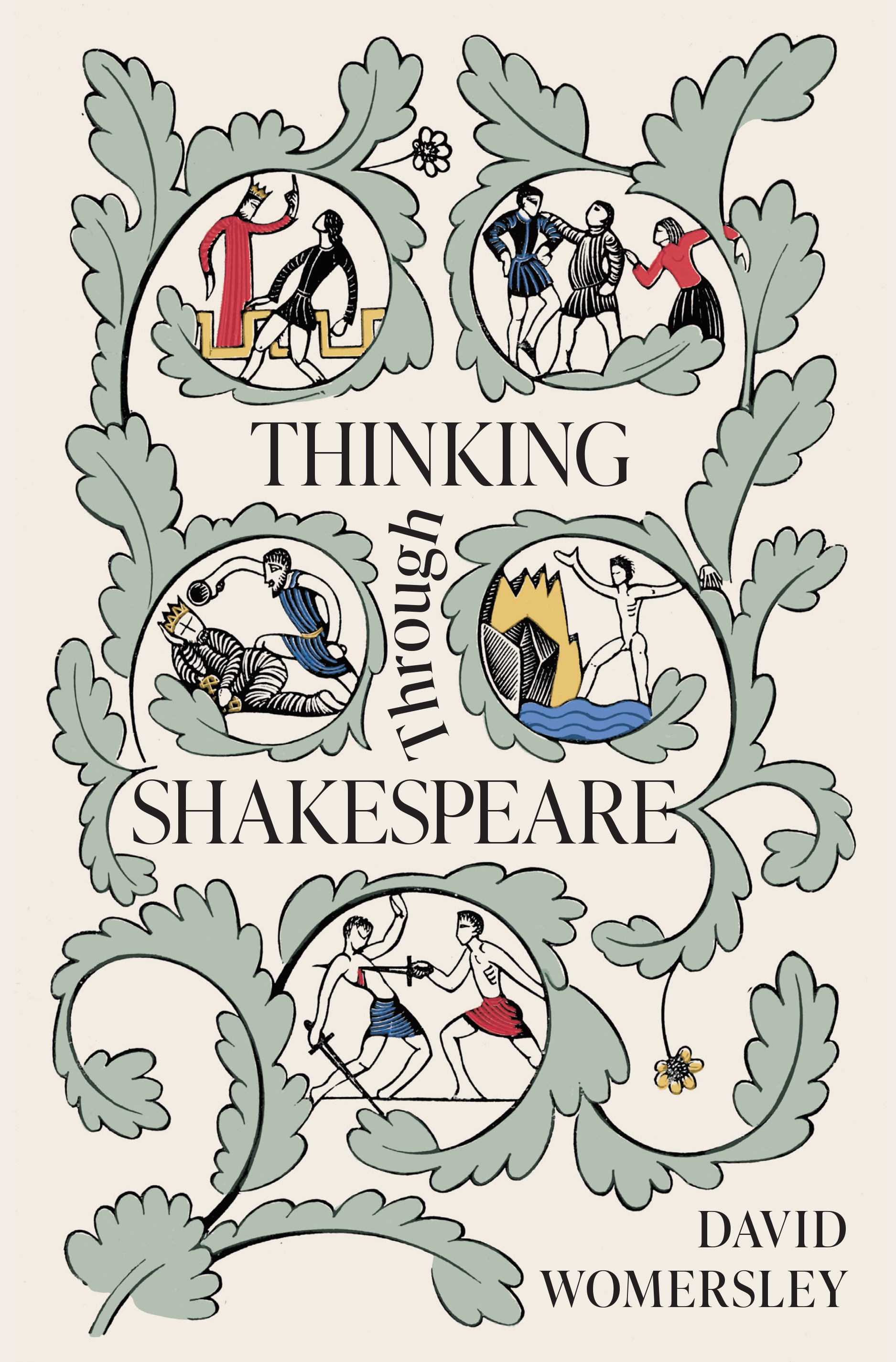
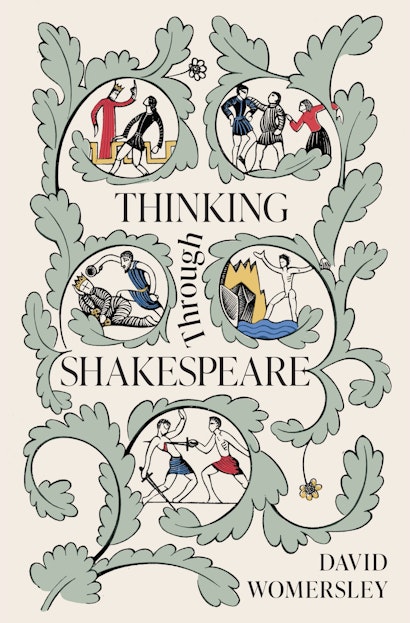
In the eighteenth century, Samuel Johnson famously argued that Shakespeare is enduringly popular because he 鈥渋s above all writers, at least above all modern writers, the poet of nature; the poet that holds up to his readers a faithful mirror of manners and of life.鈥� Johnson鈥檚 view largely prevailed until the late twentieth century, when it was challenged by a growing scepticism about the existence of a general human nature. In Thinking Through Shakespeare, eminent literary critic David Womersley pushes back against this change by exploring how Shakespeare鈥檚 plays think through鈥攁nd invite us to think through鈥攄eep human questions of lasting importance.
Thinking Through Shakespeare explores four perennial human problems: personal identity, the distinction between civilization and barbarism, the relation between political power and religious authority and the tension between means and ends. It examines the history of these problems, from antiquity to today, and traces how Shakespeare engages with them in the great tragedies鈥�Othello, Hamlet, Macbeth and King Lear鈥攂ut also in his other plays. Without arguing that human nature is universal or unchanging, or that Shakespeare has some special access to timeless wisdom, the book makes the case that his drama is powerful because it serves as a forensic tool, probing rival perspectives on questions that have preoccupied many people in many societies over many centuries.
By revealing in new ways how Shakespeare鈥檚 plays are animated and driven by central human problems, and why he should again be viewed as the great poet of human nature, Thinking Through Shakespeare opens up a richer understanding and appreciation of his work.
"A measured, historically attentive argument for why Shakespeare’s work endures—as a searching inquiry into problems that remain unsettled."鈥�Indulge Magazine
"An impressive examination of the central human questions Shakespeare explored in his plays. . . . Womersley’s elegant prose and thoroughly detailed critical analyses lead to thought-provoking interpretations. It’s a smart testament to the staying power of Shakespeare."鈥�Publishers Weekly
"In his rich and thorough exploration of not only Shakespeare’s thoughts but also the course of Western thinking, David Womersley demonstrates that ideas do matter, and that Shakespeare is bigger than the harsh but ultimately timid emotions of our age."鈥擩esse Russell, University Bookman
"A significant book. Womersley reopens the question of Shakespeare’s relation to human nature with clarity and authority, restoring to Shakespeare criticism a sense of purpose too often dissipated by narrower concerns."鈥擱alph Goldswain, No Sweat Shakespeare
"Impressive. . . . Womersley’s impeccably sourced and well-structured book deserves careful and slow reading."鈥擯aul Edmondson, Church Times
"Altogether engaging. . . . Superb."鈥�David Marx Book Reviews
"[An] important new book."鈥擡wan Fernie, Dublin Review of 快色直播
“A brilliant, timely, and richly learned book. Womersley zooms out with exhilarating panache from the rabbit holes of scholarly specialism; his Shakespeare is an orchestrator of grand debate, a virtuoso of antithesis and contradiction, articulating many competing ideas, enduringly captured by none.”—Thomas Keymer, University of Toronto
“In this erudite, lively and elegantly written book, David Womersley invites us to reflect deeply on Shakespeare’s thoughts about identity, order, chaos, ethics and politics. As we struggle daily to make sense of a world where barbarous behaviour claims the mantle of acceptability, Thinking Through Shakespeare offers compelling proof of Ben Jonson’s famous observation that Shakespeare ‘was not of an age, but for all time!’"—David Dean, author of Performing Public History
“David Womersley has written a profoundly insightful book on the universal relevance of Shakespeare—a playwright and poet whose ability to illuminate the essentials of the human condition was second to none. Much more than a book about Shakespeare, this is a book about human nature and the Western tradition—almost as sweeping in its scope as the plays of the omniscient Bard himself.”—Niall Ferguson, author of Doom: The Politics of Catastrophe
“A powerful defence of the ‘universal Shakespeare’ with an intellectual breadth to match. Beholden to no one discipline, Womersley is a master of many and has summoned an extraordinary team—ranging from Plato to Coetzee, Rousseau to Rawls, Machiavelli to Mann—to help him think through what Shakespeare thinks about that real yet elusive thing: human nature. The result is a deeply intelligent meditation on our constitutive contradictions and enduring strangenesses—wherever, whenever, whoever we are.”—David Dwan, author of The Good Life and Other Fictions
“Samuel Johnson said of Shakespeare that he is ‘above all writers . . . the poet of nature; the poet that holds up to his readers a faithful mirror of manners and of life.’ For two hundred years thereafter that idea of universal genius predominated, among critics as among audiences, only to go missing over the past few decades amid the rise of modern literary theory. In this remarkable book, David Womersley recovers and revitalises that great Johnsonian tradition. Through a dazzling series of new readings, drawing on sources from ancient Rome to modern philosophy, he breathes life again into our understanding not only of Shakespeare’s plays, but of the often-conflicting dreams and hopes and passions and ambitions of the human nature that they so brilliantly illuminate.”—Jesse Norman, author of Adam Smith: What He Thought, and Why It Matters