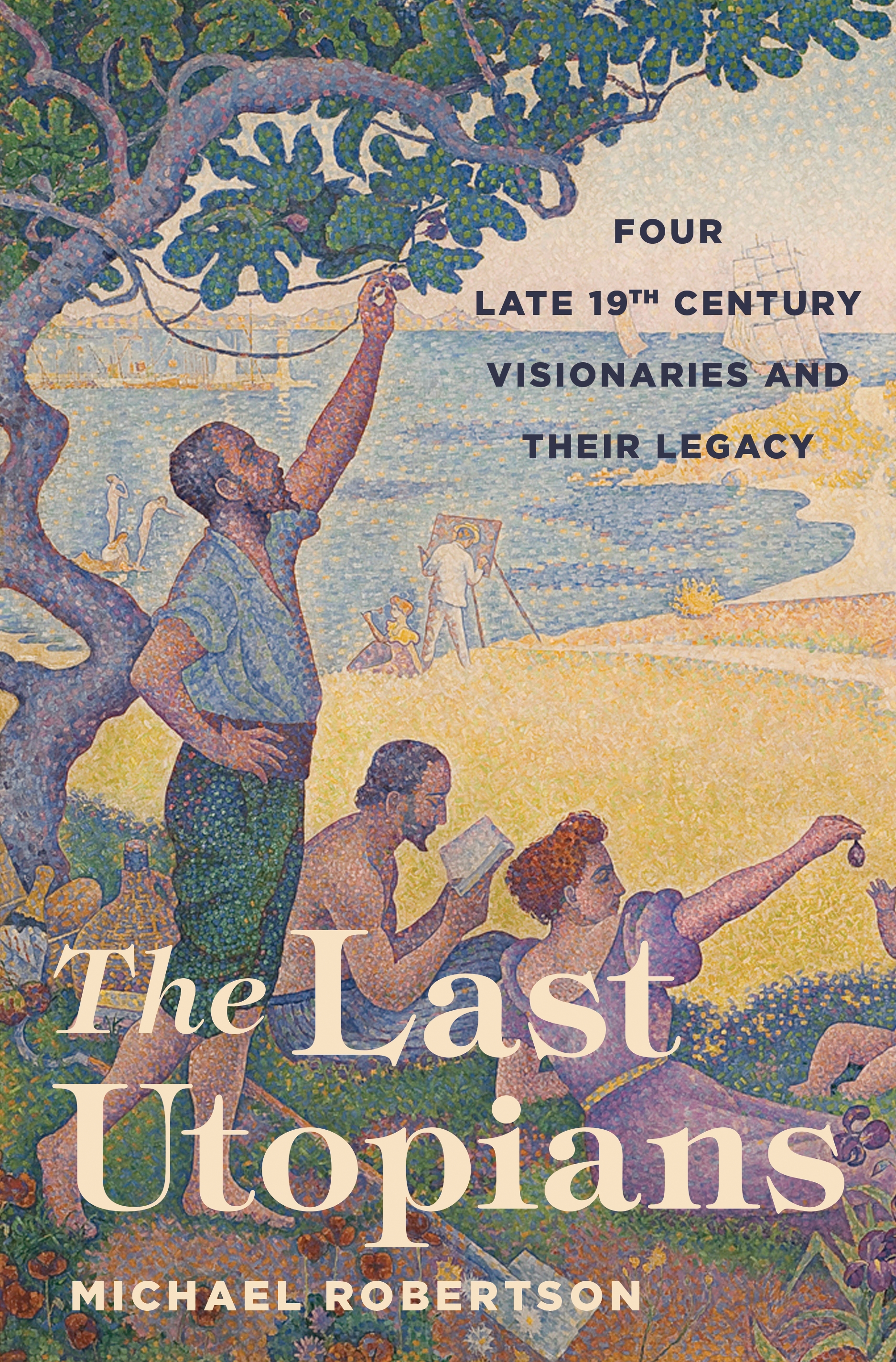
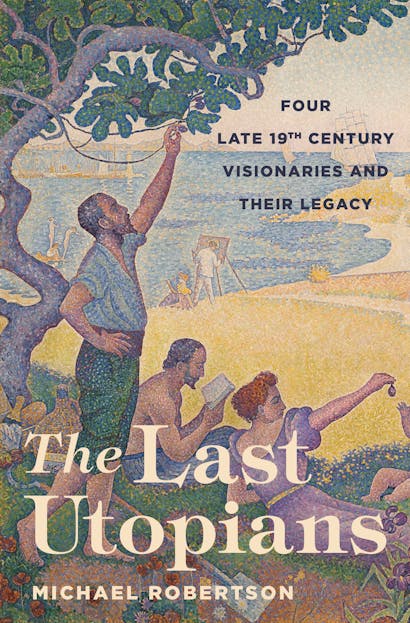
For readers reared on the dystopian visions of Nineteen Eighty-Four and The Handmaid’s Tale, the idea of a perfect society may sound more sinister than enticing. In this lively literary history of a time before 鈥淥rwellian鈥� entered the cultural lexicon, Michael Robertson reintroduces us to a vital strain of utopianism that seized the imaginations of late nineteenth-century American and British writers.
The Last Utopians delves into the biographies of four key figures—Edward Bellamy, William Morris, Edward Carpenter, and Charlotte Perkins Gilman鈥攚ho lived during an extraordinary period of literary and social experimentation. The publication of Bellamy’s Looking Backward in 1888 opened the floodgates of an unprecedented wave of utopian writing. Morris, the Arts and Crafts pioneer, was a committed socialist whose News from Nowhere envisions a workers鈥� Arcadia. Carpenter boldly argued that homosexuals constitute a utopian vanguard. Gilman, a women’s rights activist and the author of 鈥淭he Yellow Wallpaper,鈥� wrote numerous utopian fictions, including Herland, a visionary tale of an all-female society.
These writers, Robertson shows, shared a belief in radical equality, imagining an end to class and gender hierarchies and envisioning new forms of familial and romantic relationships. They held liberal religious beliefs about a universal spirit uniting humanity. They believed in social transformation through nonviolent means and were committed to living a simple life rooted in a restored natural world. And their legacy remains with us today, as Robertson describes in entertaining firsthand accounts of contemporary utopianism, ranging from Occupy Wall Street to a Radical Faerie retreat.
Awards and Recognition
- One of Choice Reviews' Outstanding Academic Titles of 2018
"[I]nstructive and touching."鈥擜dam Gopnik, New Yorker
"An extremely reliable as well as accessible introduction to the ferment of utopian ideas and practical experiments that . . . made the politics of the late nineteenth century fizz with an almost unprecedented sense of political possibility."鈥擬atthew Beaumont, Times Literary Supplement
"In this timely analysis . . . Robertson leaves readers with nourishing food for thought from another era."鈥�Publishers Weekly
"[I]n their time, all four were culture heroes: best-selling authors, popular lecturers, public figures, and objects of veneration and pilgrimage. Michael Robertson, an English professor at the College of New Jersey, has undertaken to tell their story . . . with sympathy and insight."鈥擥eorge Scialabba, Arts Fuse
"The Last Utopians is a message in a bottle from an era that looked to the future with optimism."鈥擱obert Greer, History Today
"One of the most engaging features of The Last Utopians is the author鈥檚 determination to personally explore and report on the projects of the 'contemporary partial utopians' who understand that 'utopianism is essential to society, that without it, we鈥檙e reduced to a resigned acceptance of a morally intolerable status quo.'"鈥�Town Topics
"[Michael Robertson] has a commendably clear and enjoyable literary style. It is always welcome to read a book from an academic press that is written to be understood rather than to impress."鈥擱ichard Howells, Times Higher Education
"Robertson sees the utopians of today as inheritors of the 'legacy' of his four鈥攁s a way, perhaps, of keeping fresh their relevance to our own times, which might otherwise appear to be obscure."鈥擩ames Bowman, Weekly Standard
"A fascinating book."鈥擩ohn Rimmer, Magonia Review of 快色直播
"The Last Utopians has arrived at the right time."鈥擲teve Toase, Fortean Times
"There is no doubt that Robertson is a talented writer."鈥擯eter J. Maurits, Fantastika
"A brilliant and eloquent guide through the life, times, and imaginations of some of the most compelling writers of the turn of the twentieth century, The Last Utopians is not an epitaph but, rather, a reminder of how vital and humane the utopian imagination once was鈥攁nd might be again."鈥擠aniel T. Rodgers, author of Age of Fracture
"Today, more than ever, we need utopians鈥攄reamers, fantasists, arcadians, romantics, visionaries, pie-in-the-skyers鈥攖hose audacious enough to imagine such exotic things as economic democracy; gender, sexual, and racial equality; the accountability of the powerful; people over profit; and the channeling of human anger and violence into constructive, collective movements for a good society. So Robertson鈥檚 book about four nineteenth-century utopians is of great interest right now. But let鈥檚 hope his visionaries are not the last."鈥擩onathan Ned Katz, author of The Invention of Heterosexuality
"Published at a moment when dystopian scenarios dominate the popular imagination, Robertson鈥檚 engrossing study illuminates the promises and pitfalls of utopian thinking for contemporary progressive thought and practices. This is a timely book with much to teach us about the perilous passage from social critique to realizable change."鈥擟ynthia J. Davis, author of Charlotte Perkins Gilman: A Biography
"The Last Utopians transports the reader to that no place/good place where a loving transcendence permeates being and existence. Michael Robertson accomplishes an impressive balance of affirmation and critique in this fascinating study of utopian historical visions and contemporary lived experience. A great read for hopers and gripers alike."鈥擲heila Rowbotham, author of Edward Carpenter: A Life of Liberty and Love
"Beautifully clear and coherent, and enlivened by touches of humor, The Last Utopians illuminates the unique contributions of Bellamy, Morris, Carpenter, and Gilman and makes a persuasive case for the continuing value of their work. The book should appeal to a wide range of readers who are interested in history, literature, and politics, as well as the development of feminism and gay liberation."鈥擭aomi Jacobs, University of Maine
"This is an excellent book. Its focus on 鈥榣ived utopianism' and concern with contemporary movements such as ecological intentional communities is especially relevant in a time of widespread political and economic discontent."鈥擣lorence Boos, University of Iowa