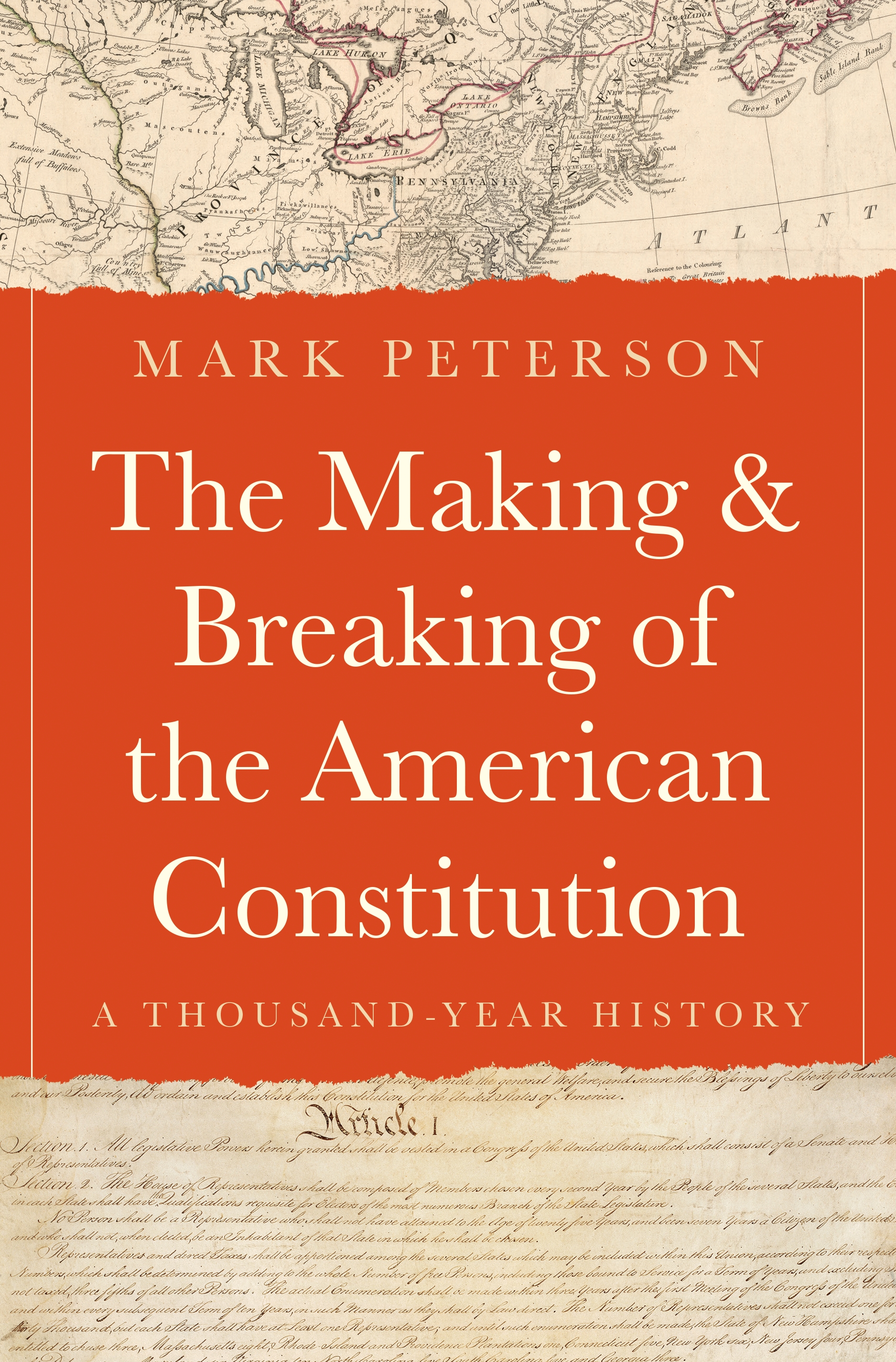
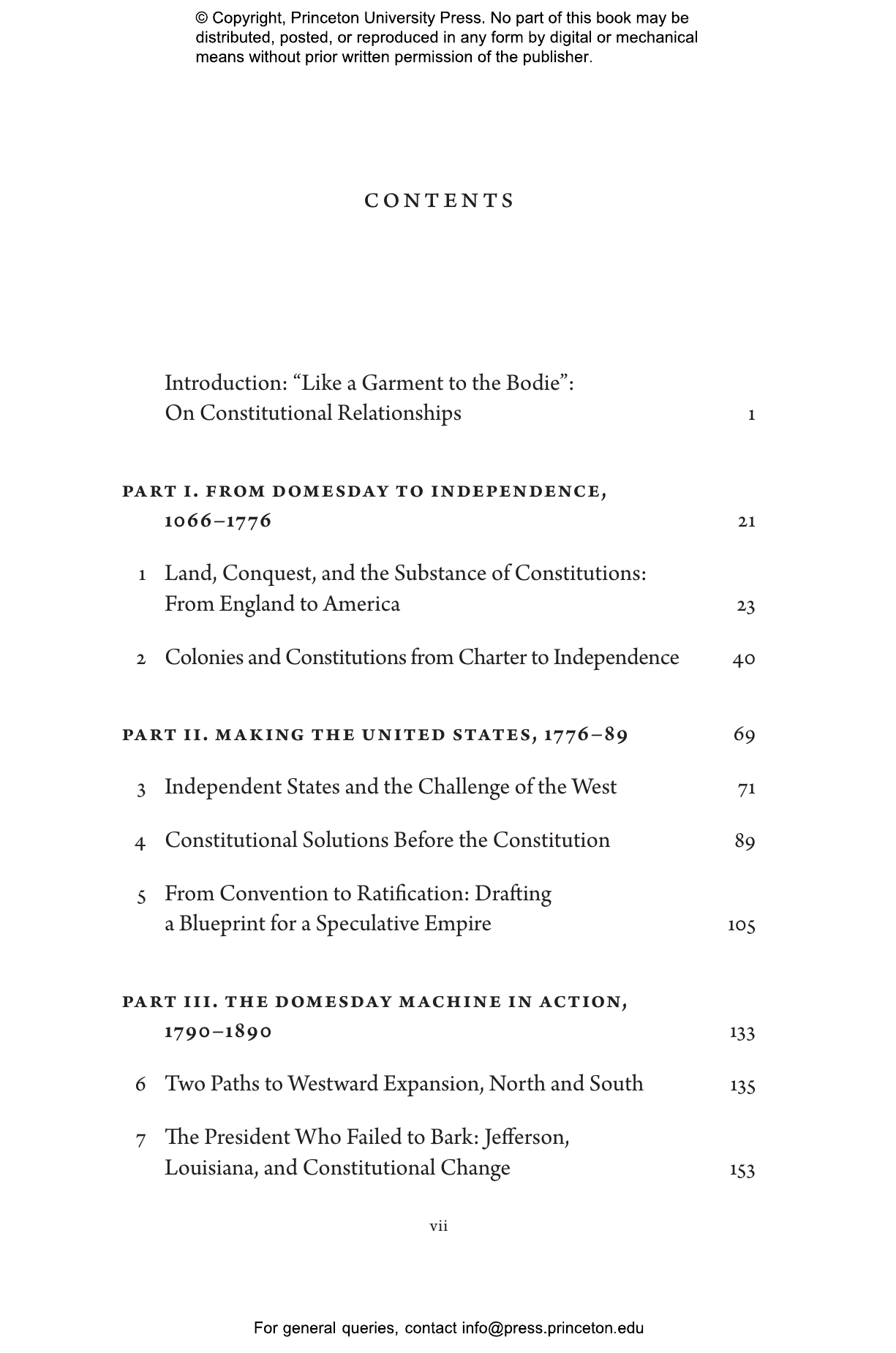
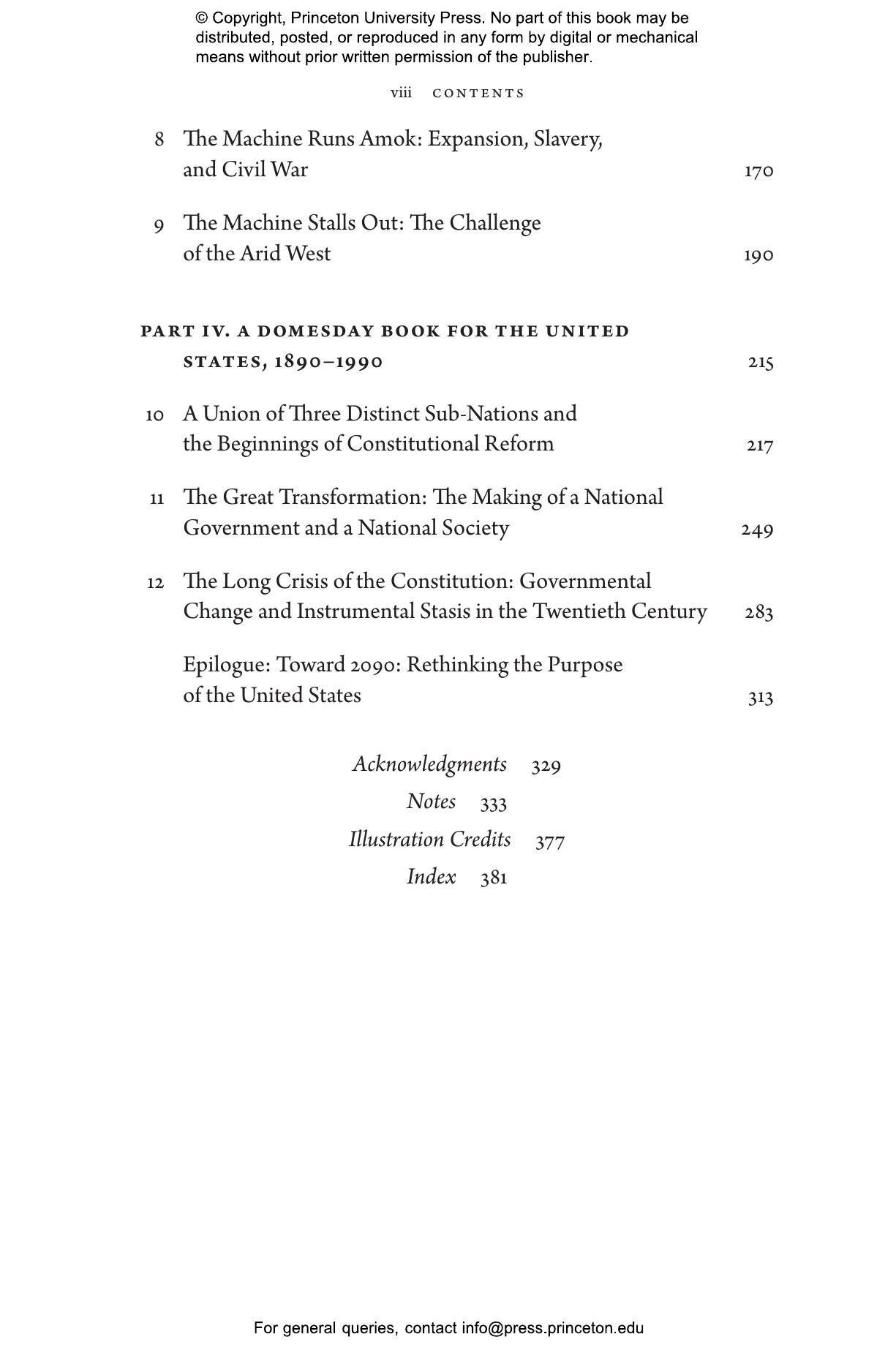
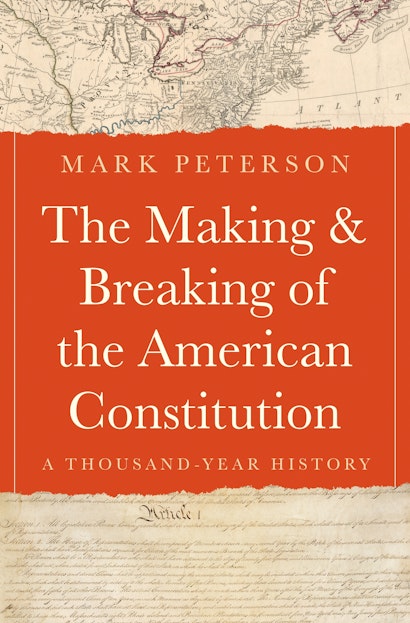
The American Revolution occurred at a time when Britain鈥檚 constitutional order failed to adapt to the extraordinary growth of its colonies. The framers designed an American constitution to succeed where Britain鈥檚 had faltered, planning for continuous population and territorial expansion that would eventually cross the continent. Yet by the end of the nineteenth century, it was already ill-suited for an increasingly urban, industrialized society, and the transformations of the twentieth century have pushed it to a breaking point. This book charts the history and aims of the American constitution from its origins in an agrarian past to the grave crisis we face today.
Mark Peterson traces the American constitutional tradition to the control of land in medieval England, showing how the founders incorporated the aspirations of Magna Carta with the administrative principles of the Domesday Book, a meticulous survey and valuation of landed property commissioned by William the Conqueror. This framework encouraged the growth of democratic self-government in a young nation. It also institutionalized the colonization of territory and the expulsion of Indigenous peoples, establishing a legal blueprint for transforming tribal lands into revenue-yielding real estate for settlers. Peterson鈥檚 riveting narrative paints an arresting picture of a dynamic republic whose frame of government has changed enormously to meet the challenges of the modern age but whose written constitution has changed very little.
Marking the 250th anniversary of American independence, The Making and Breaking of the American Constitution reveals how this widening disconnect threatens the very existence of our democracy. It calls for a constitution that sustains the ideals developed over the past thousand years while meeting the challenges of the future.
Mark Peterson is the Edmund S. Morgan Professor of History at Yale University. He is the author of The City-State of Boston: The Rise and Fall of an Atlantic Power, 1630–1865 (快色直播) and The Price of Redemption: The Spiritual Economy of Puritan New England.
"The ‘American revolution was a constitutional crisis within the... British empire,’ and the exact nature of that crisis has recurred throughout U.S. history, according to this eye-opening study. . . . [It is] a penetrating look at what ails American democracy."鈥�Publishers Weekly
"Stunning and timely. . . . Peterson is adept at complicating familiar stories from early American history."鈥擟laire Rydell Arcenas, New York Times
"In The Making & Breaking of the American Constitution, Peterson provides a detailed, immensely informative and illuminating analysis of the antecedents of the world’s longest surviving written government charter and the consequential ways in which it has been interpreted, misinterpreted, amended, ignored and marginalized."鈥擥lenn C. Altschuler, Pittsburgh Post-Gazette
“A bold reinterpretation of America’s founding story. The Making and Breaking of the American Constitution is essential reading for anyone seeking to understand today’s constitutional crisis. Peterson shows that westward expansion was not a footnote in our national narrative, but the driving purpose of its constitutional order—revealing how conquest forged our laws, our myths, and the crisis we now face.”—Maggie Blackhawk, coeditor of Cohen’s Handbook of Federal Indian Law
“In this timely, brilliant, panoramic survey of American political history, Mark Peterson provides an indispensable guide to understanding the current political crisis. Nimbly covering a thousand years of history and drawing from a wide assortment of lively metaphors and local perspectives, Peterson reveals how an American ‘Domesday Machine’ created the nation’s constitutional order, and why that order is now in existential crisis. Insightful and urgent, The Making and Breaking of the American Constitution is a compellingly necessary book.”—Andrew Preston, author of Total Defense: The New Deal and the Invention of National Security
“In this ambitious and highly successful book, Mark Peterson’s sweeping, masterful view explains why our constitution doesn’t work for the country we have become. His novel account focuses on changes in the land and the growth of the people, changes the original constitution was never meant to navigate. He weaves a compelling, highly readable account of constitutional development and then progressive constitutional failure in the face of profound demographic changes and national needs.”—Juan F. Perea, coauthor of Race and Races: Cases and Resources for a Diverse America