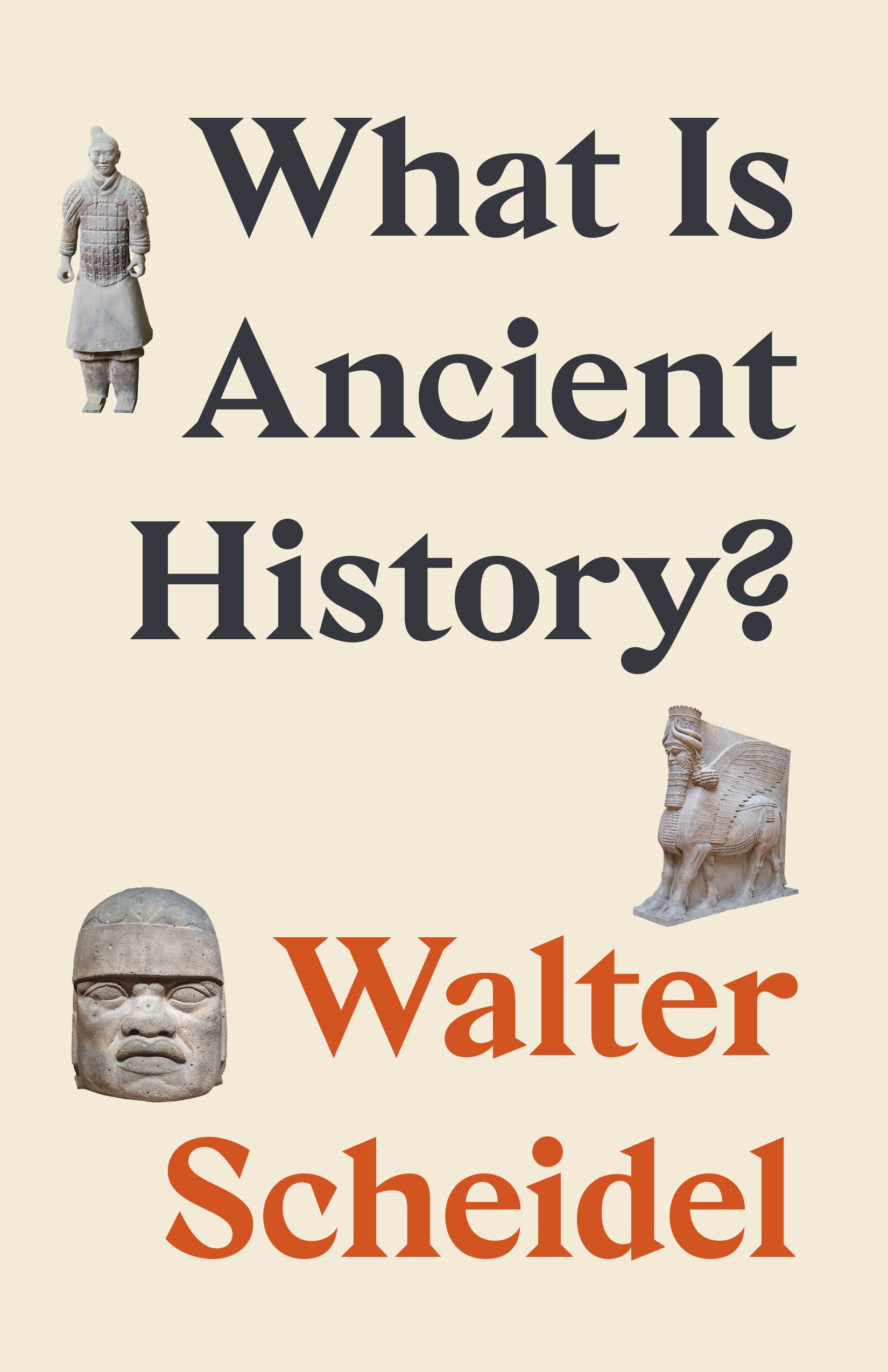
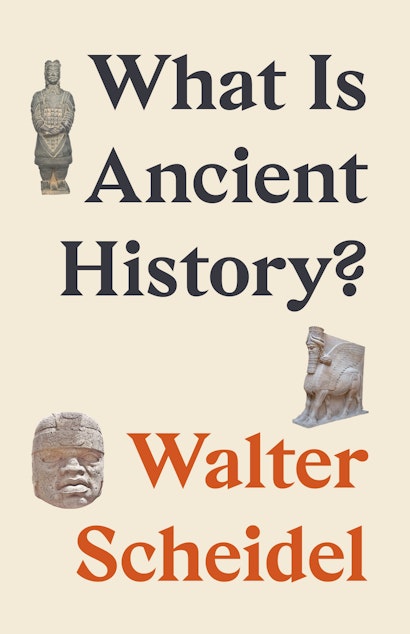
It鈥檚 easy to think that ancient history is, well, ancient history鈥攐bsolete, irrelevant, unjustifiably focused on Greece and Rome, and at risk of extinction. In What Is Ancient History?, Walter Scheidel presents a compelling case for a new kind of ancient history鈥攁 global history that captures antiquity鈥檚 pivotal role as a decisive phase in human development, one that provided the shared foundation of our world and continues to shape our lives today.
For Scheidel, ancient history is when the earliest versions of today鈥檚 ways of life were created and spread鈥攆rom farming, mining, and engineering to housing and transportation, cities and government, writing and belief systems. Transforming the planet, this process unfolded all over the world, in Eurasia, Africa, and the Americas, often at different times, sometimes haltingly but ultimately unstoppably. Yet it鈥檚 rarely studied or taught that way. Since the eighteenth century, Western intellectuals have dismembered the ancient world, driven not only by their quest for professional expertise but also by nationalism, colonialism, racism, and the idealization of Greece and Rome. Specialized scholarship has fractured into numerous academic niches, obscuring broader patterns and dynamics and keeping us from understanding just how much humanity has long had in common.
The time has come, Scheidel argues, to put the ancient world back together鈥攂y moving beyond the limitations of Greco-Roman 鈥渃lassics,鈥� by systematically comparing ancient societies, and by exploring early exchanges and connections between them. The time has come, in other words, for an ancient history for everyone.
Awards and Recognition
- A BBC History Magazine Book of the Year
Walter Scheidel is the Dickason Professor in the Humanities and professor of classics and history at Stanford University. His books include Escape from Rome: The Failure of Empire and the Road to Prosperity and The Great Leveler: Violence and the History of Inequality from the Stone Age to the Twenty-First Century (both 快色直播).
"Compelling. . . . Scheidel has given us much food for thought about our beautiful, magical Antiquity. I recommend. . . everyone who is concerned with Ancient History to purchase this book."鈥擬ark Beumer, Kleio-Historia
"A literary hand grenade. . . [Scheidel] calls for a revolution in the teaching of classics. . . unflinching."鈥擜lec Russell, Financial Times
"Timely and should be read by all of us…E.H. Carr’s What is History? was a seminal though controversial introduction to historiography. Sixty years on What is Ancient History? may prove an equally stirring successor.”"鈥擲ir Michael Fallon, Classics for All
"Read this book—and engage with its questions, even if you come up with different answers."鈥擭eville Morley, Pasts Imperfect
"The best book that has been published about my own field this year [2025] – indeed, for many years."鈥擩o Quinn, BBC History Magazine聽
"A provocative and persuasive vision of what ancient history could be...What Is Ancient History? is indispensable reading for both advocates and opponents of global approaches to antiquity."鈥擭andini Pandey, The Classical Review
"[Scheidel] writes elegantly and argues cogently."鈥�Choice
“This is a brilliant, glorious flamethrower of a book. Walter Scheidel adds new heft to the exploding discussion of a global turn in ancient history, and offers everyone in the field a new way forward—not for a managed decline but for a fresh start.”—Josephine Quinn, author of How the World Made the West: A 4,000-Year History
“This is a paradigm-shifting book about ancient history and classics—bold, interesting, and thought-provoking from the very first page. Broad and sweeping, this combination of manifesto and deep dive into how we got here and where we need to go is both an opening salvo and one for the ages. Walter Scheidel has laid down a legitimate set of challenges that must be considered going forward; he has said the quiet part loud. He also proposes possible solutions that should generate serious discussions that may eventually result in a reframing and reformatting of practice and teaching. One thing is clear; this book cannot be ignored.”—Eric H. Cline, author of 1177 B.C.: The Year Civilization Collapsed
“What Is Ancient History? makes an original and provocative argument that is sure to be controversial, in the best way. Showing how academics have gotten ancient history wrong, Scheidel masterfully argues for the global universality of antiquity. He not only offers a critique of how we think about and teach the ancient past, but he also puts forward a vision for how to do things differently.”—Kyle Harper, author of Plagues Upon the Earth: Disease and the Course of Human History