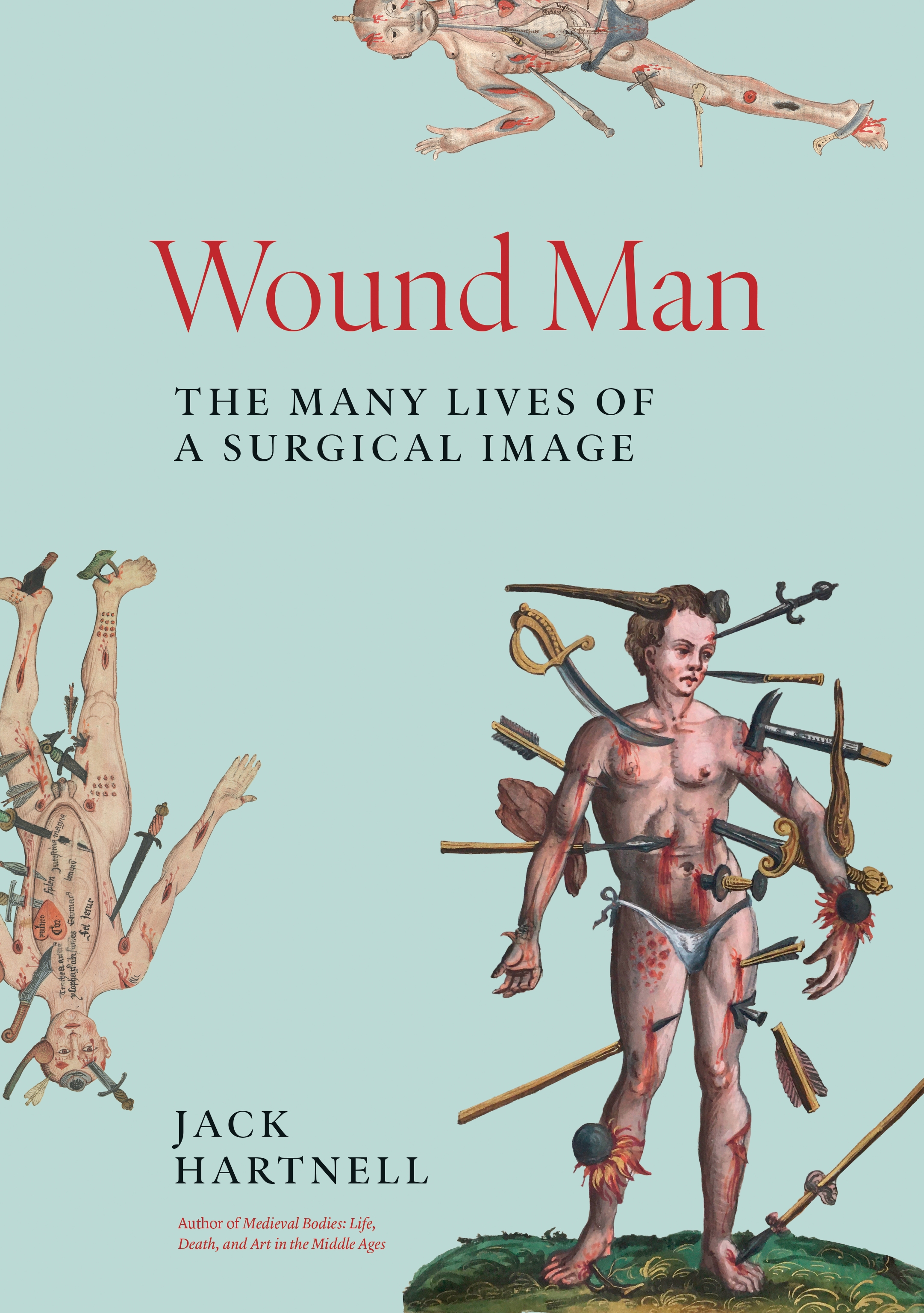
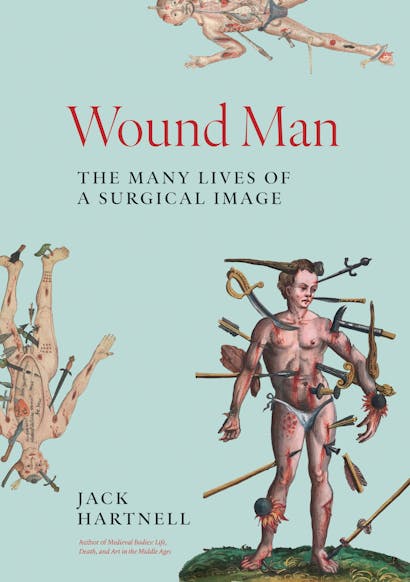
The Wound Man鈥攁 medical diagram depicting a figure fantastically pierced by weapons and ravaged by injuries and diseases鈥攚as reproduced widely across the medieval and early modern globe. In this panoramic book, Jack Hartnell charts the emergence and endurance of this striking image, used as a visual guide to the treatment of many ailments. Taking readers on a remarkable journey from medieval Europe to eighteenth-century Japan, Hartnell explains the historic popularity of this gruesome image and why the Wound Man continues to intrigue us today.
Drawing on a wealth of original research, Hartnell traces the many lives of the Wound Man, from its origins in late medieval Bohemia to its vivid reincarnations in hundreds of manuscripts and printed books over more than three hundred years. Transporting readers beyond the specifics of bodily injury, Hartnell demonstrates how the Wound Man鈥檚 body was at once an encyclopedic repository of surgical knowledge, a fantastic literary and religious muse, a catalyst for shifting media landscapes, and a cross-cultural artistic feat that reached diverse audiences around the world. The Wound Man, we discover, held profound importance not only for healers and patients but also for scribes, students, nuns, monks, printmakers, and poets.
Marvelously illustrated, Wound Man sheds light on the entwined histories of art and medicine, showing how premodern medical diagrams represent a unique site of contact between sickness, cure, painting, and print.
Awards and Recognition
- Winner of the Otto Gr眉ndler Prize, International Congress of Medieval Studies
- Shortlisted for the SRS Book Prize, Society for Renaissance Studies
"A visual treat. . . .[Wound Man] offers a stunning selection of visual sources and thoughtful commentary. Anyone interested in medieval history, figurative art, the human body or medicine will wish to return to it again and again."鈥擟hiara Thumiger, The Spectator
"Hartnell’s revelatory research and plethora of macabre illustrations make the book an unexpected treasure: It shines as both a morbid medical history and a curious record of the early years of information graphics. [Wound Man is] an uncanny history of a classical oddity."鈥�Kirkus Reviews
"Wound Man is a brilliantly researched, engagingly written, and beautifully illustrated book."鈥擜nne Helen Petersen, Culture Study
"Hartnell’s book is the most comprehensive study of the Wound Man to date. In five assiduously researched, generously illustrated chapters, he doggedly tracks the evolution of the enigmatic image over three centuries, from the first known example in a Bohemian manuscript from 1399 to variants produced in 18th-century Japan. Gathering examples from roughly 80 libraries, archives, and private collections in Europe, North America, and Asia, many of them new discoveries, Hartnell convincingly demonstrates the versatility of the Wound Man. . . . [The] sheer scope of his scholarship is astounding."鈥擹o毛 Lescaze, Hyperallergic
"Magnificent and highly readable."鈥擬ark Beumer, Kleio Historia
"Generously illustrated and fastidious in its research, Wound Man is scholarly and intelligent, and there is something beautiful to look at on almost every page. Hartnell has turned what might have been a narrow iconographic study into something far richer: a meditation on text and image, aesthetics and instruction, suffering and healing."鈥擳homas Morris, Literary Review
"[A] remarkable, comprehensive study. When we trace the visual history of Wound Man with the same rigour applied to textual sources, something extraordinary emerges about the purposes of illustration, and how profoundly its meanings can shift across centuries. . . . Wound Man offers endlessly fascinating insights into the interplay between visual and textual sources, authors and readers, as well as the repurposing of ideas for new ends."鈥擣ay Bound Alberti, Times Literary Supplement
"This is an important book, beautifully constructed, and the author has managed to trace Wound Man’s development and place him back where he belongs: at the pinnacle of surgical iconography."鈥擝ryan Rhodes, British Society for the History of Medicine
"Beautifully illustrated. . . . [Jack] Hartnell’s depth across numerous subtopics鈥攚hich helps us to better understand the all-important and multifaceted context in which the Wound Man emerged, was reproduced, made the transition to print (and back again), and circulated ever more widely鈥攊s the hallmark of a true scholar. This book is medical art history at its finest and will hopefully spur further research into a wide variety of other well-known, but equally misunderstood, medical images from the past."鈥擫ori Jones, The Medieval Review
"Inevitably, over time, [Wound Man] has lost much of his original meaning and is mostly seen as a gruesome relic of a gruesome age. But by putting the Wound Man firmly in context, this lavishly illustrated and rigorously researched volume provides compelling insights into an endlessly fascinating figure."鈥擪atherine Harvey, Burlington Magazine
“This book offers a stunning three-hundred-year visual chronicle of surgical technique, procedure, instrumentation, and much else. Jack Hartnell brilliantly employs the remarkably persistent image of the Wound Man to explore learned and vernacular medicine, the fascinating landscape of early print, and increasingly aesthetic illustration practices in crowded book markets as the Wound Man is reproduced and recreated through seventeenth-century Europe and far beyond.”—Pamela H. Smith, author of From Lived Experience to the Written Word: Reconstructing Practical Knowledge in the Early Modern World
“A brilliantly conceived and meticulously executed account of the varied contexts in which Wound Man appeared as a carrier of knowledge and mediator of healing practices. Jack Hartnell seamlessly stitches together medical history, medieval natural philosophy, the history of the book, and the history of the scientific image. Wound Man, the stuff of legends, has finally received a true hero’s welcome.”—Mitchell Merback, author of Perfection’s Therapy: An Essay on Albrecht D眉rer’s “Melencolia I”
“Wide-ranging and deeply researched, Wound Man offers a fascinating way to think about relationships between artistic procedures and medical practice, science and poetry, words and wounds, printing technology and emotion, and myriad other unexpected aspects of early modern art.”—Herbert L. Kessler, author of Experiencing Medieval Art
“Wound Man is an impressive piece of original research that is carefully argued and written with verve and conviction. Hartnell’s scholarship is exemplary.”—Sachiko Kusukawa, author of Picturing the Book of Nature: Image, Text, and Argument in Sixteenth-Century Human Anatomy and Medical Botany