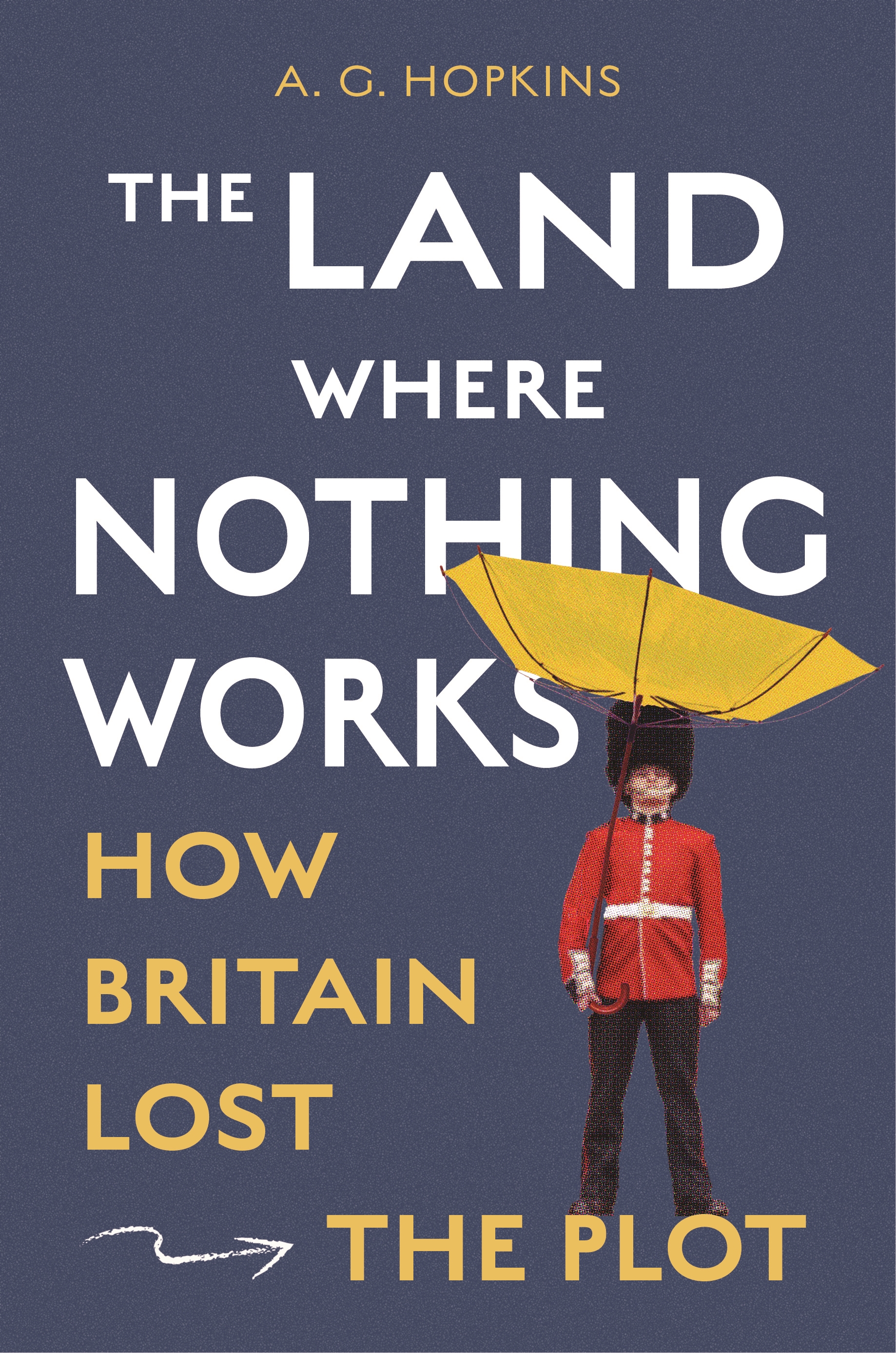
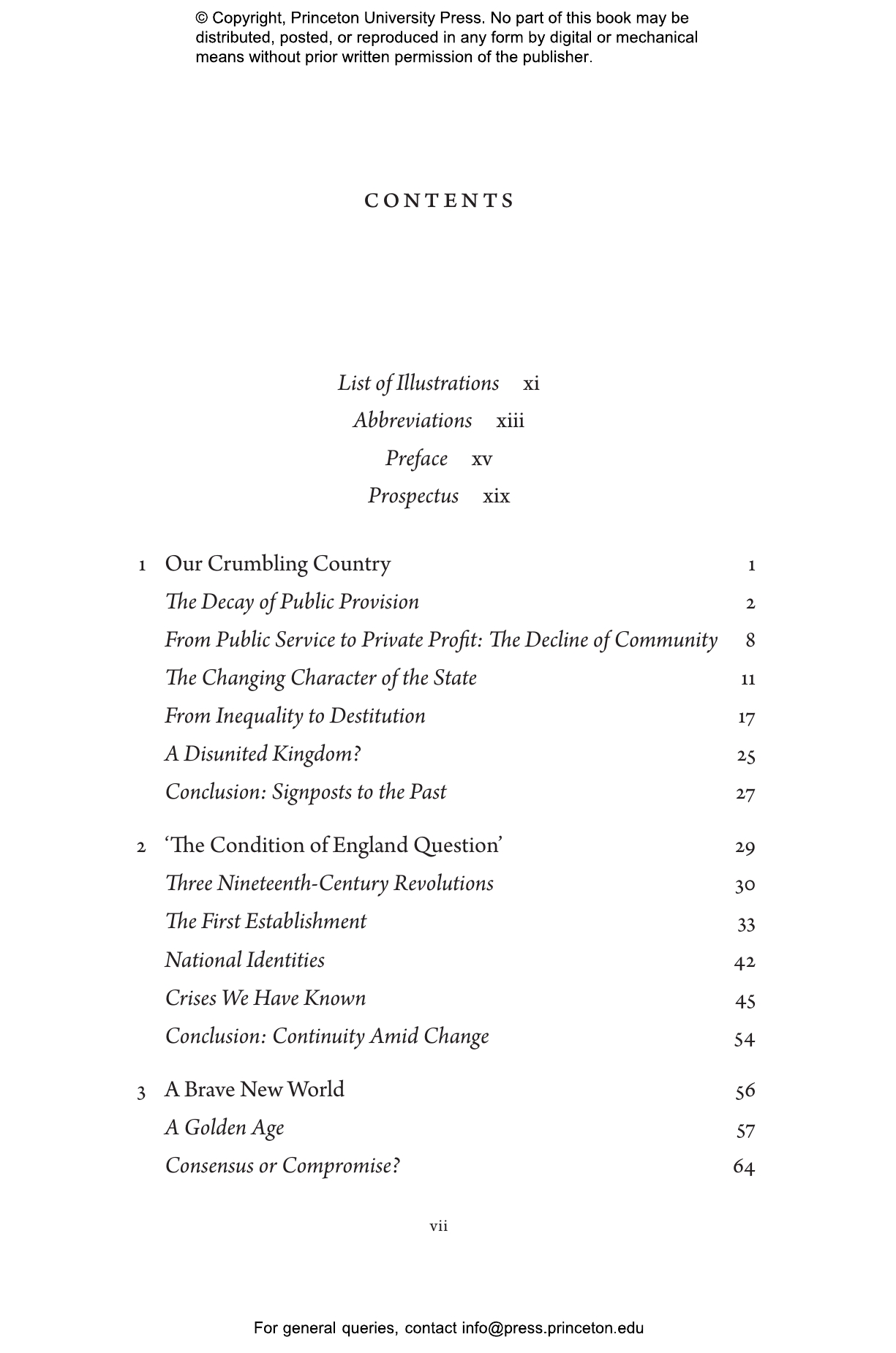
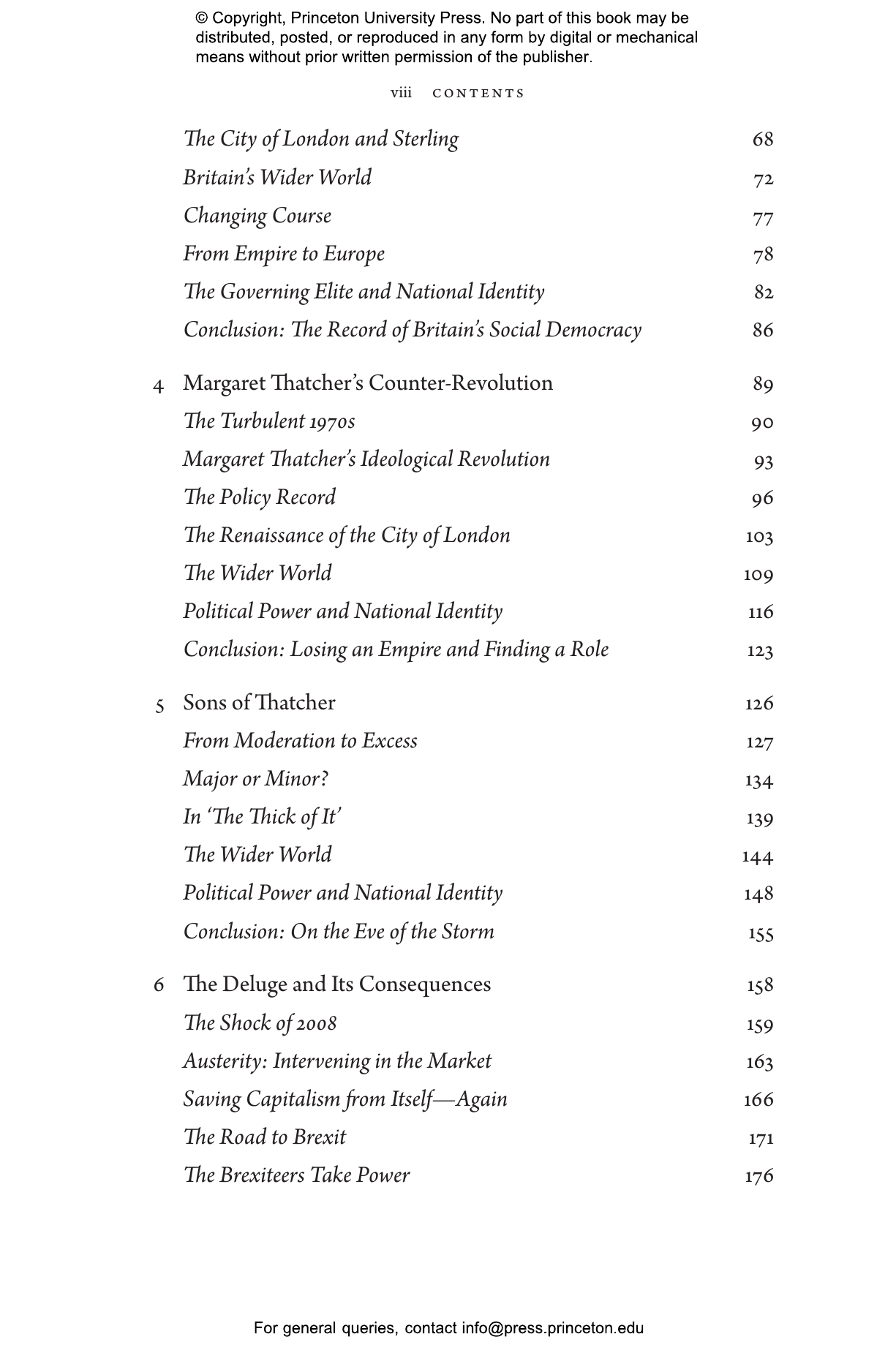
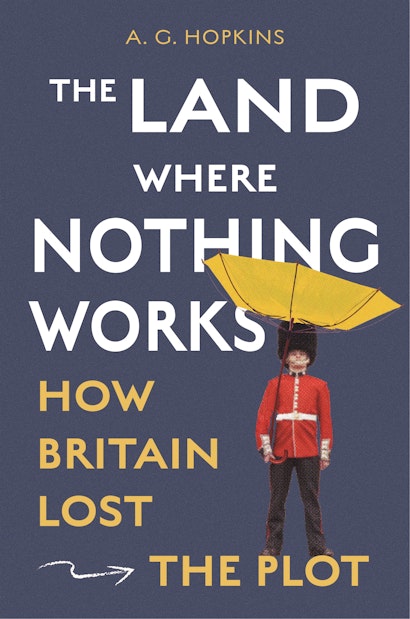
What has happened to Britain? As drivers on its roads can attest, it is the pothole capital of Europe. Once-beautiful towns now feature peeling paint, weeds, and broken railings. Public services are no longer fit for purpose. A malaise seems to infect every aspect of British life: its economy, polity, social order, sense of well-being, domestic regional relationships, and place in the world. In The Land Where Nothing Works, the distinguished historian A. G. Hopkins offers an explanation, tracing Britain鈥檚 current problems to decisions made in the 1980s that abandoned its postwar experiment in social democracy and mimicked policies of deregulation and privatisation promoted by the United States.
In 1945, the new Labour government鈥檚 development programme aimed at creating a social democracy that would benefit all members of society. The counterrevolution launched by Margaret Thatcher鈥檚 government in 1979, which remains in force today, promoted individualism and deregulation. The transition from one programme to another was a response to the growth of finance and services centred on the City of London, and to decolonisation, which redirected trade to Europe. The expansion of credit led to the financial crisis of 2008 and the years of austerity that followed, and fuelled the populist movement that culminated in Brexit. Hopkins argues that, instead of following the free-market policies of its mentor, the United States, Britain should draw on its own history of social democracy and borrow from its neighbours in Europe, where communitarian principles continue to be upheld.
A. G. Hopkins is the Emeritus Smuts Professor of Commonwealth History at the University of Cambridge, an emeritus fellow of Pembroke College, and a fellow of the British Academy. He is the author of American Empire: A Global History, Capitalism in the Colonies: African Merchants in Lagos, 1851–1931, (both 快色直播), An Economic History of West Africa, and (with P. J. Cain) British Imperialism, 1688–2015.
"罢颈尘别濒测."鈥�聽The Herald Scotland
"[A] pacy and engaging romp through British political history."鈥擬arie Le Conte, Foreign Policy
"[A] brisk, jaunty yet magnificently gloomy polemic."鈥擯ratinav Anil, The Times
"A perceptive survey of recent British history."鈥擯atricia Thane, Dublin Review of 快色直播
"Honest, adroit, and totally accurate. . . A terrific book."鈥�David Marx Book Reviews
“The Land Where Nothing Works badly needed writing. Drawing on wide-ranging statistical evidence and writing with passion and flashes of (on occasion) laugh-out-loud dark humour, A. G. Hopkins succeeds in making his case that British decline since the end of the 1970s has been dramatic on just about every internationally accepted standard of measurement. This book, the work of one of our most distinguished and experienced modern historians, deserves to be widely read by all those keen to discover how Britain became the dysfunctional society it is today—and how its vertiginous decline might be reversed.”—Scott Newton, Cardiff University
“Long-established as a preeminent scholar of empire, A. G. Hopkins has turned his attention to postwar Britain. In what he asserts will be his last book, he dissects the problems of the last seventy years with characteristic verve and insight. While inescapably controversial, his diagnosis will undoubtedly have a big impact on how we think about the political economy of modern Britain.”—Jim Tomlinson, University of Glasgow
“In The Land where Nothing Works, A. G. Hopkins, one of our most eminent historians of empire, traces a fascinating story of how Britain arrived at its current broken state. He combines a pithy, even racy, writing style with outstanding academic scholarship. He has covered a remarkable breadth of literature, from recent decades of journalism to highly reputable and thorough academic research. He has digested and synthesised this material with new insights into a coherent and fascinating account of Britain’s relative economic and social decline. For a time in the 1970s, Britain was labelled the ‘sick man of Europe.’ The ‘Thatcher revolution’ was meant to be a cure. Hopkins explains in clear and accessible language how and why the cure failed. The book is essential reading for all who worry that this failure could trigger Britain’s slide into a populist dystopia.”—John Muellbauer, University of Oxford
“A highly readable, bracing account of the last four and a half decades, dominated by the neoliberal powers of unaccountable, deregulated finance. Almost every page carries memorably sardonic, pithily expressed magisterial judgements, distilled from the authoritative knowledge of a lifetime’s leading scholarship on the comparative global history of capitalist imperialisms. This is the story we must now squarely face of the accumulating damage done to the regions of the UK outside of the privileged South, to the people’s health, to the society’s capacity for economic productivity, and to trust in democratic politics.”—Simon Szreter, coauthor of After the Virus: Lessons from the Past for a Better Future