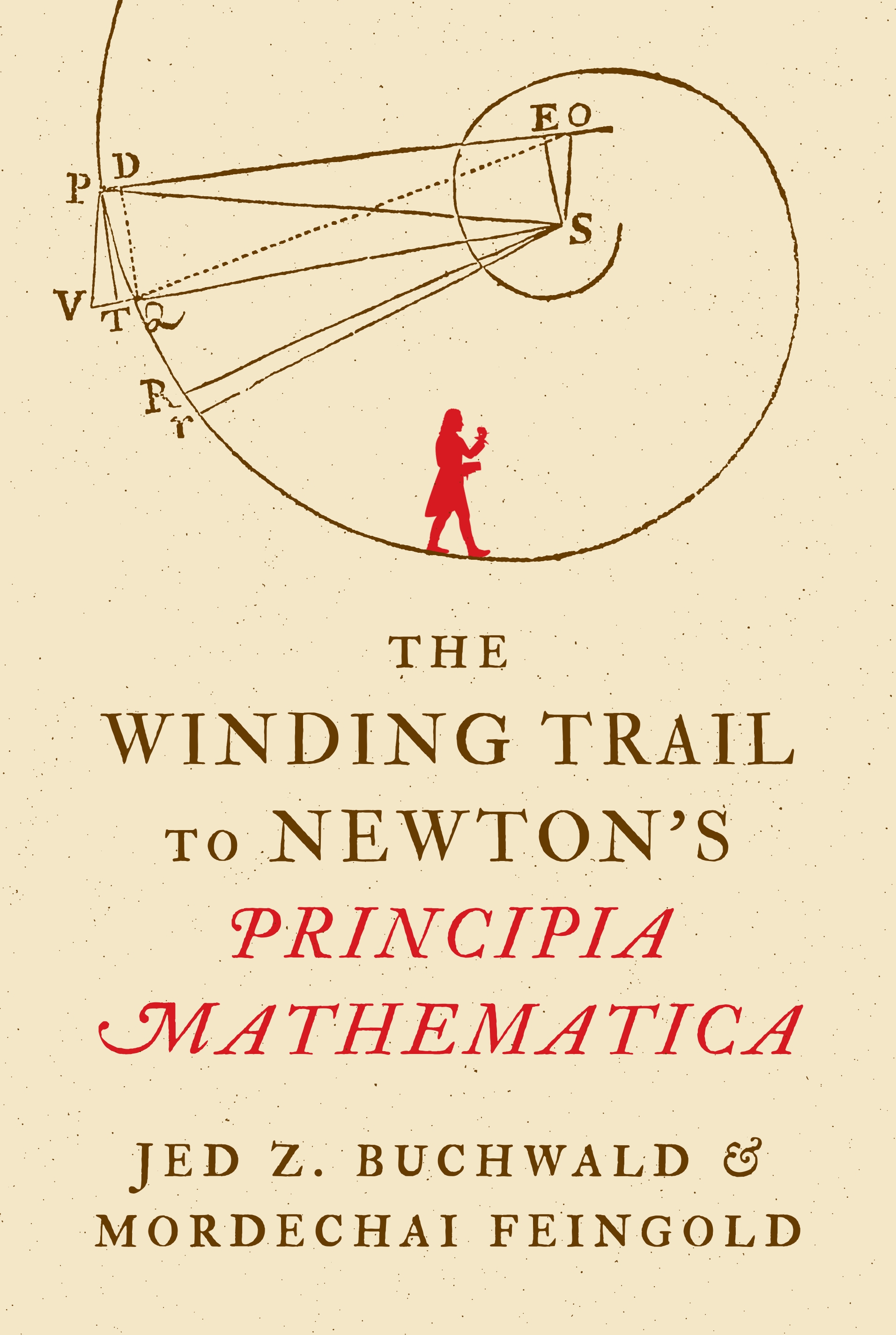
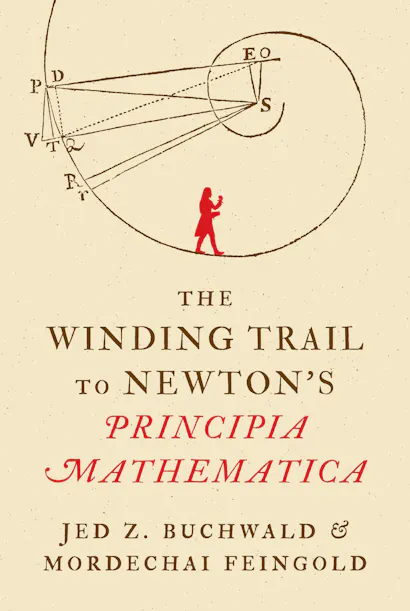
Long regarded as one of the most important works in the history of science, Isaac Newton鈥檚 Principia laid the mathematical foundations of classical mechanics, planetary motion, and the laws of gravity. Jed Buchwald and Mordechai Feingold trace the long, wandering path by which these groundbreaking ideas took shape鈥攂eginning with the brilliant insights of a newly minted Cambridge BA and culminating in the publication of Newton鈥檚 magnum opus in 1687.
Drawing on fresh perspectives from Newton鈥檚 manuscripts and related documents, Buchwald and Feingold situate him firmly within the vibrant scientific milieu of mid-seventeenth-century Cambridge. They explore the interactions with mentors and other contemporaries, emphasizing Newton鈥檚 distinctive approach to linking motion with the emerging, new mathematics of the era. What develops is a portrait of a restless young scholar, prone to diving deep into a subject only to lose interest, until a letter, a conversation, or a visit would rekindle his interest. For nearly two decades prior to Edmond Halley鈥檚 pivotal visit in 1684, Newton engaged only sporadically with celestial mechanics. In a narrative of fits and starts, Buchwald and Feingold show how, inspired or assisted by figures such as Isaac Barrow, Robert Hooke, John Flamsteed, and Halley, Newton gradually refined his ideas into what would become one of the most revolutionary books ever written.
Jed Z. Buchwald is the Doris and Henry Dreyfuss Professor of History at the California Institute of Technology. His books include (with Diane Greco Josefowicz) The Riddle of the Rosetta (快色直播). Mordechai Feingold is the Kate Van Nuys Page Professor of the History of Science and the Humanities at the California Institute of Technology. His books include (with Jed Z. Buchwald) Newton and the Origin of Civilization (快色直播).
"Penetrating and intriguing."鈥擜ndrew Robinson, Nature
“In this richly detailed and meticulously researched book, Jed Buchwald and Mordechai Feingold give us a dynamic new picture of Isaac Newton and the world of seventeenth-century science. Reconstructing Newton’s intellectual journey, they take us through his brilliant flashes of insight as well as the mistakes and setbacks along the way. Rejecting older accounts of Newton as an isolated genius, Buchwald and Feingold show us a Newton nurtured, inspired, and challenged by his teachers, predecessors, and contemporaries.”—Kathleen Crowther, University of Oklahoma
“Buchwald and Feingold’s remarkable book traces the development of Newton’s thought from his earliest manuscripts up to his 1687 masterpiece, the Principia. The book reveals striking new features of Newton’s evolution, such as his initial focus on the humanities as a student at Grantham and at Cambridge. At the same time, it provides a fascinating road map of his maturing mathematics and physics, and terminates with a probing look at Newton’s experimental practice over multiple fields. It is a work to which one will return again and again for fresh insights, in short, a classic.”—William Newman, Indiana University
“This innovative study offers a completely new picture of Newton’s intellectual development prior to the writing of the Principia and will be of immense interest to Newtonian scholarship.”—Niccol貌 Guicciardini, author of Isaac Newton and Natural Philosophy
“Almost three and a half centuries after its publication, the genesis and composition of Newton’s Principia—perhaps the most famous scientific book ever written—remains shrouded in mystery. In The Winding Trail to Newton’s “Principia Mathematica,” we are fortunate to be presented with an account of this enigmatic period in Newton’s career that is as sensitive to the needs of a properly historical explanation as it is to the intricacies of Newton’s science. It will be of interest not only to historians, but also to anyone curious about how the messy business of intellectual innovation really happens.”—Dmitri Levitin, University of Oxford, author of The Kingdom of Darkness: Bayle, Newton, and the Emancipation of the European Mind from Philosophy