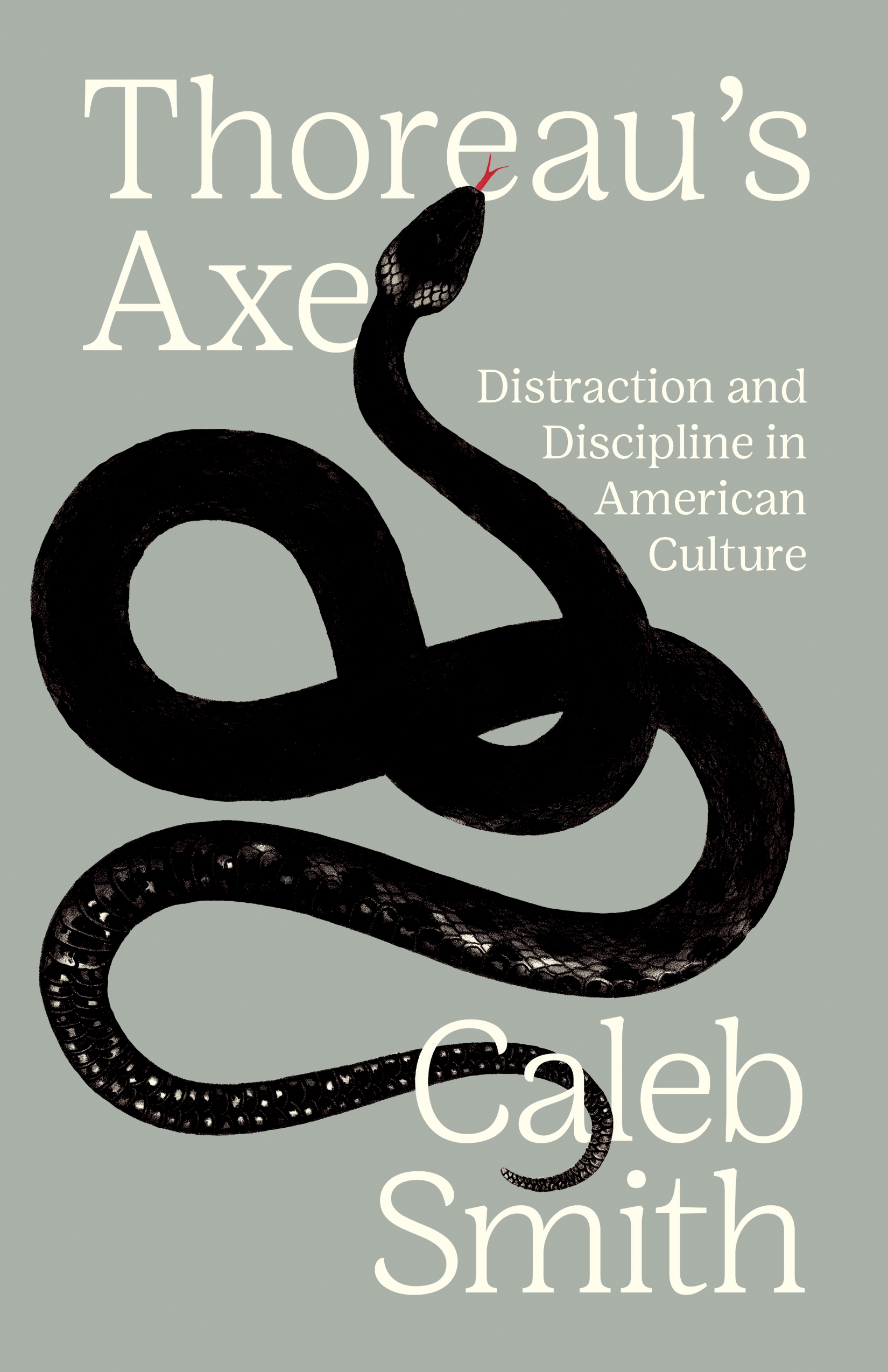
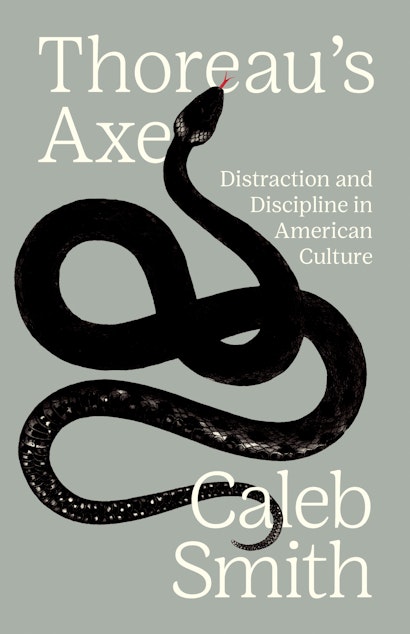
Today, we鈥檙e driven to distraction, our attention overwhelmed by the many demands upon it鈥攎ost of which emanate from our beeping and blinking digital devices. This may seem like a decidedly twenty-first-century problem, but, as Caleb Smith shows in this elegantly written, meditative work, distraction was also a serious concern in American culture two centuries ago. In Thoreau鈥檚 Axe, Smith explores the strange, beautiful archives of the nineteenth-century attention revival鈥攆rom a Protestant minister鈥檚 warning against frivolous thoughts to Thoreau鈥檚 reflections on wakefulness at Walden Pond. Smith examines how Americans came to embrace attention, mindfulness, and other ways of being 鈥渟piritual but not religious,鈥� and how older Christian ideas about temptation and spiritual devotion endure in our modern ideas about distraction and attention.
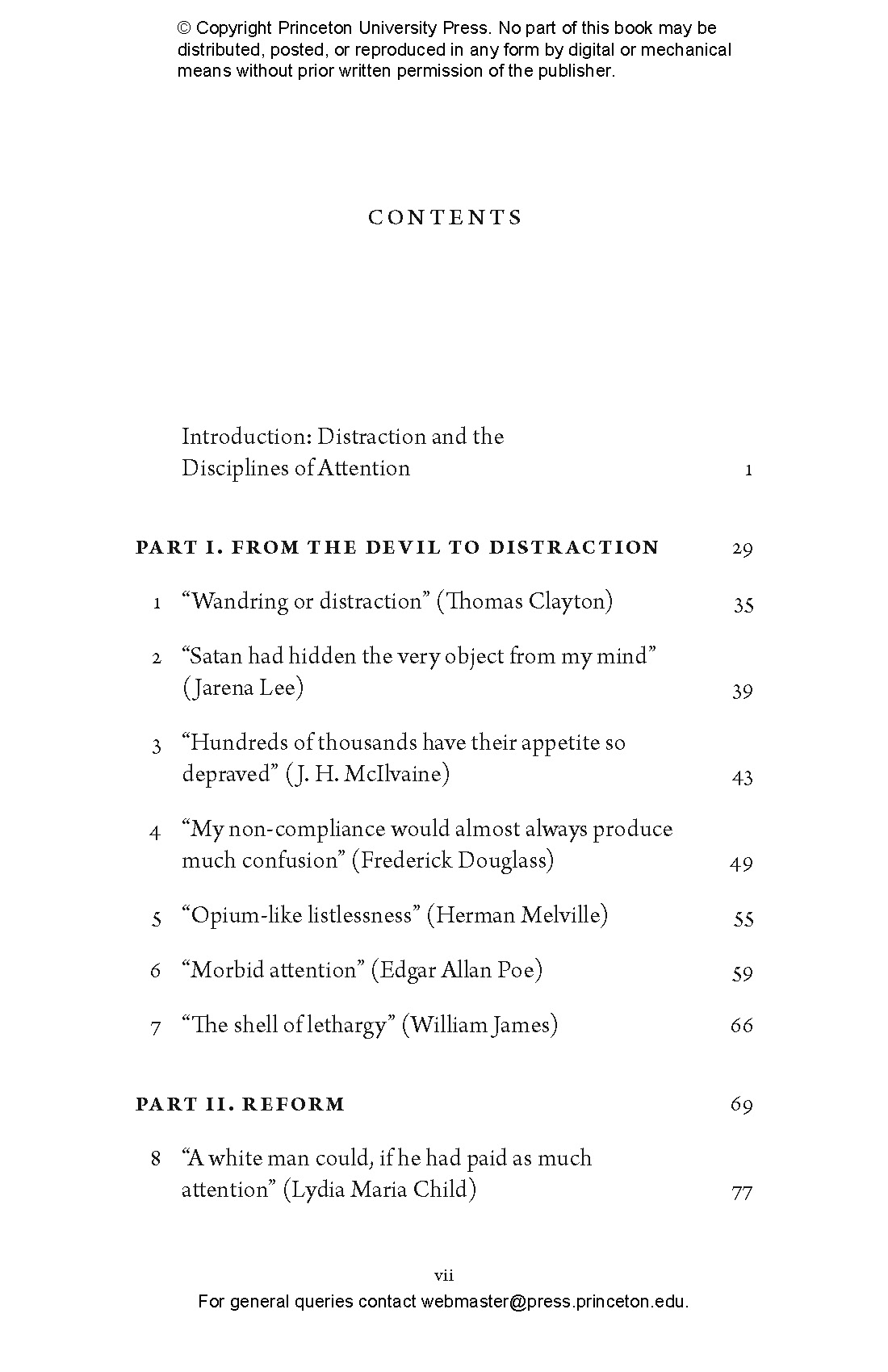
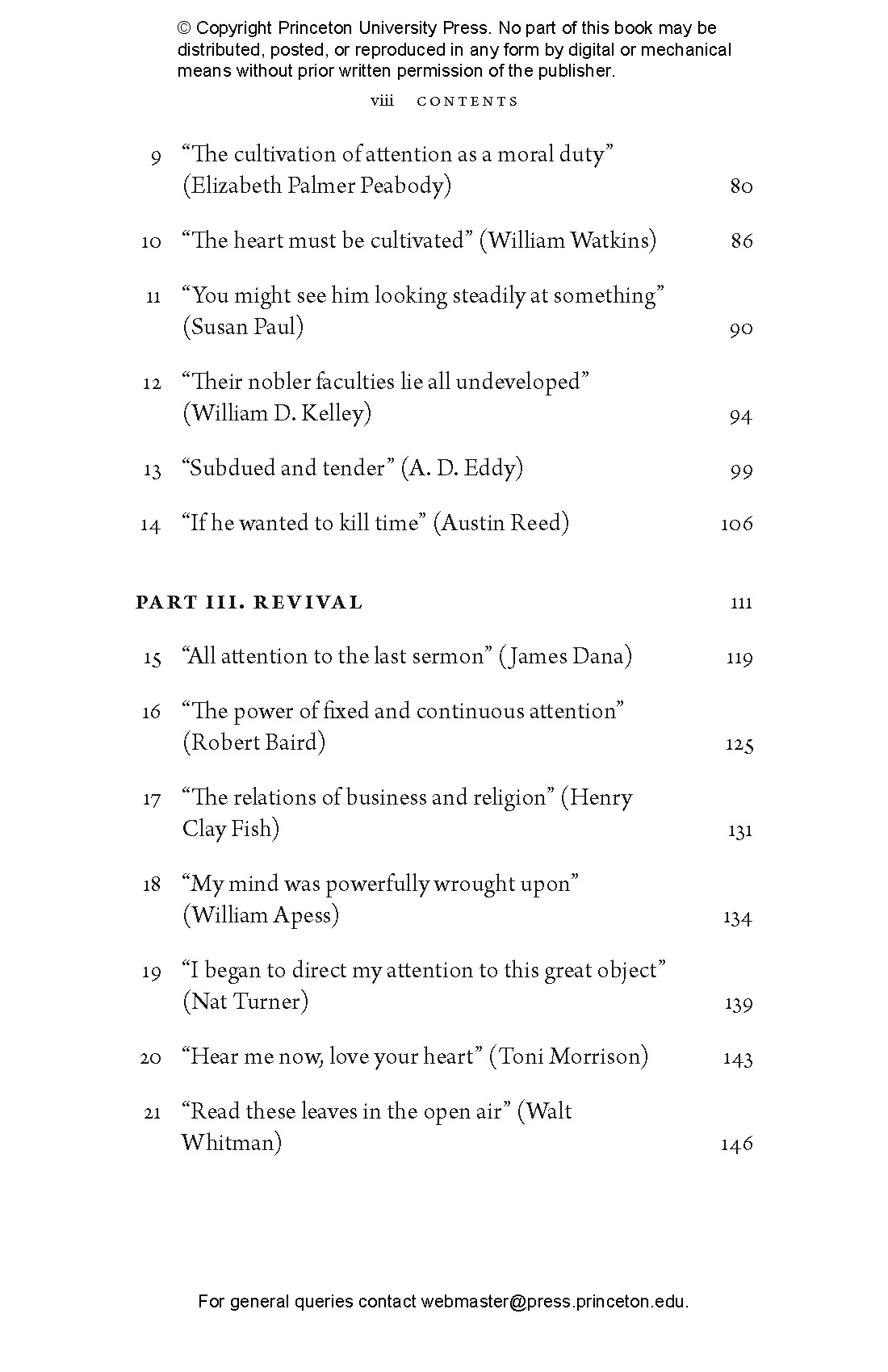
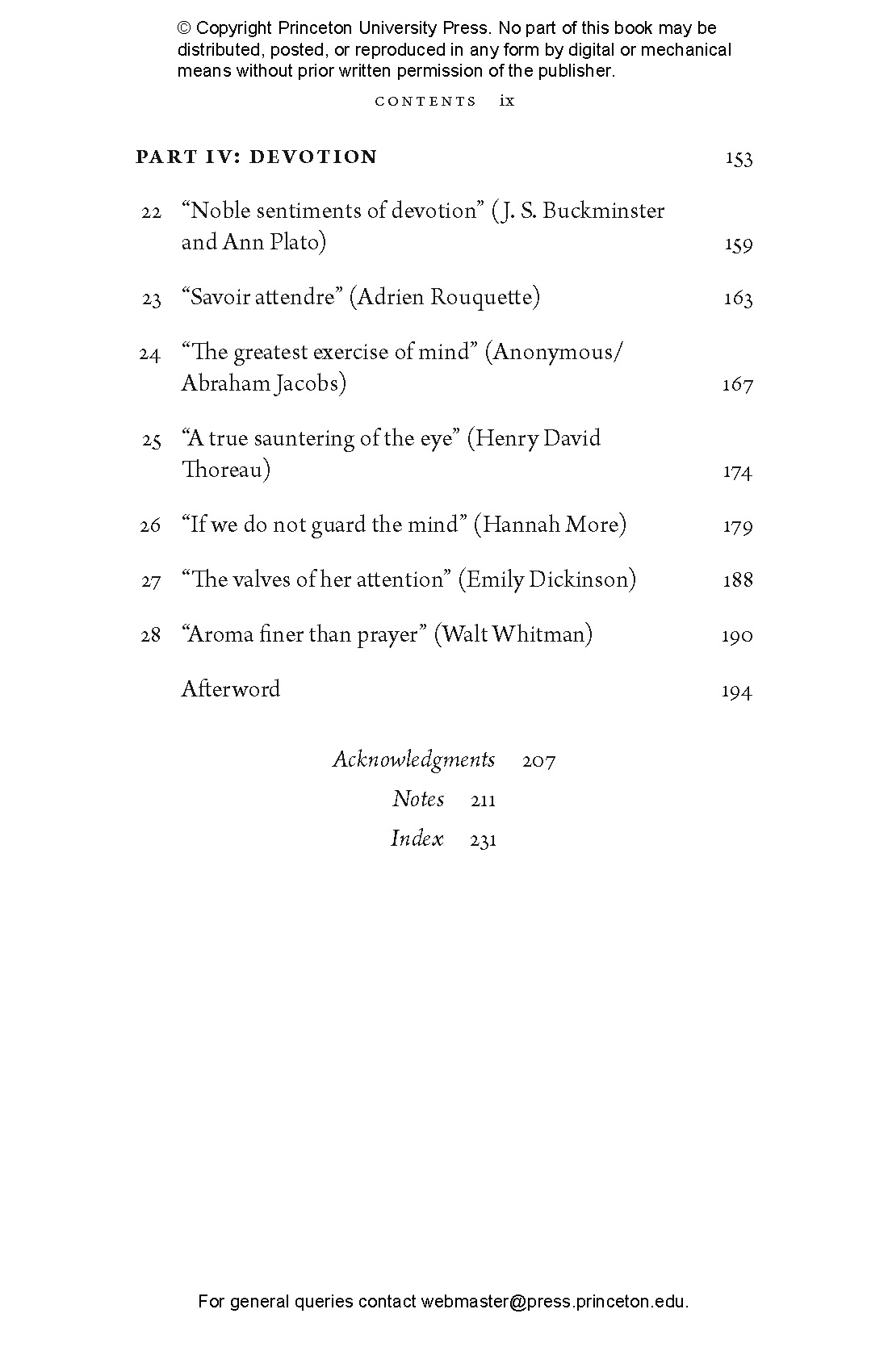
Smith explains that nineteenth-century worries over attention developed in response to what were seen as the damaging mental effects of new technologies and economic systems. A 鈥渨andering mind,鈥� once diagnosed, was in need of therapy or rehabilitation. Modeling his text after nineteenth-century books of devotion, Smith offers close readings of twenty-eight short passages about attention. Considering social reformers who designed moral training for the masses, religious leaders who organized Christian revivals, and spiritual seekers like Thoreau who experimented with regimens of simplified living and transcendental mysticism, Smith shows how disciplines of attention became the spiritual exercises of a distracted age.
"A fascinating meditation on 'the "infinite bustle" of modern life.'"鈥擱obert M. Thorson, Wall Street Journal
"A fascinating new book."鈥擟raig Fehrman, Boston Globe
"With a colloquial tone, Smith makes a solid case that the contemporary take on distraction. . . is an old one that came about in the 19th century. . . . The result is a rousing academic study on the meanings of mindfulness."鈥�Publishers Weekly
"[An] elegant anthology of American anxieties over attention."鈥擬ichael Ledger-Lomas, The Spectator
"Smith’s historicization of what he calls ‘disciplines of attention’ offers a useful check on reactionary nostalgia. Taking the measure of the distractions of the digital present requires caution."鈥擫en Gutkin, Chronicle Review
"[A] fascinating book. . . . Smith’s analyses are incisive and well researched. . . . Collectively they form an intriguing study of the moral framework around distraction and attention during this period."鈥�Choice Reviews
"Thoreau’s Axe [is] a work structured like a book of devotion, offering twenty-eight ‘readings’ that traverse two centuries of discourse on attention, and how various figures, from poets to preachers to reformers, have attempted to inculcate it. . . . [Smith] has the deep and natural orientation of a historian, in his approach to archives and strange and curious corners of nineteenth-century American thought."鈥擱achel Kushner, Harper's
"Anxieties over attention and distraction are nothing new but also, and more to the point, [Smith] raises an enduring cultural contradiction: like Thoreau, many of us feel distracted by shifts and accelerations in collective life—by new media, to be sure, but also by capitalism and its myriad crises—and yet, to combat these collective distractions, we turn inward and desperately try to become more disciplined, attentive individuals. . . . Smith is not the first to name this tension, though his ‘genealogy of distraction and the disciplines of attention’ might be the first to unearth its deep cultural roots."鈥擟helsea Fitzgerald, Los Angeles Review of 快色直播
"Much of Thoreau’s Axe cuts deeply into American culture, revealing how discipline and punishment, often wielded from above, have defined for us the proper objects of attention: God, country, race, and the capitalist grind. But the blade of Smith’s analysis is subtle, and what I find most remarkable about Thoreau’s Axe is Smith’s comfort with ambiguity, the apparent ease with which he makes space for contradiction, the degree to which his method depends on it."鈥擠aegan Miller, Yale Review
"Smith’s examples of attention being demanded rather than sought forces the reader to consider more carefully the goal of cultivating attention, and who benefits from such attention."鈥擲hira Telushkin, Plough Quarterly
"Original and impactful. . . . Smith shows the price we pay for remaining distracted, the challenge of cultivating responsible and impactful disciplines of attention amidst capitalistic structures, and the corresponding need to always remember to look beyond the self."鈥擬organ Shipley, Review19
"Thoughtful and well-written."鈥擜lan Dent, The Penniless Press
"Smith’s book has the merit of showing a meaningful continuity not only between our time and Thoreau’s, but also between Thoreau and like-minded thinkers of his century."鈥擟ostica Bradatan, Times Literary Supplement
"Smith has tried to write something other than a traditional academic book—and succeeded. The book's range of writings is expansive, so that one review will not do justice to its conceptual and historical breadth. Its eclectic structure provides thoughtful readings at the expense of sustained, focused analysis. . . . I see it as a kind of academic version of devotional writing, an extended series of thoughtful meditations on cultures of attention shaped by the powers of state, churches, and reform institutions."鈥擯hilip Gould, Modern Fiction Studies
"Full of incisive analysis. . . . It is to Smith’s credit that while Thoreau’s Axe demonstrates the still-necessary powers of disciplined scholarly attention, it largely divests from the coercive power of dazzling argumentation. Rather it invites us to wander in its wise but unsettled thinking around something many of us have been thinking about already."鈥擪risten Case, American Literary History
"Smith’s work exemplifies the best of nineteenth-century American studies, illuminating distinctive aspects of that century while casting new light on our own."鈥擟harles McCrary, American Nineteenth Century History
鈥泪苍 Thoreau鈥檚 Axe, Caleb Smith is persuasively skeptical about the ways that concepts of attention and distraction have been conscripted by moralizing agendas. But this is ultimately a book of devotion that invites us鈥攊n the marrow of its sentences, and the electricity of its curiosity鈥攖o see devotion in a new way: as the act of reclaiming attention. By excavating strange affinities between rebellion and surrender, these provocations ultimately resonate far beyond their particular objects of inquiry, suggesting that perhaps we can find succor in seductions stranger than we鈥檇 ever imagined, in errands that surprise us, and in acts of self-composure that end up rearranging our sight.鈥濃�擫eslie Jamison, New York Times-bestselling author of The Empathy Exams
鈥�Thoreau鈥檚 Axe is an elegantly written meditation on how a medicine can also be a poison. Smith shows us that our concern with attention and how to manage it has a much longer backstory than we might expect, and that the disciplining of our attention can be at once a technique of domination and a means of liberation.鈥濃�擡mily Ogden, author of On Not Knowing: How to Love and Other Essays
鈥�Thoreau鈥檚 Axe is a compelling and captivating book of criticism, wholly original in its conception. It is learned and surprising in its tending to the archive and a line-by-line pleasure to read, marked by a simmering minimalism that is part Lydia Davis with hints of Cormac McCarthy. This is a gorgeous new work.鈥濃�擩ohn Lardas Modern, author of Neuromatic: Or, A Particular History of Religion and the Brain