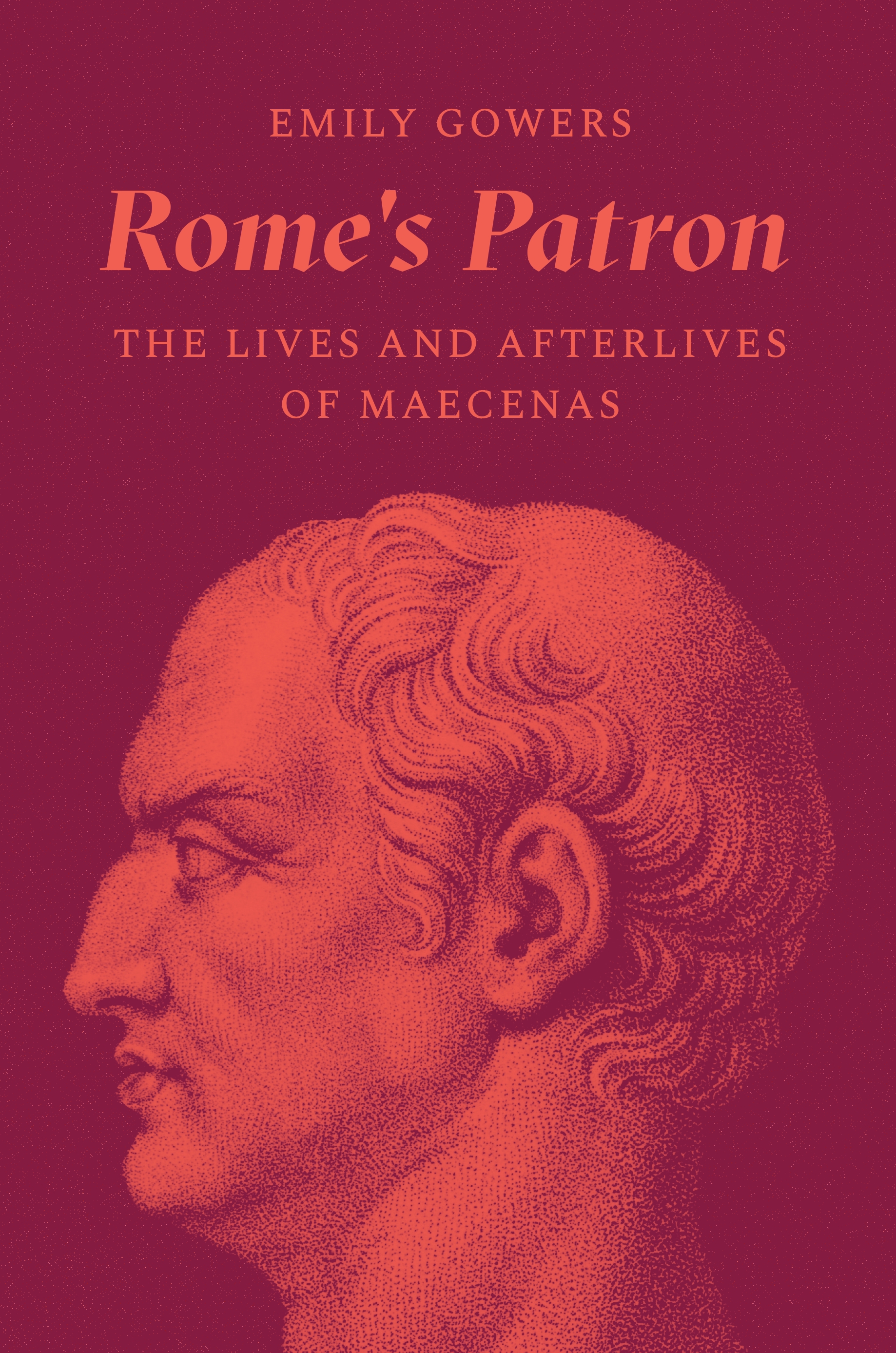
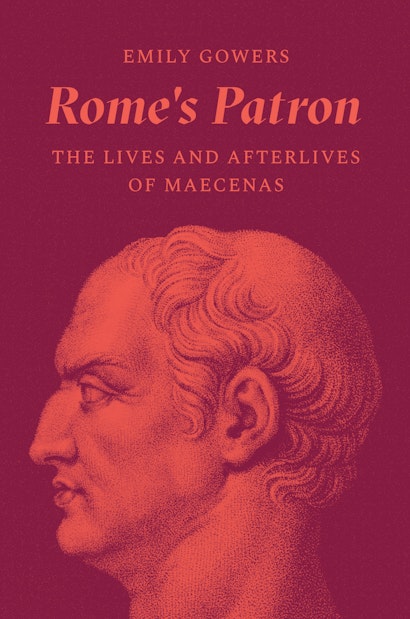
An unelected statesman with exceptional powers, a patron of the arts and a luxury-loving friend of the emperor Augustus: Maecenas was one of the most prominent and distinctive personalities of ancient Rome. Yet the traces he left behind are unreliable and tantalizingly scarce. Rather than attempting a conventional biography, Emily Gowers shows in Rome鈥檚 Patron that it is possible to tell a different story, one about Maecenas鈥檚 influence, his changing identities and the many narratives attached to him across two millennia.
Rome鈥檚 Patron explores Maecenas鈥檚 appearances in the central works of Augustan poetry written in his name鈥擵irgil鈥檚 Georgics, Horace鈥檚 Odes and Propertius鈥檚 elegies鈥攁nd in later works of Latin literature that reassess his influence. For the Roman poets he supported, Maecenas was a mascot of cultural flexibility and innovation, a pioneer of gender fluidity and a bearer of imperial demands who could be exposed as a secret sympathizer with their own values. For those excluded from his circle, he represented either favouritism and indulgence or the lost ideal of a patron in perfect collaboration with the authors he championed.
As Gowers shows, Maecenas had and continues to have a unique cachet鈥攊n the fantasies that still surround the gardens, buildings and objects so tenuously associated with him; in literature, from Ariosto and Ben Johnson to Phillis Wheatley and W. B. Yeats; and in philanthropy, where his name has been surprisingly adaptable to more democratic forms of patronage.
Emily Gowers is professor of Latin literature and a fellow of St John’s College at the University of Cambridge. She is the author of The Loaded Table: Representations of Food in Roman Literature and the editor of Horace: Satires Book I.
"The book is of rare critical finesse and a genuine pleasure to read, restoring the ‘name’ Maecenas less as an individual fixed by the sources than as a cultural device in continual metamorphosis. . . . [A]n important book."鈥擲ergio Casali, The Classical Review
"Rome’s Patron is an expansive treatment of a fascinating figure, at once authoritative and enlivened with keen observations on nearly every page."鈥擫uke Roman, Journal of Roman Studies
"This [is] an exceptional book, the product of vast reading combined with high scholarship—and . . . readability. It would be an impertinence for the reviewer (whose knowledge of Maecenas has been immeasurably widened by Emily Gowers) merely to recommend it: it deserves to be bought widely throughout the respublica litterarum."鈥擟olin Leach, Classics for All
"The most in-depth study ever published on the mercurial figure at the heart of power in the early years of the Roman Empire. . . . Gowers brings the richness of all this alive for the reader, in a book that Maecenas himself would have welcomed into his library."鈥擟liff Cunningham, Sun News Austin
“The conception and range of the book are bold and ambitious. All of Gowers’s characteristic virtues are on show: eloquent and evocative writing, surprising and original details, deep scholarship, a scrupulous command and use of secondary literature, a broad range of cultural references, both ancient and modern, and, above all, penetrating analyses of poetry.”—William Fitzgerald, King’s College London
“Emily Gowers’s eagerly awaited book traces in rich detail the many complexities of Maecenas’s life, his relationship to Augustus, his influence on the great Augustan poets, his impact on the landscape of Rome, and his afterlife in art and literature. This learned and elegant book will surely hold the field on its topic for the next generation.”—Stephen Harrison, University of Oxford