
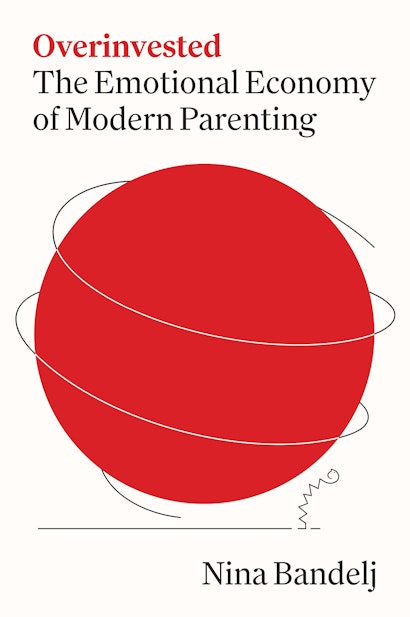
If TV shows express l鈥檈sprit du temps, then today鈥檚 Married鈥ith Children would be called Exhausted鈥ith Children. Contemporary parenting is far from permissive chaos and more relentless effort: careful scheduling, constant supervision, and pouring our souls鈥攁s well as loads of money鈥攊nto our children.
Consider that between 1960 and 2015 what families with children up to age 17 on childcare and education increased nine-fold, in relative terms. Since 2010, average college loan balances that parents take on for their children have surpassed the balances that students themselves have. Most kids today are enrolled in not just one but multiple extracurricular activities鈥攕occer, dance, scouts, violin, piano, chess, coding, swim practice, Kumon, Russian School of Math, you name it鈥攁nd parents shuttle them to and from. Indeed, mothers today spend twice as much time with children as they did in the 1960s, even when many more now work outside the home. And when what is different in how they are raising their children compared to how they were raised, it鈥檚 not values, religion or discipline that parents call out; it鈥檚 about having a loving relationship with their child. Nowadays the vast majority of mothers (88%) and fathers (85%) that being a parent is the most, or one of the most, important aspects of who they are as a person. At the same time, 鈥�41% of parents say that most days they are so stressed they cannot function and 48% say that most days their stress is completely overwhelming,鈥� as by the U.S. Surgeon General who declared parental mental health and well-being as a public health crisis in 2024. Parents are exhausted because we are expected to invest so completely鈥攆inancially and emotionally.
Yet, this all-in parenting standard is unique in recent history. Scholars of American childhood recount how, in the past, the tables were turned, and how, before the twentieth century, 鈥減arents depended on the labor of their children for the survival of the family. 鈥� Children worked in the fields, at home, and in the factories.鈥� Indeed, as historian reported, it was not unusual in the nineteenth century for American children to earn more money for their families than their mothers, who rarely worked outside the home, or for teenage boys employed in factories to earn more in wages than their fathers earned by tending family farms. Apparently, as an eleven-year-old president Ulysses S. Grant was in charge of his father鈥檚 fields and explored the rural Ohio countryside on his own, a celebrated example of freedom and independence long associated with American childhood.
The understanding of children as economically useful began to shift in the late nineteenth and early twentieth centuries. The first child labor laws in the United States, passed in the 1830s, put limits on hours worked and night shifts, provided for more breaks, and required more education for child workers. Demand for these welfare protections came from social reformers such as Florence Kelley, one of the first women to graduate from Cornell, who argued that children (and women) needed to be protected from capitalist labor exploitation to ensure social order. These legal reforms culminated in the Fair Labor Standards Act of 1938, which outlawed child labor at the federal level and codified society鈥檚 move away from a focus on children鈥檚 productive value.
Cultural change accompanied these legal shifts. As 快色直播 sociologist Viviana Zelizer famously observed, children were converted 鈥�from economically useful to emotionally priceless.鈥� Zelizer documents, for instance, how child life insurance policies, once sold as sensible investments to offset the loss of children鈥檚 economic contributions, were rebranded as tokens of love for the living child. Archived court cases reveal this transformation. In one Florida decision, the parents of a boy killed in an accident received 1.8 million dollars not for forgone wages but for 鈥渢he mental pain and anguish of the bereaved parents.鈥� Childhood was no longer a primarily productive economic stage but an emotionally valuable one.
After World War II, as Americans shed wartime deprivations, they embraced new economic models built around mass consumption, credit cards, and home mortgages. With the postwar baby boom and a period of prosperity, advertisers promoted washing machines, canned food, and TV dinners. A new consumer culture emerged that also reshaped childhood. In , economist and sociologist Juliet Schor shows that marketing to kids has created 鈥渃ommercialized children鈥� who are deeply susceptible to the advertising messages lurking practically everywhere. It was this new consumer culture that molded children into little creatures who are 鈥渂orn to buy.鈥�
Economically useful? Emotionally priceless? Born to buy? These labels capture different historical periods and reveal that how we view children today, what we take for granted, is not 鈥渘atural.鈥� It is a product of economic, political, and cultural circumstances. Such circumstances have changed considerably since the era of the commercialized child of the 1980s. Has that change led to a new major shift in how we think about children? Yes, it has.
In recent decades, emotionally priceless children have been remade into human capital. Human capital theory, popularized by Chicago economist and Nobel laureate Gary Becker, views individuals as accumulations of skills, knowledge, and experience whose value lies in their capacity to generate income and economic growth. Becker was famous for applying the 鈥渆conomic way鈥� to 鈥渢hinking about life,鈥� as the title of captured. He and others who embraced 鈥�economization鈥� lassoed it around a subject that would seem its unlikely prey鈥攆amily and parenting.
Contemporary children remain emotionally priceless, but the unrelenting focus on human capital as a value in a neoliberal society, where market logic rules, has reintroduced economic valuation into family life. Parenting has come to be viewed鈥攑rimarily by economics experts and policymakers鈥攁s a process of human capitalization, an effort to increase children鈥檚 future economic productivity and the higher price (wage) they will presumably be able to command in the labor market if they are invested with more education and greater skills. Therefore, following this theory, parents should invest in building the human capital of their children as early as possible. Through popular messages parents are told it鈥檚 never too early to start fostering academic skills and extracurricular development during infancy, even in the womb. Parents embark on this investment project, and quite eagerly. After all, we want to do everything we can for our treasured children, even if doing so defies our emotional and financial exhaustion.
Seen in historical perspective, treating children as projects is neither natural nor inevitable. It is the latest chapter in a long story of how societies define the value of children, and how parents are asked to organize their love, labor, and hopes around that definition. Recognizing this history allows us to ask if child-rearing should resemble project management. Are parents raising human capital, or human beings? It also allows us to ask not only how we value children, but how we sustain the well-being of those who raise them and how we build social infrastructure that supports that bright future we say we desire for them.
Nina Bandelj is Chancellor鈥檚 Professor in the Department of Sociology at the University of California, Irvine, and past president of the Society for the Advancement of Socio-Economics.