
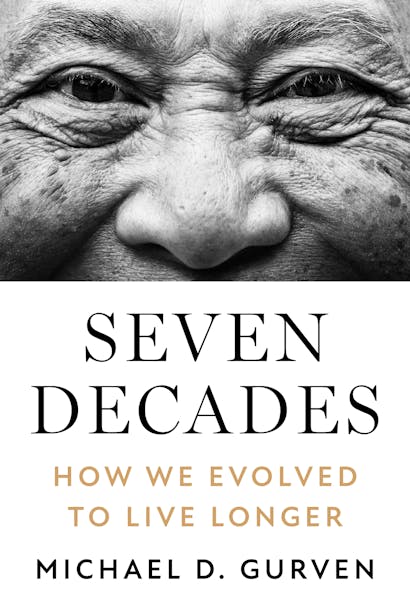
In the same breath that celebrates the long lives of supercentenarians like 114 year old American Naomi Whitehead, comes a growing societal dread concerning the aging of our global population. The silver tsunami brings skyrocketing healthcare costs, vanishing social security, a tanked economy, and dire needs for caregiving. Declining fertility combined with living longer is indeed shifting our demographic landscape. Currently, 1 in 5 Americans are over age 65, up from 1 in 12 in 1950. By 2050, it will be 1 in 4. No doubt that things need to change.
On the horizon are many creative ideas, each designed to tackle one aspect of population aging. AI-driven humanoid robots like the Japanese 鈥淎eric鈥� are one prototype away from helping you sit up and change your socks. Exoskeletons will help us walk despite frail limbs and crippling arthritis. Wearable sensors will track vital signs and other sudden biomarker changes, and alert medical personnel if something is way off. These and other technological innovations will help alleviate the burden of our growing pool of elders.
That being said, we need to reframe how to view the 82 million Americans expected to be age 65 and over by 2050. While the oldest old are growing at fast rates, the weight of their projected numbers is somewhat offset by growth in the 鈥測oung old鈥�: it may be scary to realize that there will be 2.5 times more 85+ year old in 2050 than today, but in absolute numbers that鈥檚 just 10 million more people. There will still be 4 times more elders aged 65-84 than over age 85. If our 鈥測oung old鈥� can maintain functional health, then the lion鈥檚 share of our elders will still be in a position to make valuable contributions.
But first we need to rethink the goals of our latter years. On average, world leaders today run old (the is 62 y), but most of us wouldn鈥檛 even consider running for (which also slants old, at least in the US, UK and Canada). While elder leaders profit from wisdom and experience, most elders, if they lead, do so at a much more local level.
Let鈥檚 focus instead on work. Sociologist Sara Lawrence-Lightfoot refers to the timing of traditional retirement in the 60鈥檚 as our 鈥渢hird chapter鈥�, a time to meet new challenges and find new purpose. Post-midlife job transitions known as 鈥渆ncore careers鈥� enable people to make a difference while still making money. At least 9 million US adults age 44 to 70 have already taken on encore careers in education, healthcare, government and non-profits, and another 31 million are interested in making the shift.
Reinvention and pursuing long-neglected encore dreams are appealing (and feasible) for some, but many others may instead choose, or have no choice but to continue along their same work trajectory. For most of our evolutionary history there was no formal retirement, no transition to leisurely travel and all-you-can-eat Caribbean cruises. Among Tsimane forager-farmers that I鈥檝e worked with for over two decades, elder men may hunt less (and do so on established trails closer to their village), but they still fish, and maintain small fields where they grow plantains, manioc root and corn. Elder women also burn, weed and harvest crops, and produce vats of cherished local brew from chewed manioc roots they ferment with their own spit. Elders watch and guide grandchildren, they make and fix local tools, weave mats, fans and baskets, and are entertaining storytellers and singers. They鈥檙e also still involved in local politics even if elected village leaders are mostly younger men who speak Spanish and navigate interactions with town officials.
In the US, there are indications that we鈥檝e started moving down a similar path. One in 5 Americans age 65+ remains employed 鈥� that鈥檚 twice as many as in 1990, and combined they earn triple the total share of all worker wages. More folks are working part-time or are self-employed. The US Bureau of Labor Statistics the labor force growth rate of those ages 65 to 74 to be more than 50%, and more than 91% for those 75 years of age and older. Moving forward, only expect to fully retire by age 65, and a majority of those who expect to continue working say that it鈥檚 because they want to, and not just because they need to due to low savings and worries about depleting pensions.
Outside of work, volunteerism is up too. The share of all volunteer hours contributed by older adults increased by over 50% over the past two decades. The majority of older adults say it is important to them personally to make the world a better place.
It may sound patronizing to mention the unpaid childcare that elders provide, but when cash-strapped parents are paying an average of $14,000 annually for preschool, anything helps. By one estimate,
New strategies are needed to best harness the experience and willful intentions of our incoming elders, and for us to thrive with opportunity. Flexible, part-time jobs to accommodate a broader range of elders, 鈥渞eturnships鈥� to help refresh skills, multigenerational work teams to promote mutual mentoring, and phased retirement options can maximize productivity of elders. Time banks and other exchange programs where elders can trade skills for services can provide alternative means of caregiving. More co-residence models where elders live with students or young families, can resolve multiple problems simultaneously: living together mitigates social isolation, offers affordable housing and provides live-in childcare. Adapted housing can ensure the right balance between privacy and independence, and cooperative living.
A vibrant, ever-present elder force can act as a new role model to young people about what aging can and should look like鈥攁 corrective against ageist stereotypes and fears. When elders are better integrated into society, everyone benefits.
About the Author
Michael D. Gurven is Distinguished Professor of Anthropology at the University of California, Santa Barbara, and a fellow of the American Association for the Advancement of Science. His work has been featured in the New York Times and on NPR and the BBC.