
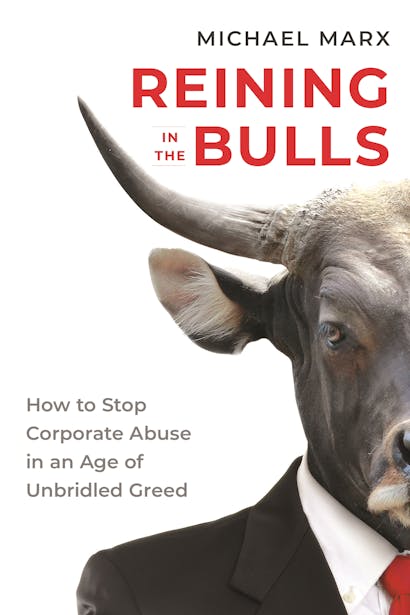
We鈥檝e entered a new Gilded Age, as corporations wield growing influence over our lives and our politics. They influence how we think, what we buy, who we vote for, and how our society evolves. They drive the wealth that fuels our economic system, and their power insulates them from strict government regulations and accountability. As a result, corporate abuses鈥攑ollution, toxic and inhumane work environments, defective products鈥攇o unchecked. When the government refuses to corral industry鈥檚 misdeeds, advocacy groups turn to corporate campaigns to expose and change harmful behavior. Reining in the Bulls鈥痠s the first comprehensive resource for those who want to understand, plan, and execute modern corporate campaigns.
You鈥檝e spent decades holding corporations accountable for harm to people and the planet. Today, with the loss of hard-won labor and environmental protections, that work seems particularly challenging. Can you reflect on similar periods throughout history, and what we鈥檝e learned from them?
Michael Marx: This is an especially challenging moment, with weakened government regulations and attacks on progressive elements of civil society鈥攗niversities, law firms, charitable foundations鈥攖hat support corporate campaigns.
We鈥檝e been here before, but to a lesser degree. The Gilded Age and the Reagan years also saw massive consolidations of corporate power. And those eras were followed by pendulum swings in the opposite direction.
The abuses of the Gilded Age gave rise to the Progressive Era, which advanced antitrust laws, stronger regulation, and labor reforms. Reagan鈥檚 deregulatory push was followed by vigorous environmental, labor, and consumer regulation.
Now the rise of the Democratic Socialists suggests a backlash to the current administration is under way. But meaningful reform is never guaranteed.
Generation Alpha and Generation Z have the opportunity to channel rage into reform. We may see this coalesce into a strong, diversified, and enduring movement concerned with climate threats, creeping authoritarianism, artificial intelligence, and unaffordability that has dramatically affected their lives and aspirations.鈥疶ech companies and their billionaire owners will become the next major corporate campaign targets. Younger generations have a powerful interest in forcing these companies to reduce the threats their technologies and economic power can create.
Today, the most visible campaigns against corporate impunity are nationwide, grassroots efforts to stop construction of data centers. Drawing on your experience, what key pieces of advice would you give to the anti-data-center activists?
MM: Corporations鈥� threats to healthy and livable communities are nothing new. Campaigns against timber, agricultural, animal food processing, mining, big-box retailers, and other industries offer useful lessons.
First, activists can demand at least a one-year moratorium to provide time to become educated on the impact of data centers on their community. Next, share those findings with local media, community leaders, and fellow citizens. Connect with allies in other communities who can testify to the damage data centers have done elsewhere. Forge ties with NGOs and experts who can provide tools and information to organize the opposition, formulate demands, and formalize and enforce agreements. Finally, require annual independent auditing of the data centers鈥� impacts and full transparency to ensure they meet agreed-upon standards and are liable for violations.
You have counseled activists to 鈥渂e 鈥榮oft鈥� on the people and 鈥榟ard鈥� on the issue.鈥� Why is this important?
MM: Campaigns to make corporations more socially and environmentally responsible depend in part on the relationships that develop. When NGOs are 鈥渟oft鈥� on the companies鈥� representatives, meaning they are firm but respectful, they facilitate trust building and collaborative problem solving. That increases the potential for a successful outcome. That success and the resulting good relations lay the foundation for addressing other issues. Campaigns involving The Home Depot, Nike, and Staples demonstrate that confrontation can eventually build bridges between corporations and advocates, making companies more socially and environmentally attuned and willing to change.
You have had considerable success in compelling corporations to act more ethically. What victories are you especially proud of?
MM: The Great Bear Rainforest Campaign involved getting many Fortune 500 companies in the US (including The Home Depot and Lowe鈥檚) to stop purchasing wood from endangered areas of British Columbia鈥檚 coastal rainforest. The campaign also won agreements that protect roughly 16 million acres of old-growth forest and strengthen First Nations鈥� role in managing their traditional lands.
The Big Box Campaign against Walmart, which we directed, prompted the retailer to make sweeping commitments on renewable energy, waste reduction, product sustainability, and its global supply chain. Walmart鈥檚 vast purchasing power means that those changes reverberated around the world.
The Tar Sands Campaign to stop the expansion of high-carbon oil production in Alberta involved blocking new pipelines to transmit the oil. We directed a network of over 35 organizations in the US, Canada, and the EU that effectively stopped the planned expansion. Our campaign ultimately generated enough national attention and pressure to convince President Obama to officially reject the Keystone XL pipeline. That was perhaps my proudest moment.
When you think about organizing corporate accountability campaigns, what is different today than when you started this work?
MM: The biggest change is the use of the internet. In my first campaign against the Mitsubishi Corporation for rainforest destruction, we had email. The internet was just becoming a reality. Social media platforms didn鈥檛 exist. We collected petition signatures largely by hand in the streets. Charitable foundations knew about corporate campaigns against companies like Nestl茅 for infant formula deaths, and against General Motors for supporting apartheid in South Africa, but they rarely funded these or other corporate campaigns.
Today groups like Greenpeace, the Sierra Club, NRDC, EarthJustice, and Stand.earth have millions of digital activists. They can collect tens of thousands of signatures and dollars quickly through their members. Through the internet and social media, they can publicize corporate abuses, organize rallies in multiple locations, and communicate directly with consumers and shareholders. That gives activists enormous power to threaten a global corporation鈥檚 brand and reputation in real time.
What gives you hope in this fraught moment?
MM: The next generation of youth. While my generation faced the threat of dying in Vietnam and the existential threat of nuclear war, today鈥檚 youth inherit nuclear dangers plus climate change that imperils all life on earth, authoritarianism that is weakening democracies worldwide, and artificial intelligence which will likely change their future economic reality and prospects.
My hope is that Reining in the Bulls is among many torches that my generation of activists pass to the next generation. I hope to warn them of the dangers they face, inspire them to confront the companies and politicians responsible, and teach them the lessons we鈥檝e learned. In that way, they can build a stronger and smarter movement to ensure corporations serve, rather than harm, current and future generations.
Michael Marx is one of the world鈥檚 premier environmental corporate campaigners. He served as campaign director for both Rainforest Action Network and Sierra Club. He was the co-founder and executive director of ForestEthics (now Stand.earth) and founder of Corporate Ethics International. Marx directed or played a leading role in several of the largest corporate ethics campaigns of the last 30 years, targeting companies including Mitsubishi Corporation, The Home Depot, PepsiCo, Walmart, Amazon.com, and TransCanada. He has designed corporate campaigns for the Rockefeller Brothers Fund, Pew Charitable Trusts, ClimateWorks, Sea Change, and The William and Flora Hewlett Foundation. He is the author of鈥�Reining in the Bulls: How to Stop Corporate Abuse in an Age of Unbridled Greed