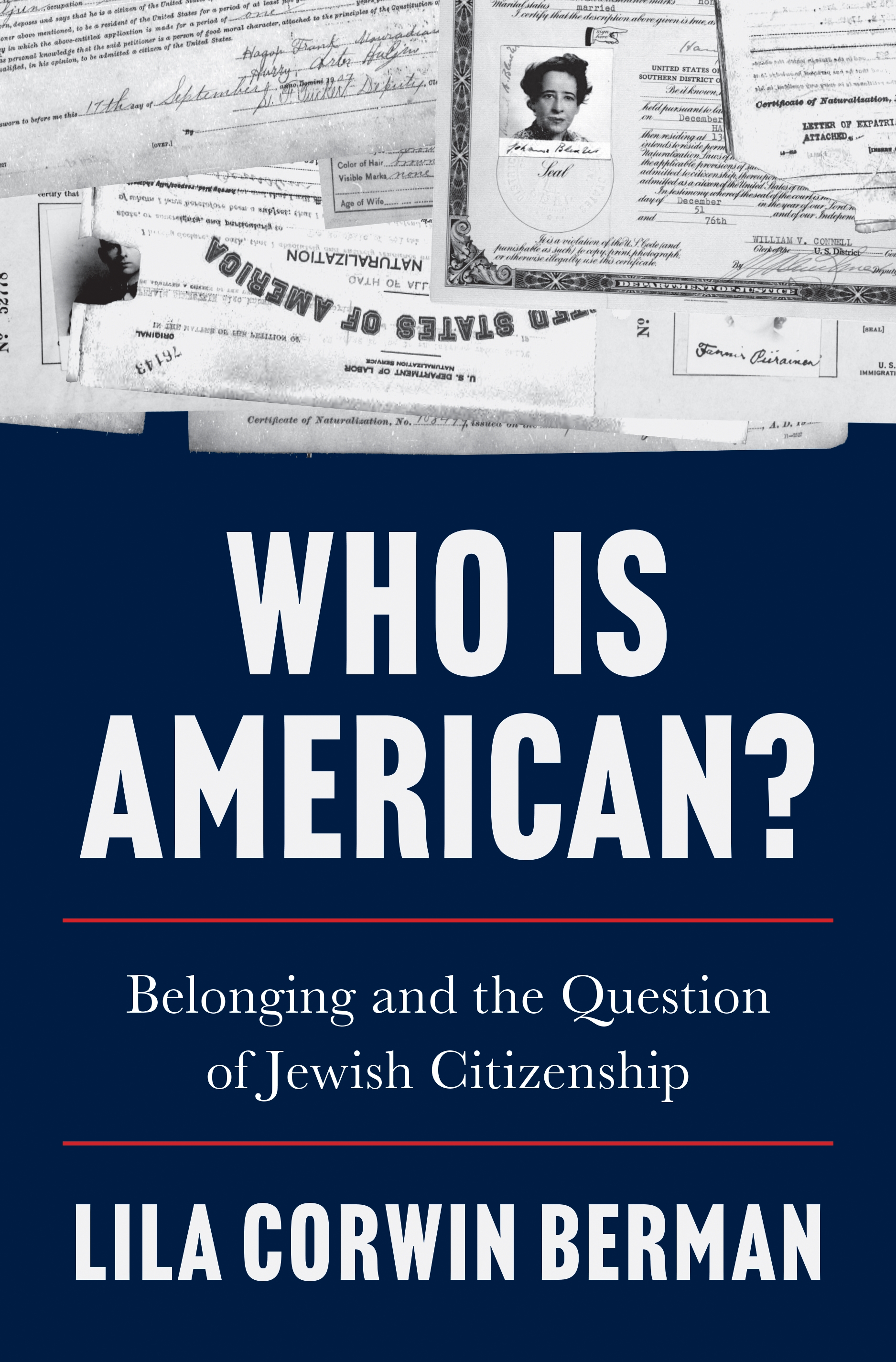
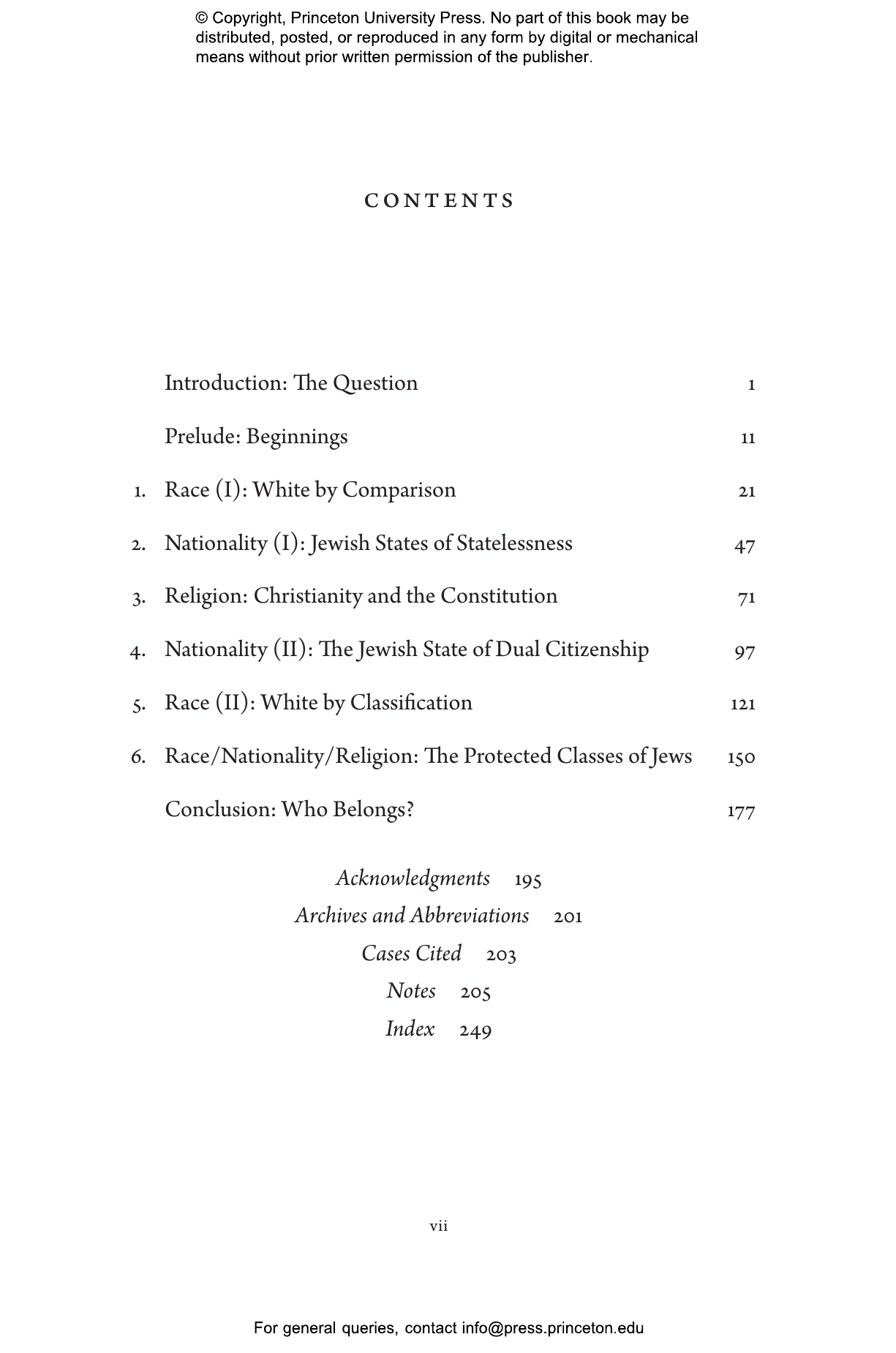
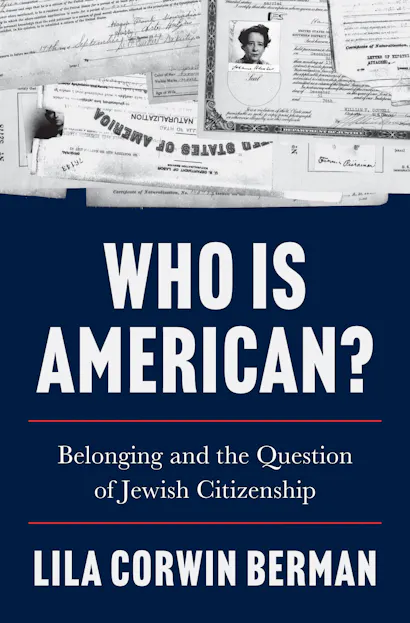
The history of Jews in the United States is often told as if they immigrated, gained citizenship, and almost immediately achieved full legal rights. Yet this story fundamentally misses how citizenship rights worked for Jews and countless others who arrived on American shores. In Who Is American? Lila Corwin Berman draws on case law, statutes, and debates to argue that both the laws of American citizenship and Jews鈥� position in them changed repeatedly across the twentieth century. Courts, policymakers, and the public persistently asked what it meant to be Jewish under the law. Were Jews a race, a nationality, a religion鈥攐r some combination of each? The answer carried profound legal consequences. Not only did it determine Jews鈥� citizenship status, but it also affected the rights they could exercise. Just as significantly, the meaning of the categories under law changed over time, affecting Jews鈥� self-understanding, their political ideals, and their relationships to other groups of Americans.
Who Is American? tells a history that resonates powerfully with today鈥檚 high-stakes battles over citizenship and rights. As Berman concludes, citizenship law has always been better at posing questions about the terms of belonging than at providing any ultimate resolution. The tangled story of Jewish citizenship demonstrates the limits of law and explains why the United States continues to fall into new and, often, unsettling debates about who is American.
Lila Corwin Berman is the Paul and Sylvia Steinberg Professor of American Jewish History at New York University, where she directs the Goldstein-Goren Center for American Jewish History. She is author of The American Jewish Philanthropic Complex: The History of a Multibillion-Dollar Institution (快色直播) and Metropolitan Jews: Politics, Race, and Religion in Postwar Detroit.
"As Berman amply demonstrates, while the US has been unique in offering its Jewish citizens acceptance compared to other countries, the path towards protecting the rights of those citizens has not lacked problems, complications, and ongoing debates, within and beyond the American Jewish community."鈥擲tu颅art Halpern, Jewish Book Council
“This is the book that many of us have been waiting for without even realizing it. Berman provides a brilliant analysis of the constructions and exploitations of Jewishness in American legal history, and offers a new way of thinking about American Jewish citizenship—and citizenship as a whole—for contemporary liberalism.”—James Loeffler, Exceptional Hatred: Antisemitism and the Fight over Free Speech in Modern America
“This provocative book definitively explodes the longstanding and misleading myth of ‘American Jewish exceptionalism,’ namely, that American Jews gained citizenship automatically, uncontroversially, and irrevocably—unlike their brethren in Europe and elsewhere. Berman demonstrates that the granting of citizenship was always contingent and disputed. This book will be required reading for everyone concerned with the past, present, and future of Jews in America.”—David Sorkin, author of Jewish Emancipation: A History across Five Centuries
“A timely, accessible, and fascinating contribution to American Jewish history and to the history of citizenship in the United States more broadly.”—Jessica M. Marglin, author of The Shamama Case: Contesting Citizenship across the Modern Mediterranean
This publication has been produced to meet accepted Accessibility standards and contains various accessibility features including concise image descriptions, a table of contents, a page list to navigate to pages corresponding to the print source version, and elements such as headings for structured navigation. Appearance of the text and page layout can be modified according to the capabilities of the reading system.
Accessibility Features
-
WCAG v2.2
-
WCAG level AA
-
Table of contents navigation
-
Single logical reading order
-
Short alternative textual descriptions
-
Print-equivalent page numbering
-
Landmark navigation
-
Index navigation
-
Epub Accessibility Specification 1.1
-
ARIA roles provided
-
All non-decorative content supports reading without sight
-
No known hazards or warnings