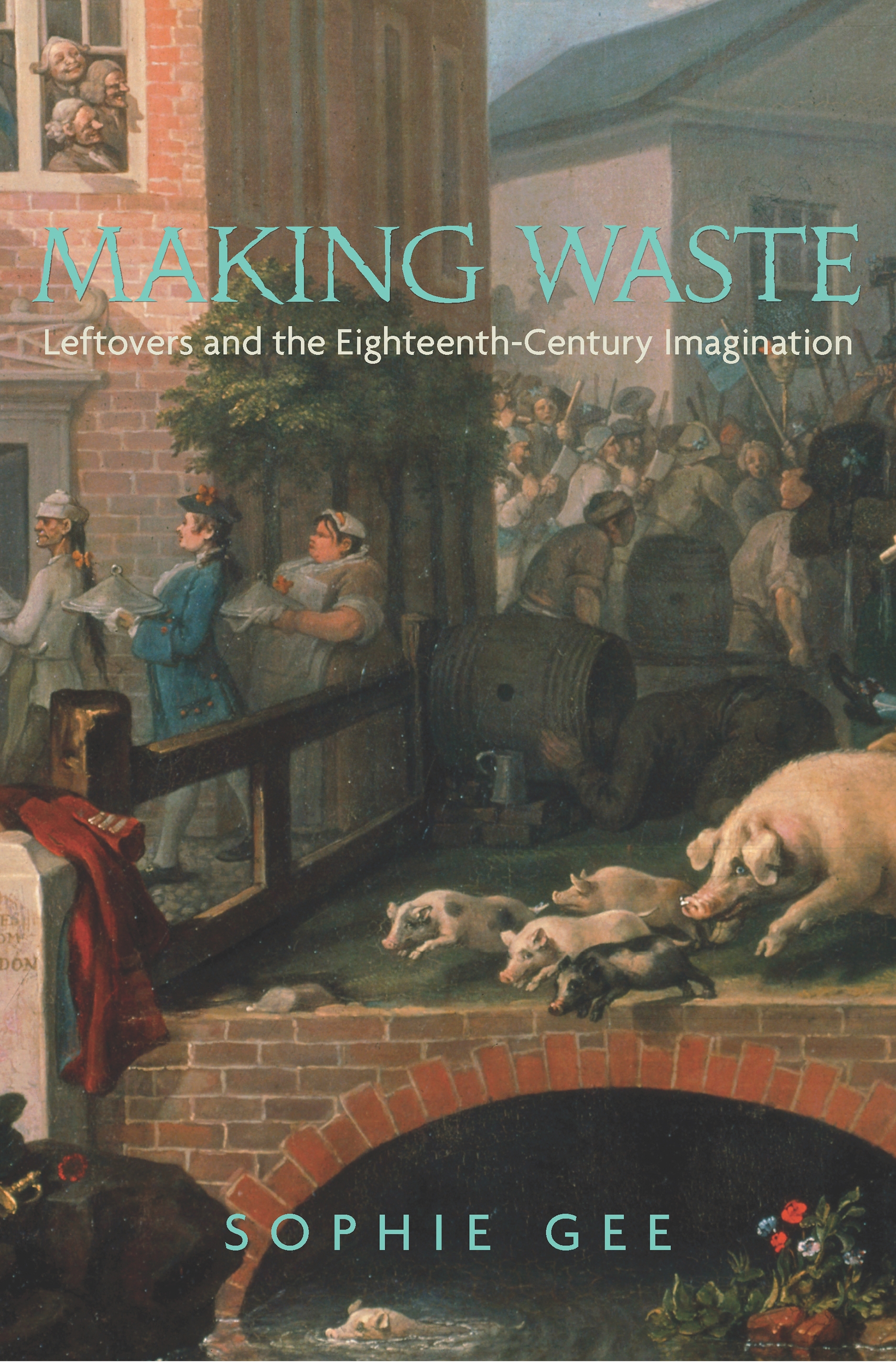
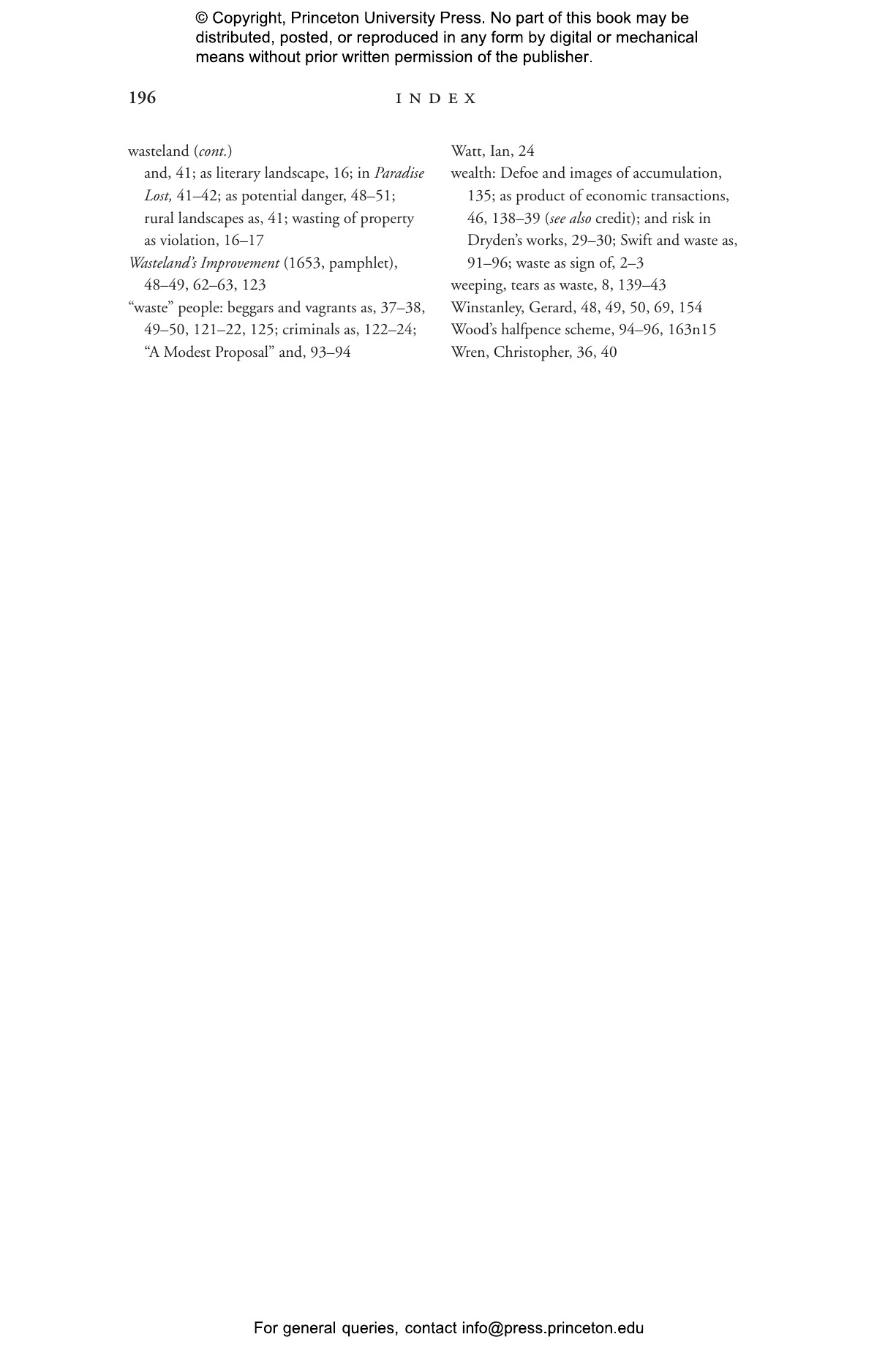
Making Waste: Leftovers and the Eighteenth-Century Imagination
Hardcover
Paperback
ebook (EPUB via app)
- Sale Price:
- $33.60/拢28.00
- Price:
-
$48.00/拢40.00 - ISBN:
- Published:
- Dec 28, 2009
- Copyright:
- 2010
30% off with code PUP30
ebook (PDF via app)
- Sale Price:
- $33.60/拢28.00
- Price:
-
$48.00/拢40.00 - ISBN:
- Published:
- Dec 28, 2009
- Copyright:
- 2010
30% off with code PUP30
-
Audio and ebooks (EPUB and PDF) purchased from this site must be accessed on the
快色直播 app. After purchasing, you will receive an email with
instructions to access your purchase.
About audio and ebooks - Request Exam Copy
Why was eighteenth-century English culture so fascinated with the things its society discarded? Why did Restoration and Augustan writers such as Milton, Dryden, Swift, and Pope describe, catalog, and memorialize the waste matter that their social and political worlds wanted to get rid of鈥攆rom the theological dregs in Paradise Lost to the excrements in 鈥淭he Lady’s Dressing Room鈥� and the corpses of A Journal of the Plague Year? In Making Waste, the first book about refuse and its place in Enlightenment literature and culture, Sophie Gee examines the meaning of waste at the moment when the early modern world was turning modern.
Gee explains how English writers used contemporary theological and philosophical texts about unwanted and leftover matter to explore secular, literary relationships between waste and value. She finds that, in the eighteenth century, waste was as culturally valuable as it was practically worthless鈥攁nd that waste paradoxically revealed the things that the culture cherished most.
The surprising central insight of Making Waste is that the creation of value always generates waste. Waste is therefore a sign鈥攖hough a perverse one鈥攖hat value and meaning have been made. Even when it appears to symbolize civic, economic, and political failure, waste is in fact restorative, a sign of cultural invigoration and imaginative abundance. Challenging the conventional association of Enlightenment culture with political and social improvement, and scientific and commercial progress, Making Waste has important insights for cultural and intellectual history as well as literary studies.