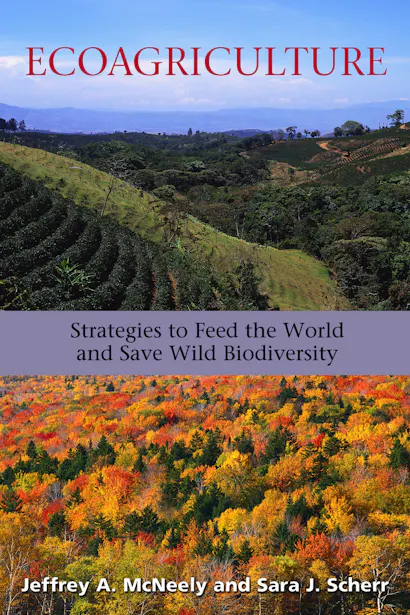
Ecoagriculture: Strategies to Feed the World and Save Wild Biodiversity

ebook (EPUB via app)
- Sale Price:
- $32.90/拢28.00
- Price:
-
$47.00/拢40.00 - ISBN:
- Published:
- Sep 26, 2012
- Copyright:
- 2002
- Size:
- 6 x 9 in.
30% off with code PUP30
ebook (PDF via app)
- Sale Price:
- $32.90/拢28.00
- Price:
-
$47.00/拢40.00 - ISBN:
- Published:
- Sep 26, 2012
- Copyright:
- 2002
- Size:
- 6 x 9 in.
30% off with code PUP30
-
Audio and ebooks (EPUB and PDF) purchased from this site must be accessed on the
快色直播 app. After purchasing, you will receive an email with
instructions to access your purchase.
About audio and ebooks - Request Exam Copy
Although food-production systems for the world’s rural poor typically have had devastating effects on the planet’s wealth of genes, species, and ecosystems, that need not be the case in the future. In Ecoagriculture, two of the world’s leading experts on conservation and development examine the idea that agricultural landscapes can be designed more creatively to take the needs of human populations into account while also protecting, or even enhancing, biodiversity. They present a thorough overview of the innovative concept of 鈥渆coagriculture鈥� - the management of landscapes for both the production of food and the conservation of wild biodiversity. The book:
- examines the global impact of agriculture on wild biodiversity
- describes the challenge of reconciling biodiversity conservation and agricultural goals
- outlines and discusses the ecoagriculture approach
- presents diverse case studies that illustrate key strategies
- explores how policies, markets, and institutions can be re-shaped to support ecoagriculture
Ecoagriculture explores new approaches to agricultural production that complement natural environments, enhance ecosystem function, and improve rural livelihoods. It features a wealth of real-world case studies that demonstrate the applicability of the ideas discussed and how the principles can be applied, and is an important new work for policymakers, students, researchers, and anyone concerned with conserving biodiversity while sustaining human populations.