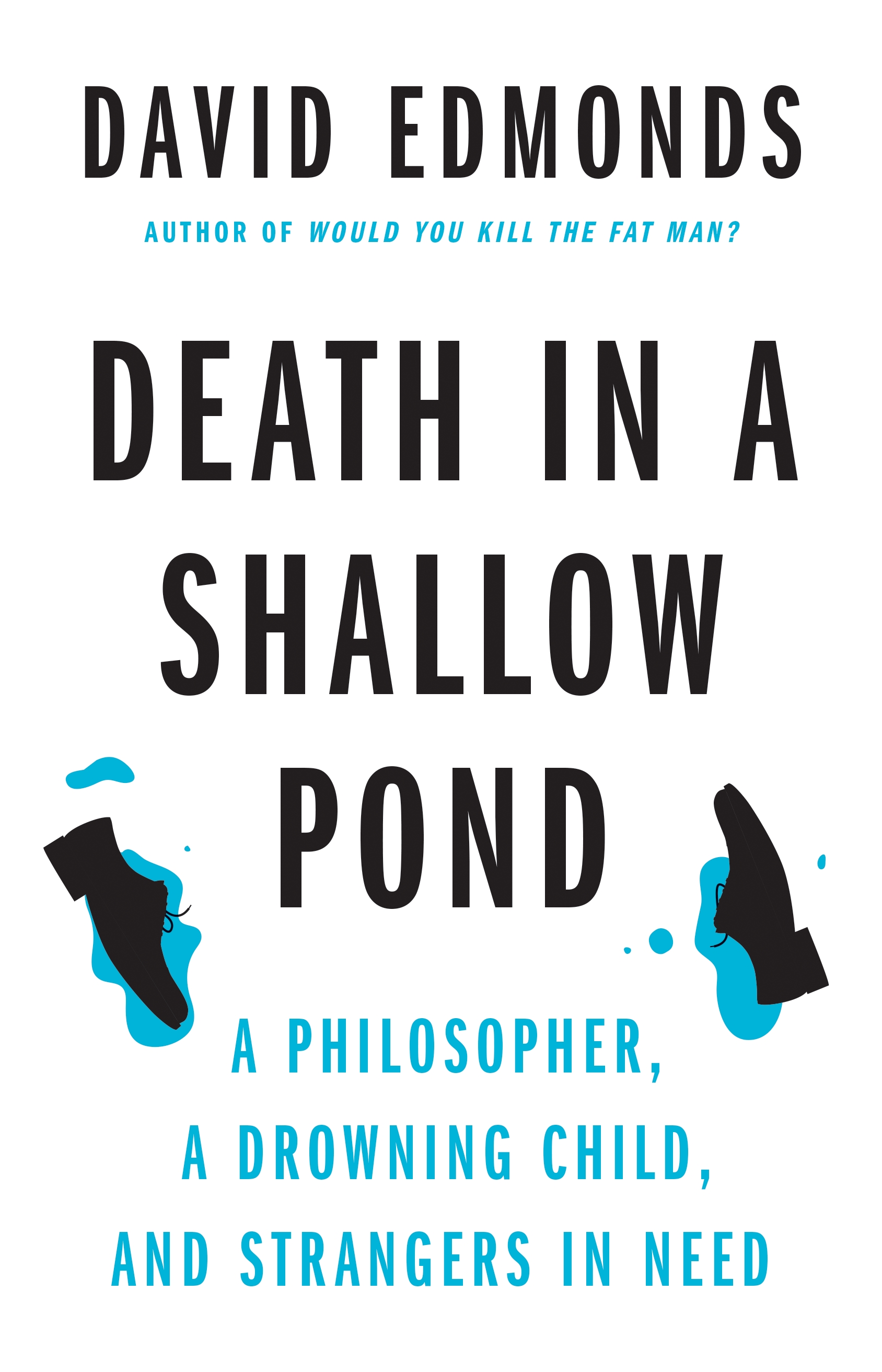
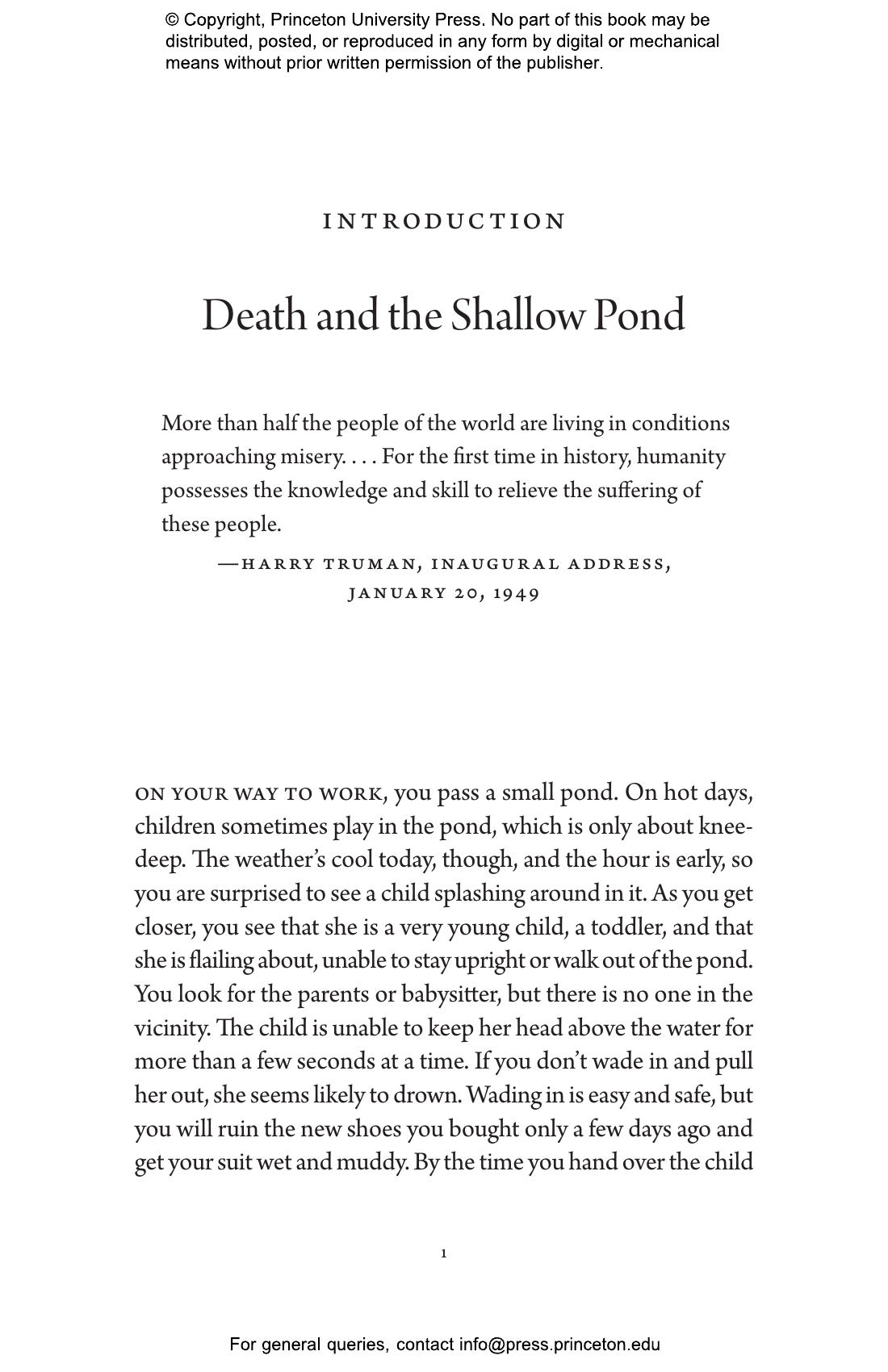
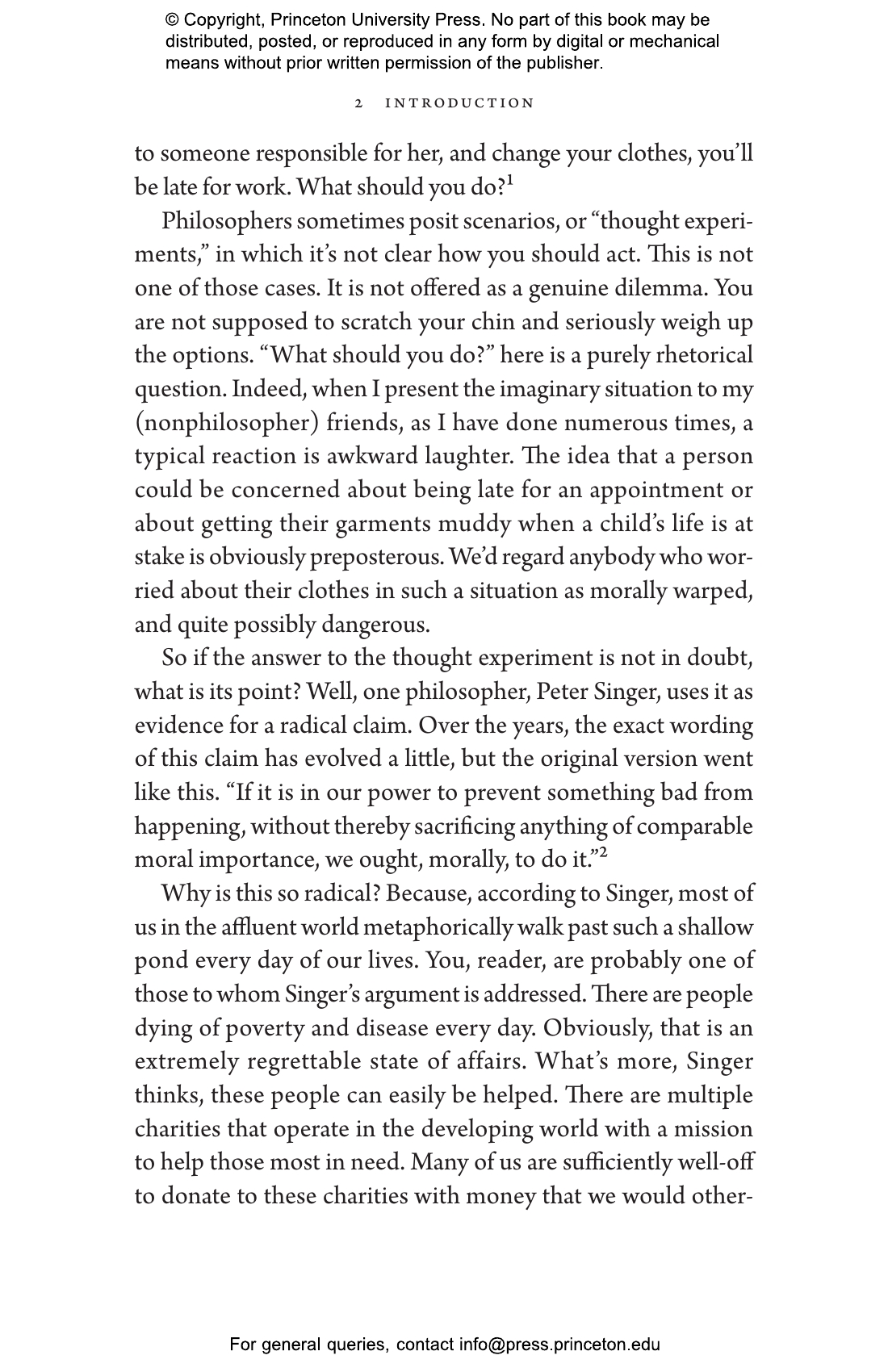
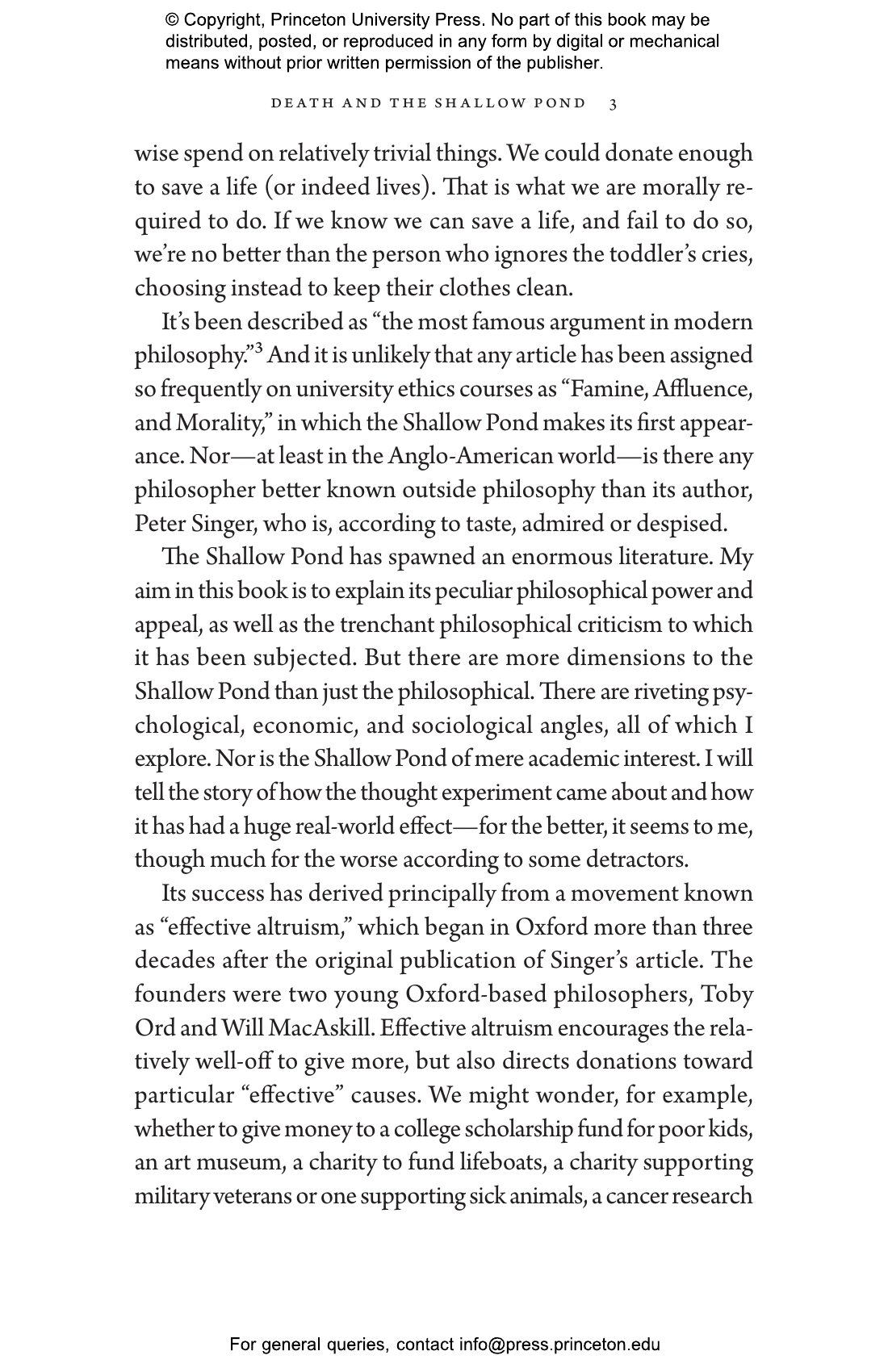
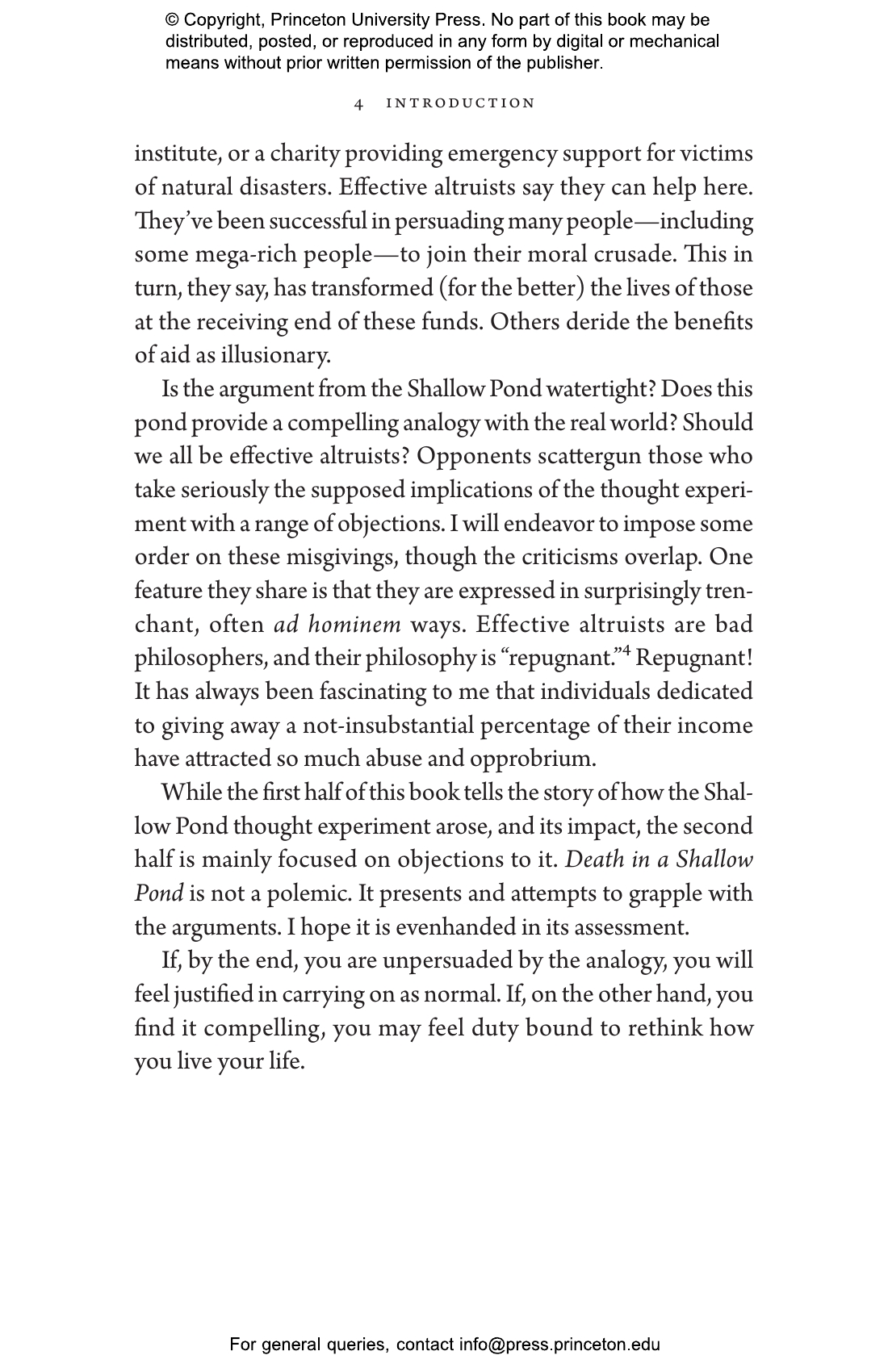
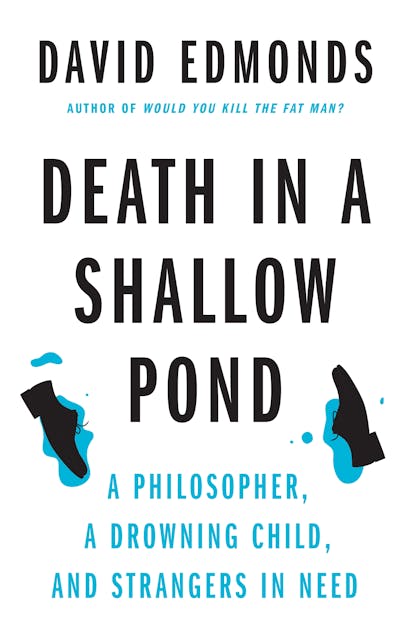
Imagine this: You鈥檙e walking past a shallow pond and spot a toddler thrashing around in the water, in obvious danger of drowning. You look around for her parents, but nobody is there. You鈥檙e the only person who can save her and you must act immediately. But as you approach the pond you remember that you鈥檙e wearing your most expensive shoes. Wading into the water will ruin them鈥攁nd might make you late for a meeting. Should you let the child drown? The philosopher Peter Singer published this thought experiment in 1972, arguing that allowing people in the developing world to die, when we could easily help them by giving money to charity, is as morally reprehensible as saving our shoes instead of the drowning child. Can this possibly be true? In Death in a Shallow Pond, David Edmonds tells the remarkable story of Singer and his controversial idea, tracing how it radically changed the way many think about poverty鈥攂ut also how it has provoked scathing criticisms.
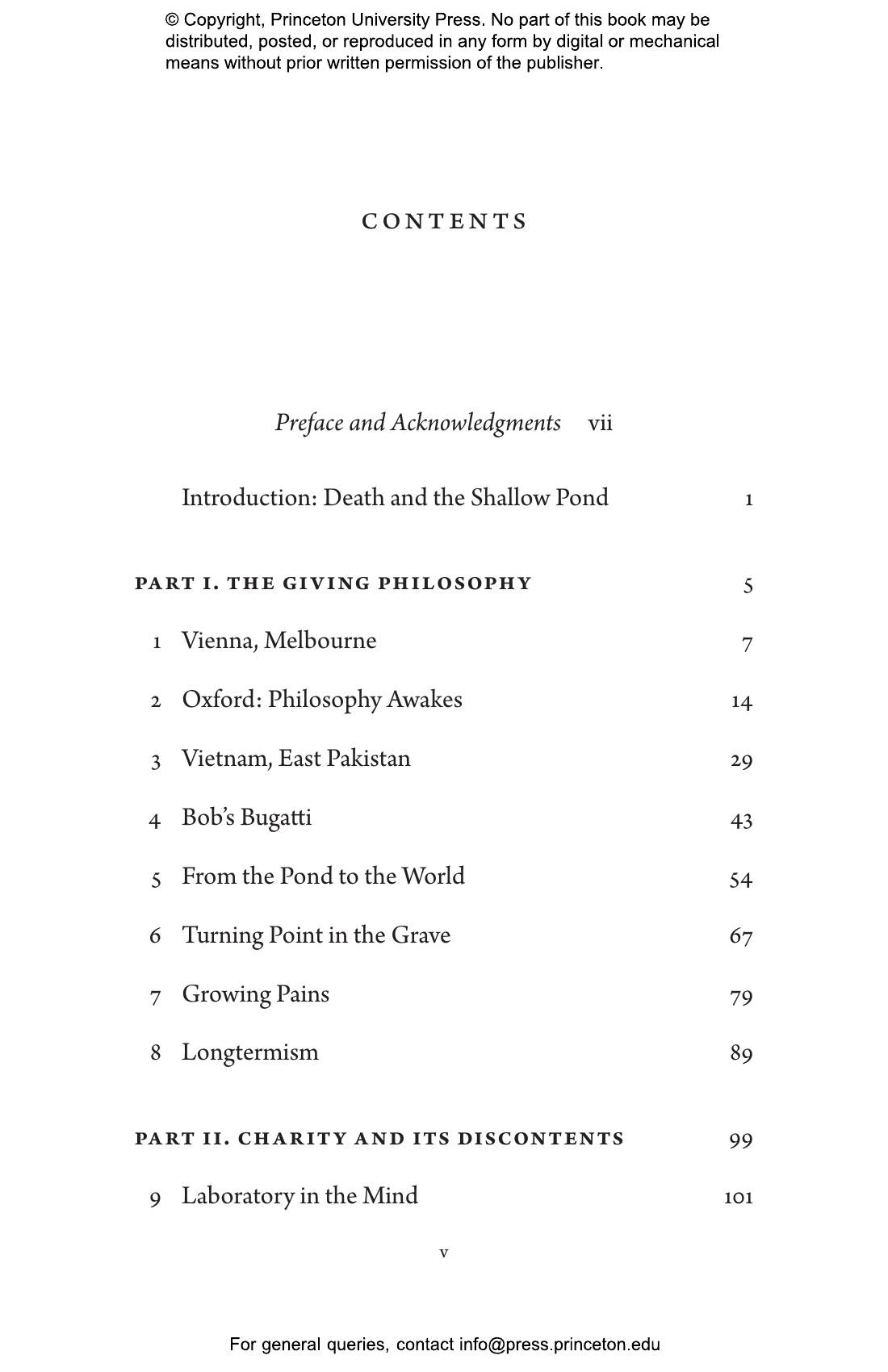
Death in a Shallow Pond describes the experiences and world events that led Singer to make his radical case and how it moved some young philosophers to establish the Effective Altruism movement, which tries to optimize philanthropy. The book also explores the reactions of critics who argue that the Shallow Pond and Effective Altruism are unrealistic, misguided, and counterproductive, neglecting the causes of鈥攁nd therefore perpetuating鈥攑overty. Ultimately, however, Edmonds argues that the Shallow Pond retains the power to shape how we live in a world in which terrible and unnecessary suffering persists.
Awards and Recognition
- A New Yorker Best Book of the Year
- A Five快色直播 Best Philosophy Book of the Year
- Finalist for the PROSE Award in Philosophy, Association of American Publishers
"Entertaining, even riveting. Edmonds is a lucid and engaging explicator of knotty philosophical tangles, and he brings the milieu he treats to life."鈥擝ecca Rothfeld, Washington Post
"[Edmonds] transforms moral inquiry into a high-stakes adventure."鈥�New Yorker
"The Shallow Pond has become the most influential fictional body of water since John Bunyan鈥檚 Slough of Despond. . . . [Edmonds] follows its ripples all the way out."鈥擠an Piepenbring, Harper's
"Full of deft, disarming details. . . . Edmonds has written the rare philosophical book that leaves the reader both clearer-headed and more honestly conflicted."鈥擭ikhil Krishnan, Foreign Policy
"[Edmonds] does a good job of explaining why the shallow pond cannot simply be dismissed. If it makes us uncomfortable – if we want to believe we are good people, yet continue to enjoy some luxuries rather than donate every spare penny to charity – the onus is us to explain why Singer is wrong. This is a debate with high stakes."鈥擜lex Dean, Times Literary Supplement
"An insightful assessment of the Shallow Pond thought experiment and the effective altruism movement it influenced. . . . [Edmonds’] analyses provide fascinating commentary on the ironies of a world in which extreme wealth coexists with poverty, famine, and preventable death. This is sure to spark debate."鈥�Publishers Weekly
"Edmonds. . .presents a powerful moral challenge which should not be ducked."鈥擩ulian Baggini, Literary Review
"Skillfully written. . . . Edmonds has convinced me that we should not ignore Singer’s original provocation."鈥擝en Wurgaft, Chronicle of Higher Education
"Highly recommended."鈥�Choice
“David Edmonds’s Death in a Shallow Pond is one of the best histories of philosophy I have read. It tells the story of Peter Singer and Effective Altruism, which has been the most influential movement in philosophy over the last several decades. Both informative and engaging.”—Tyler Cowen, New York Times bestselling author of Stubborn Attachments: A Vision for a Society of Free, Prosperous, and Responsible Individuals
“Effective Altruism has elicited an unusual combination of dogmatic intellectual support within academia, enthusiastic endorsement from scores of ultrawealthy individuals and organizations, and vitriolic condemnation from across the board. David Edmonds offers a lively, thoughtful, and balanced history of Effective Altruism, and a timely and welcome assessment of its strengths and weaknesses as a philosophical idea.”—C茅cile Fabre, author of Spying Through a Glass Darkly: The Ethics of Espionage and Counter-Intelligence
“This is the fascinating story of how a simple philosophical thought experiment catalyzed five decades of argument and activism about the ethics of philanthropy. The cast of characters is as rich and colorful as the panoply of heroes and villains in a good Victorian novel. David Edmonds is by far the best writer in the genre that weaves together philosophical ideas that affect people’s lives, biography, anecdote, and cultural and political history. There could scarcely be a more enjoyable introduction to the philosophy of charitable giving than this illuminating book.”—Jeff McMahan, University of Oxford
“Death in a Shallow Pond is a brilliant philosophical exploration and a delight to read. David Edmonds’s gripping narrative sheds light on Peter Singer’s seminal thought experiment, the Effective Altruism movement it inspired, and the many objections that have been raised against both.”—Richard Yetter Chappell, author of Parfit’s Ethics
“Death in a Shallow Pond is a compelling introduction to, and history of, this famous thought experiment. With clear and pithy writing, Edmonds provides fresh insights about the key figures in this debate and its animation of the larger Effective Altruism movement.”—Brad Hooker, author of Ideal Code, Real World