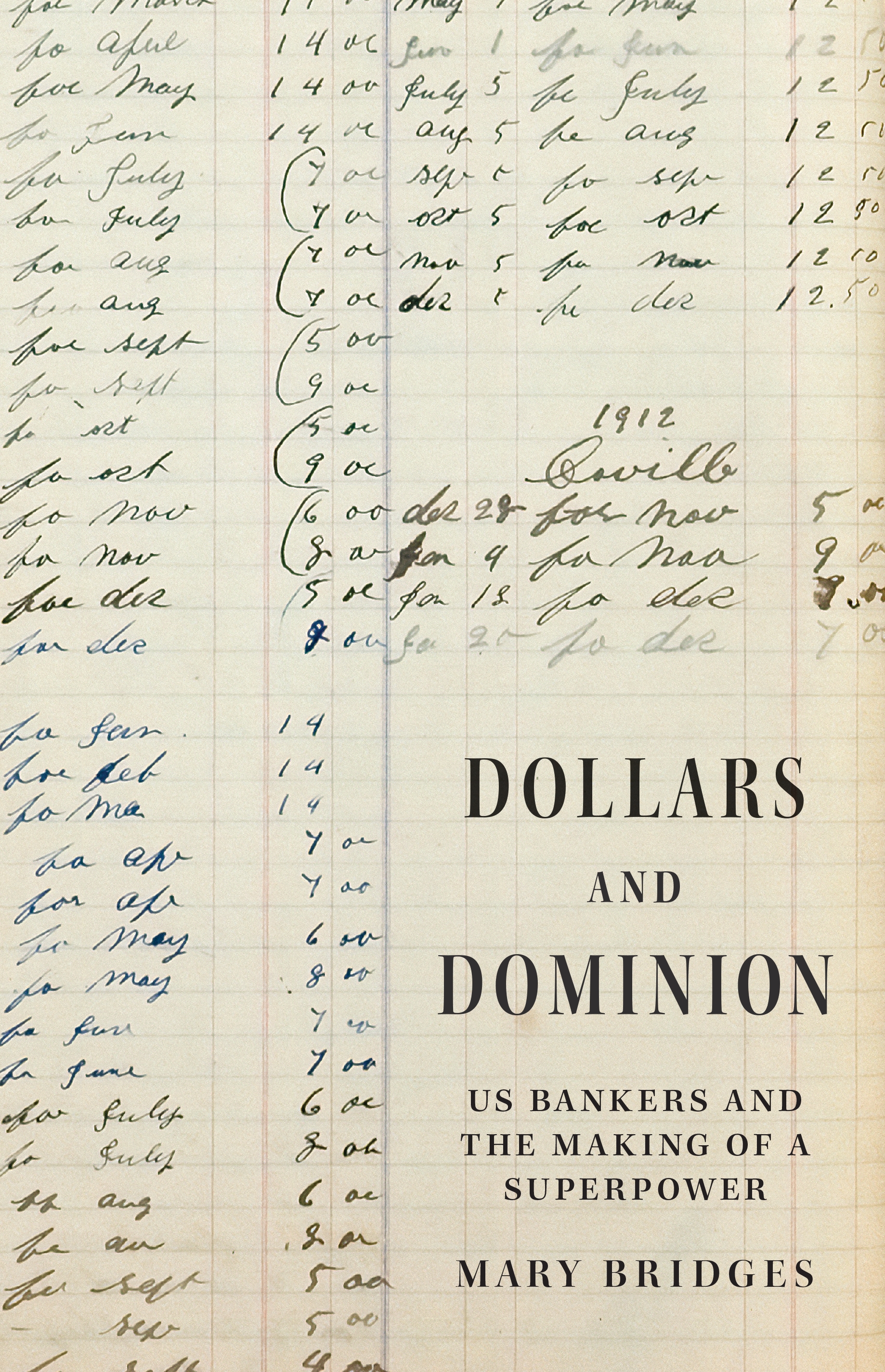
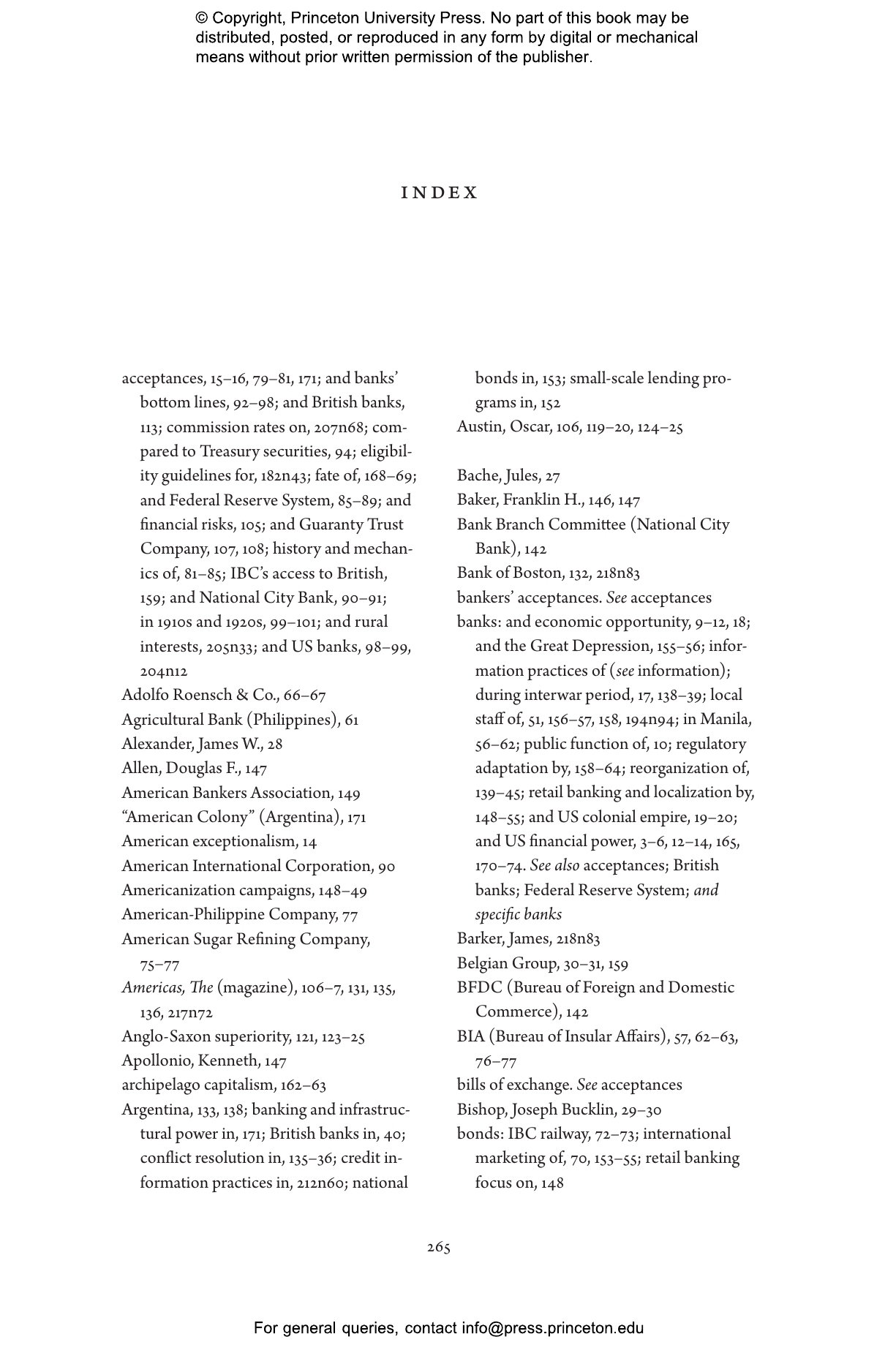
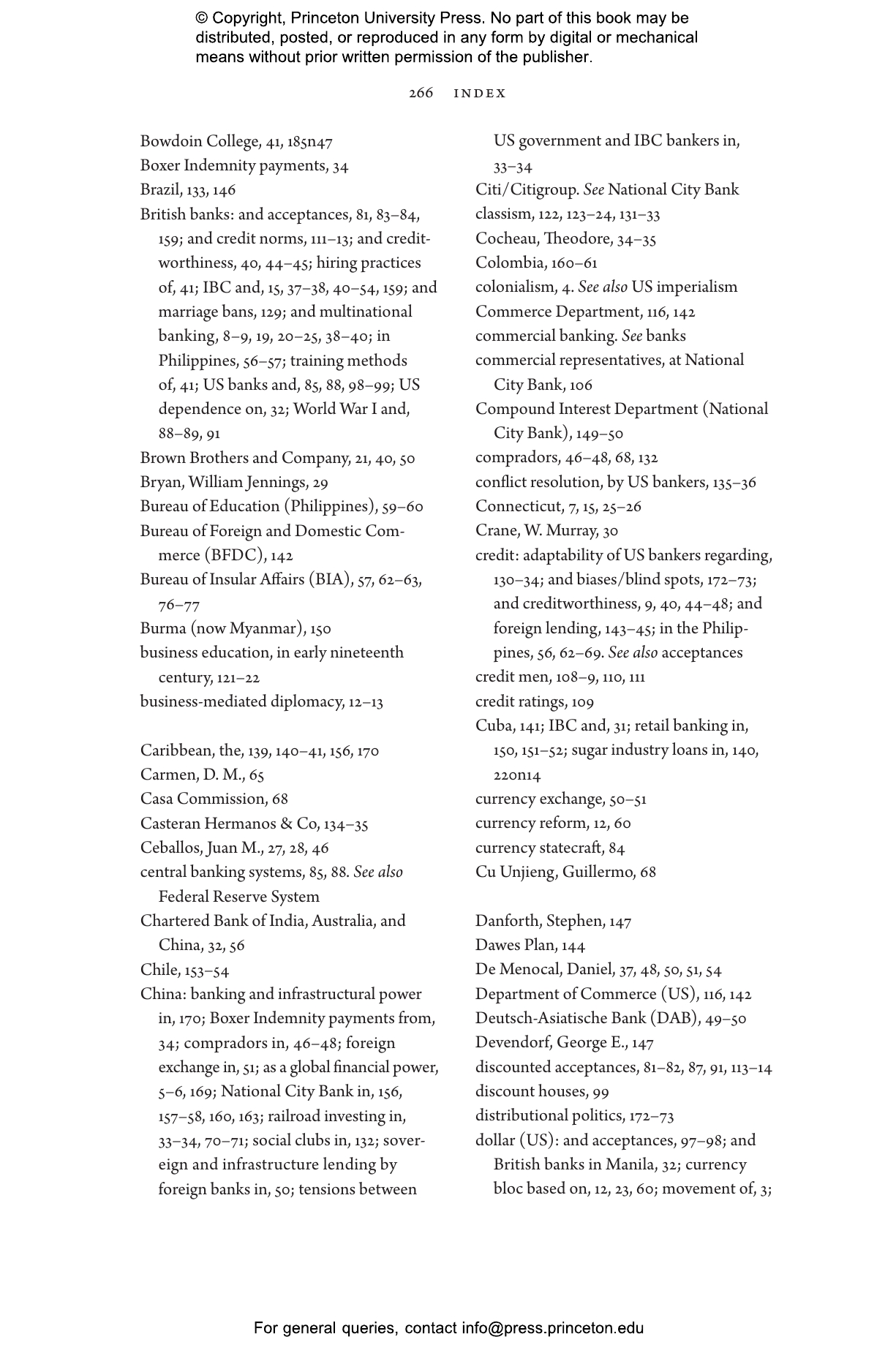
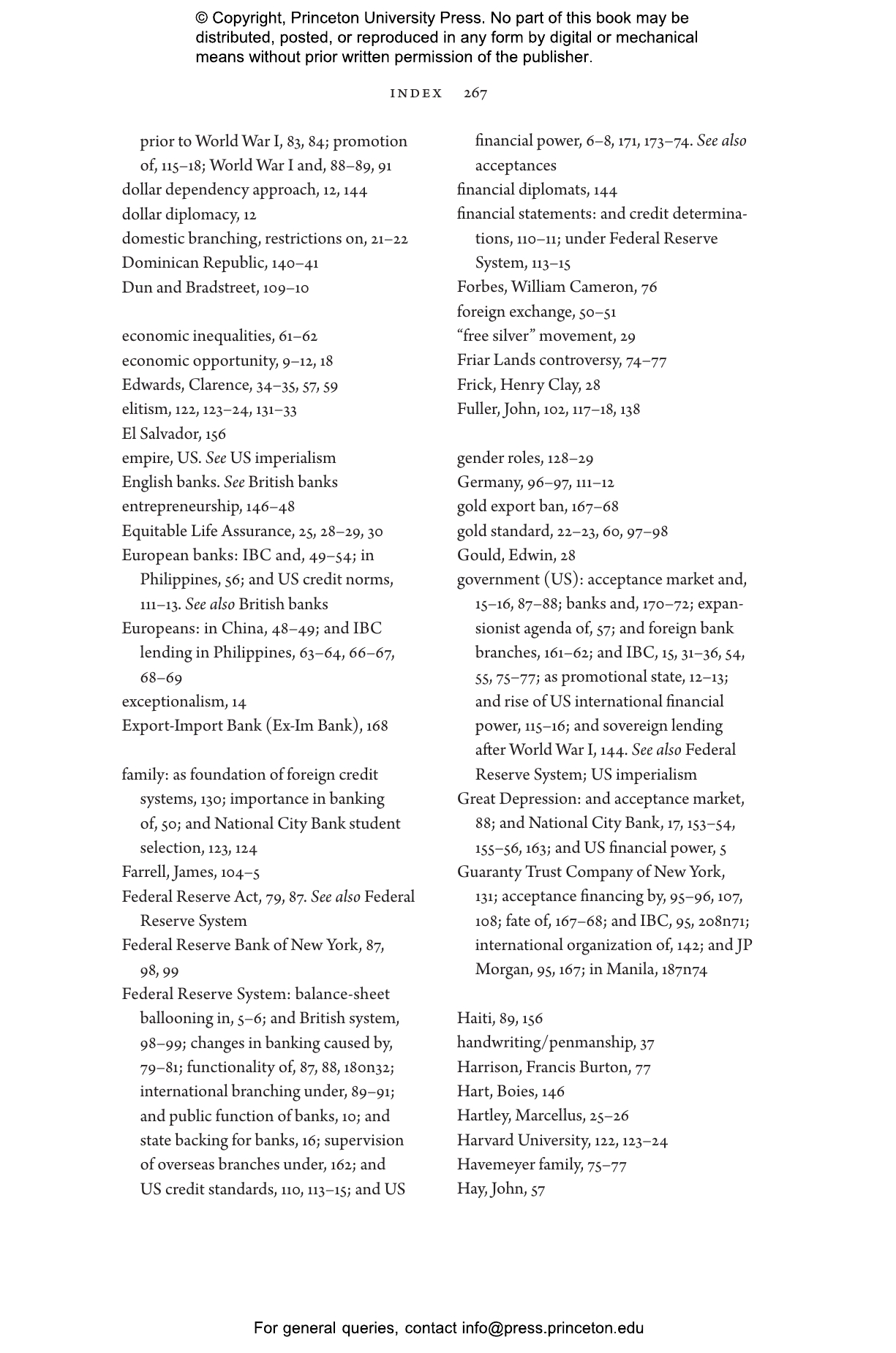
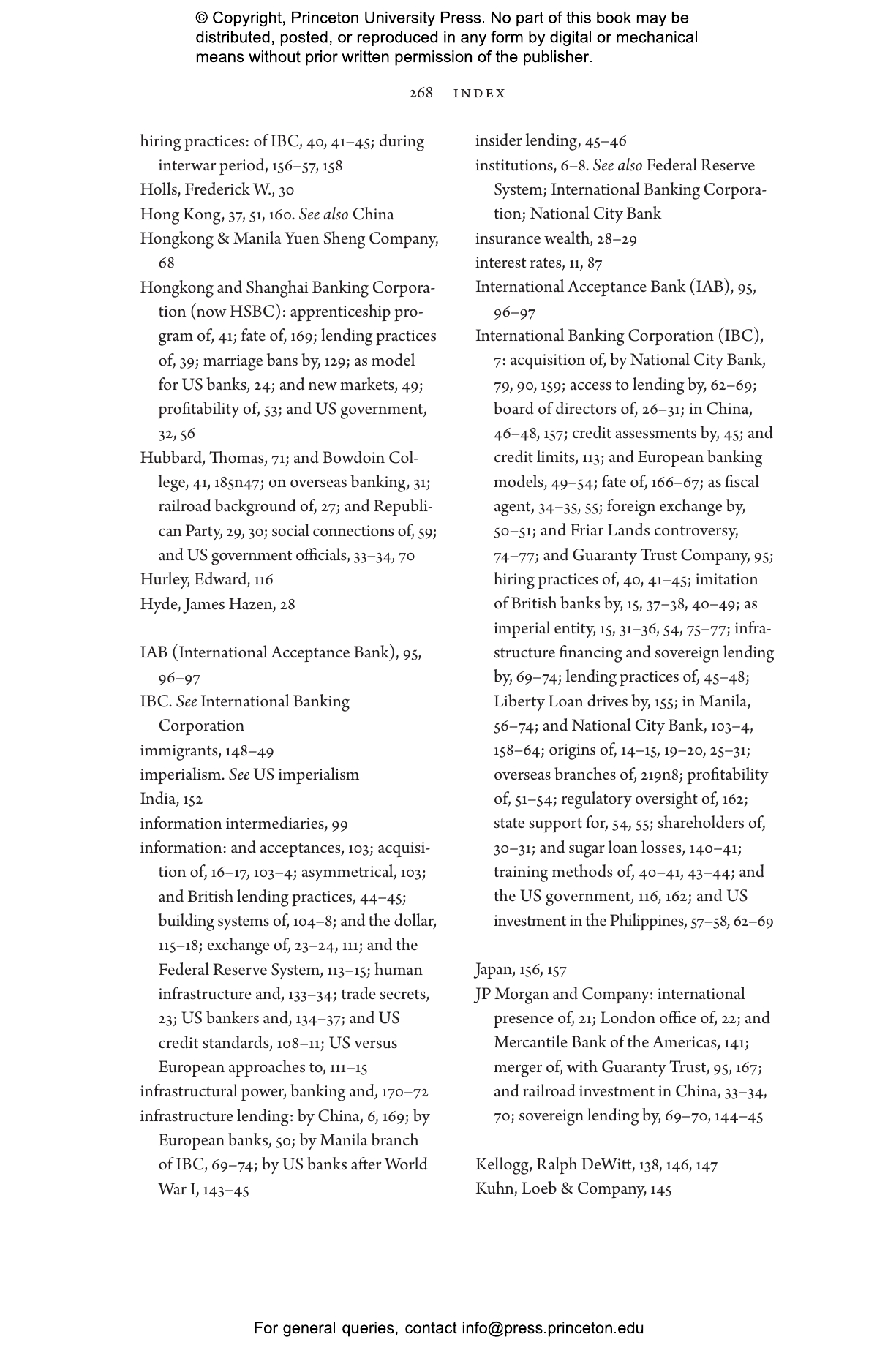
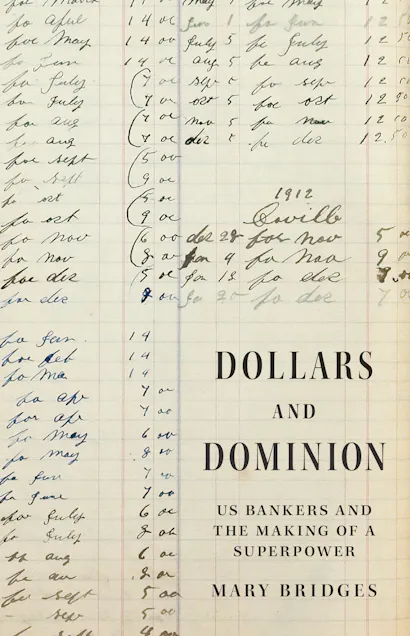
The dominance of US multinational businesses today can seem at first like an inevitable byproduct of the nation鈥檚 superpower status. In Dollars and Dominion, Mary Bridges tells a different origin story. She explores the ramshackle beginnings of US financial power overseas, showing that US bankers in the early twentieth century depended on the US government, European know-how, and last-minute improvisation to sustain their work abroad. Bridges focuses on an underappreciated piece of the nation鈥檚 financial infrastructure鈥攖he overseas branch bank鈥攁s a brick-and-mortar foundation for expanding US commercial influence.
Bridges explores how bankers sorted their new communities into 鈥渦s鈥濃�攑otential clients鈥攁nd 鈥渢hem鈥濃�攍ocal populations, who often existed on the periphery of the banking world. She argues that US bankers mapped their new communities by creating foreign credit information鈥攁nd by using a financial asset newly enabled by the Federal Reserve System, the bankers鈥� acceptance, in the process. In doing so, they constructed a new architecture of US trade finance that relied on long-standing inequalities and hierarchies of privilege. Thus, racialized, class-based, and gendered ideas became baked into the financial infrastructure.
Contrary to conventional wisdom, there was nothing inevitable or natural about the rise of US finance capitalism. Bridges shows that US foreign banking was a bootstrapped project that began as a side hustle of Gilded Age tycoons and sustained itself by relying on the power of the US state, copying the example of British foreign bankers, and building alliances with local elites. In this way, US bankers constructed a flexible and durable new infrastructure to support the nation鈥檚 growing global power.
Awards and Recognition
- Honorable Mention for the Vincent P. DeSantis Book Prize, Society for Historians of the Gilded Age and Progressive Era
- Shortlisted for the Lionel Gelber Prize, Lionel Gelber Foundation
Mary Bridges, a historian of the twentieth-century United States, is the Ernest May Fellow in History and Policy at Harvard Kennedy School’s Belfer Center for Science and International Affairs.
"[An] indispensable account of the prehistory of the U.S. economic security state."鈥擧enry Farrell, Foreign Affairs
"Carefully researched."鈥擡dward Chancellor, Times Literary Supplement
"Dollars and Dominion is a book of impressive breadth . . . . [It] draws on an extensive array of archival materials."鈥擲eokju Oh, Journal of Imperial and Commonwealth History
"Bridges tells us an intriguing story of the global dominance of the US dollar with compelling historical evidence. She explores the dominance of the US dollar through an account of the daily practices of branch bankers overseas, giving this book a unique and captivating edge. The financial power of the US dollar as a global currency prevails today."鈥擳ianyang Song, International Affairs
"[An] excellent study of American global economic power."鈥擟hristy Ford Chapin, American Historical Review
"A well-researched, accessible, and insightful examination into the intertwined expansion of U.S. economic and imperial power in the first three decades of the twentieth century."鈥擪aitlin A. Simpson, The Journal of the Gilded Age and Progressive Era
“This is a finely executed monograph, which uses one bank, the International Banking Corporation (IBC), a subsidiary of First National City Bank of New York (and thus an ancestor of Citigroup), to show vividly the internationalization of US financial business in the very early twentieth century.”—Harold James, 快色直播 University
“Foreign branches of US banks played a seminal role in extending American power and empire abroad. Bridges’s engaging history of global branch banking in the first half of the twentieth century paints a vivid picture of the day-to-day banking activities that held together ever-growing networks of credit, payments, and currencies, and in turn boosted the status of the dollar. In our current moment, this superb deep dive into history helps us understand the resilience of the financial system built on these foundations, even in a world seemingly ripe with challenges and contestations of the dollar’s status as a global reserve currency.”—Vanessa Ogle, Yale University
“A significant scholarly contribution, revisiting the world of US finance and empire from the purview of bankers, managerial men-on-the-spot, and the Federal Reserve, traipsing across four continents.”—Marc-William Palen, University of Exeter