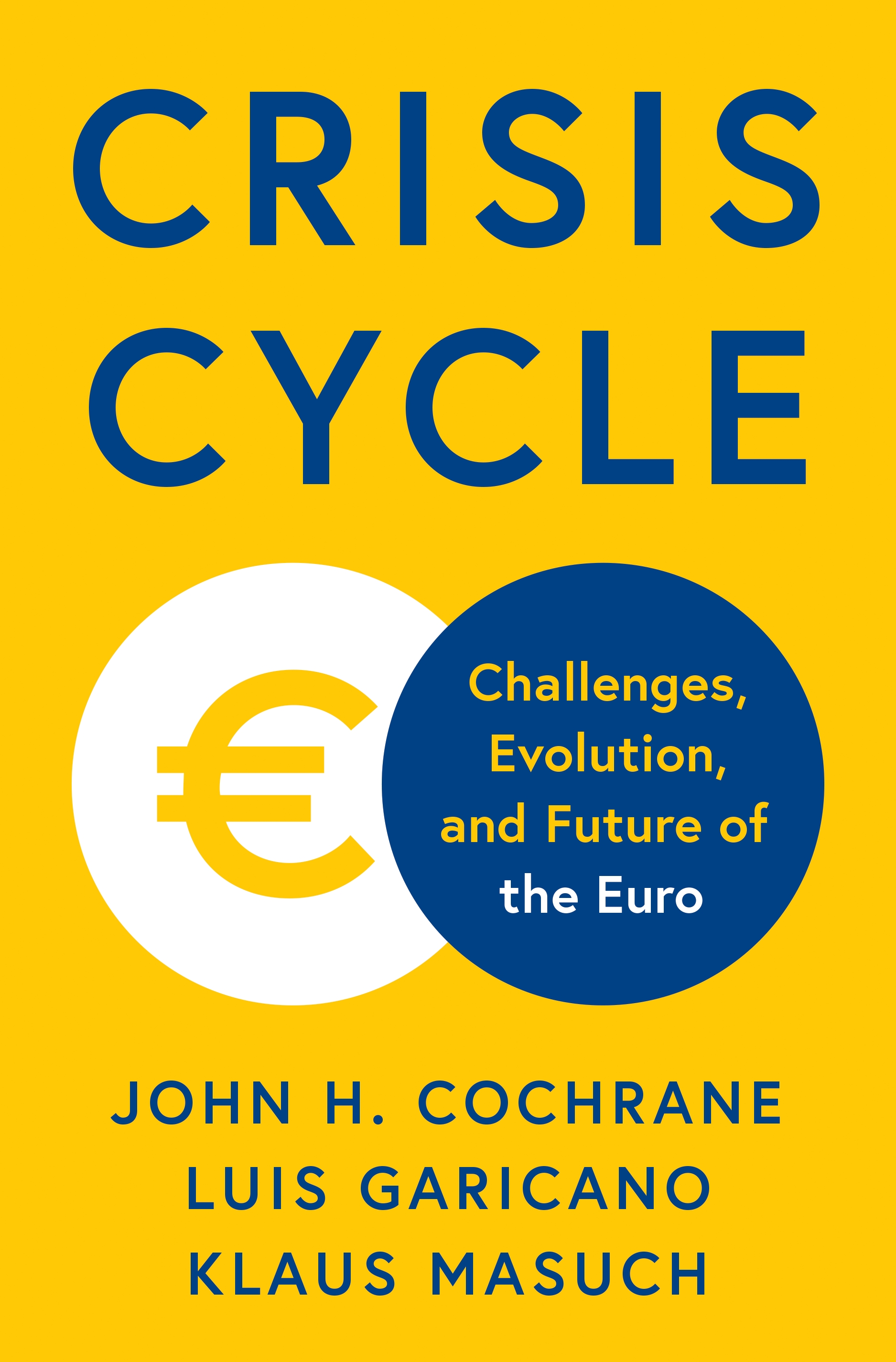
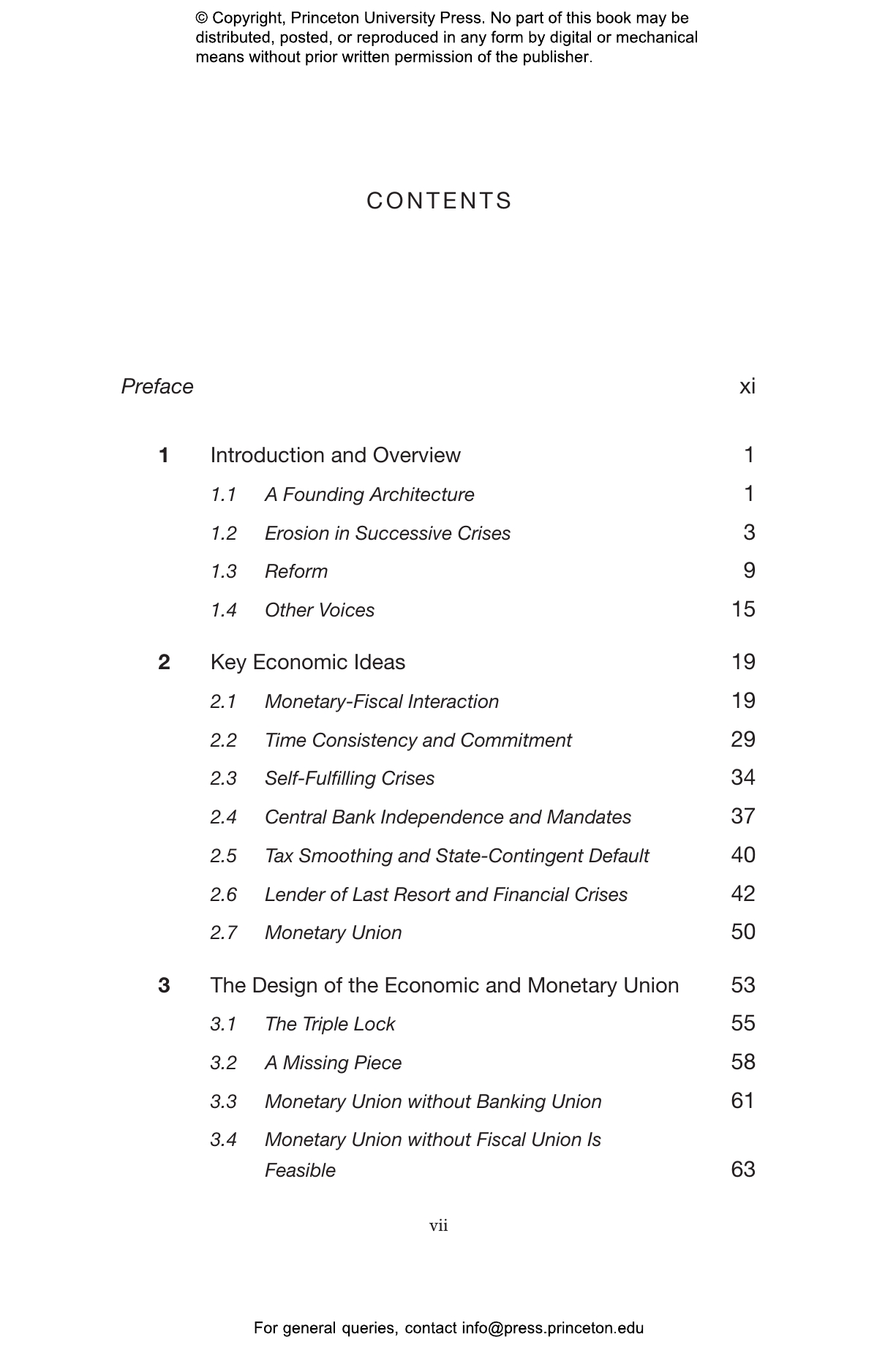
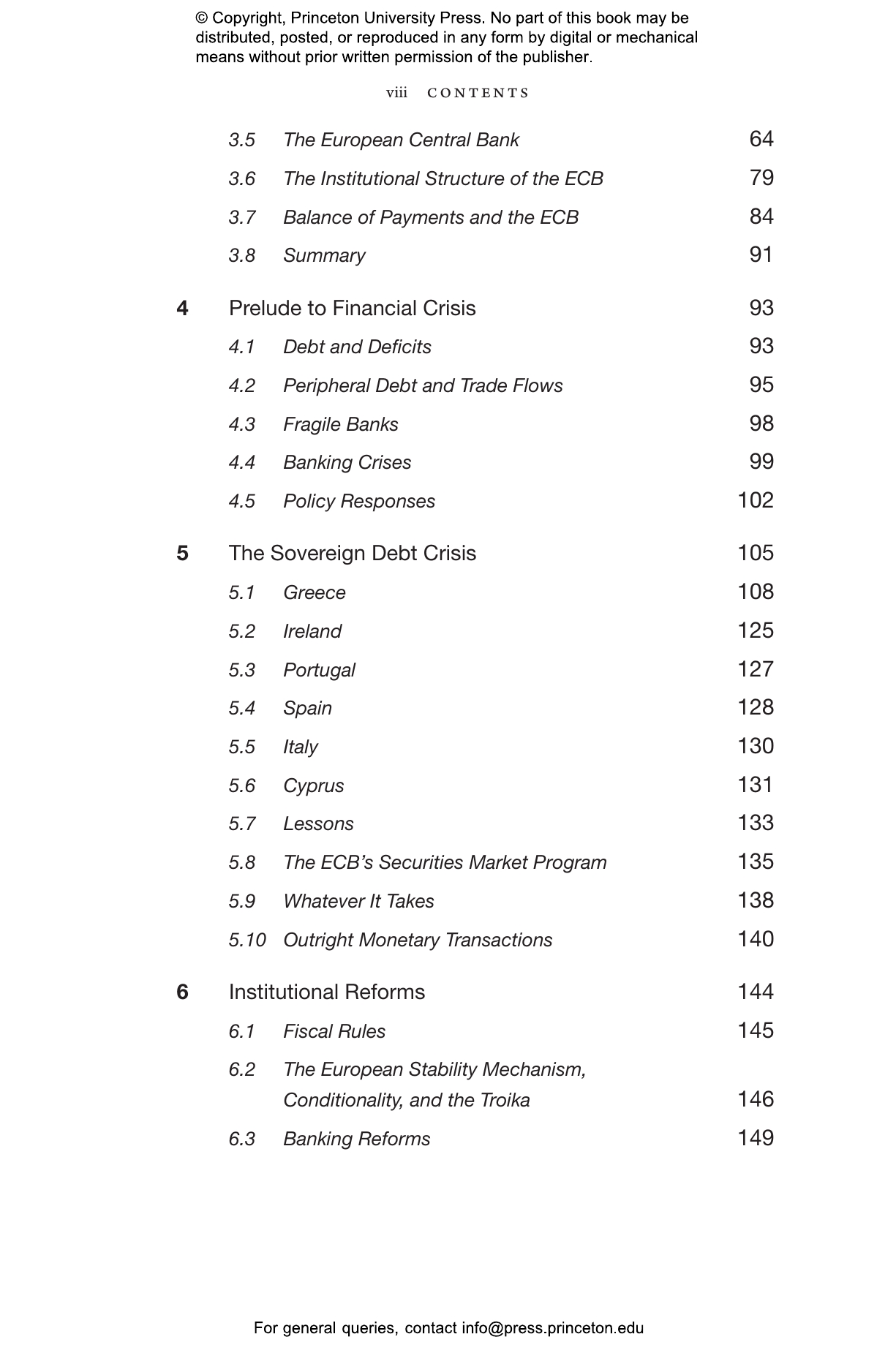
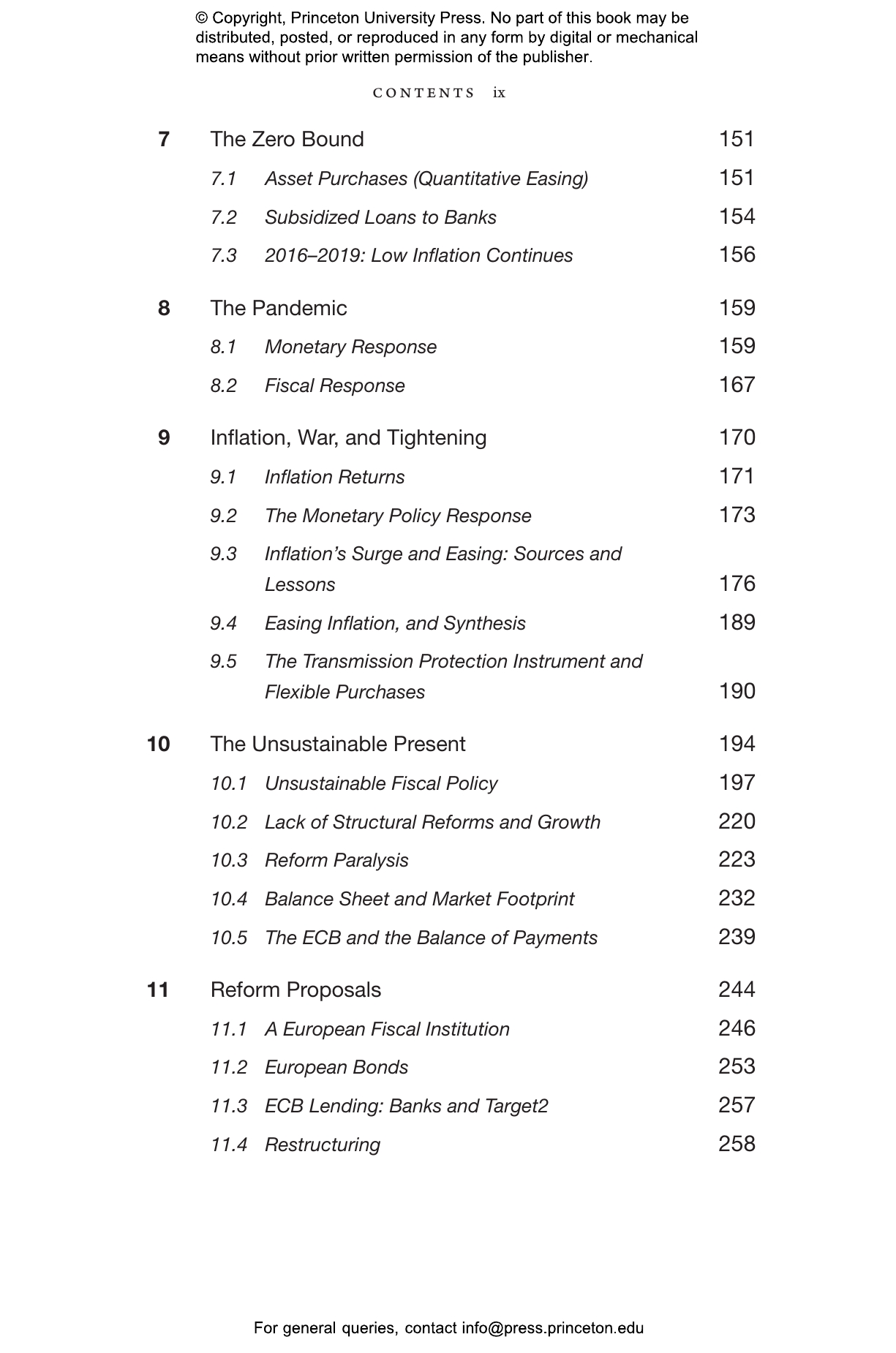
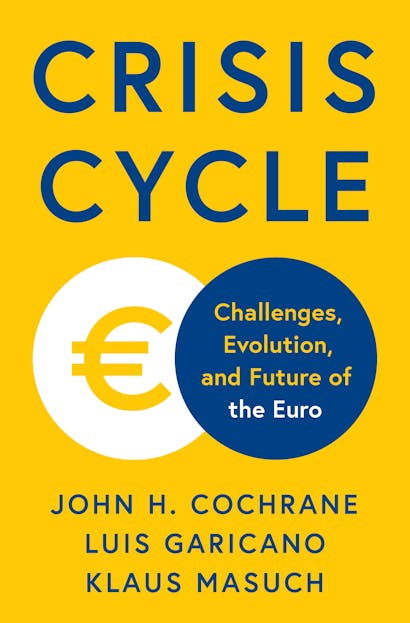
The euro has survived crises unimagined at its founding: the financial meltdown of 2007鈥�2009, the sovereign debt crisis of 2010鈥�2012, the pandemic, and the Russian invasion of Ukraine. The European Central Bank fought these crises with dramatic policy innovations, buying up vast amounts of debt and providing large loans to banks. But now everyone expects the ECB to intervene routinely, and the euro is more fragile as a result. Crisis Cycle recounts this history and offers recommendations for restoring a durable monetary union.
Monetary and fiscal policy are intertwined, especially in a currency union like the eurozone. Member states can be tempted to borrow and spend too much, and then count on the ECB to rescue them by printing money to buy their bonds. To avoid these disincentives, the ECB was founded with a narrow mandate: use interest rates to pursue price stability, and don鈥檛 buy sovereign debt. Debt and deficit rules would keep countries from getting into trouble.
The ECB鈥檚 emergency innovations brought back these disincentives. How can the EU avoid larger and larger bailouts? The authors argue that Europe needs a joint fiscal institution that can provide temporary help to sovereigns, a resolution mechanism so sovereign default is a motivating possibility, and bank reform that ensures sovereign default will not bring down the financial system. This timely book shows how to restore the euro鈥檚 ambitious and effective founding framework. The unique group of authors combine extensive policy experience and authoritative academic credentials.
Awards and Recognition
- A Financial Times Best Economics Book of the Summer
"The book ought to be read by anyone with an interest in, or an influence on, the future development of the economic and monetary framework of the European Union."鈥擭iels Buenemann, Central Banking
"An excellent discussion and analysis of the euro and its future."鈥�Choice
"This book tackles one of the most pressing and perennial questions facing the European Union: can the euro survive in its current form, and if not, what needs to change? . . . For anyone concerned about the future of European integration, this represents an important contribution to the ongoing debate on the Euro."鈥擬ax Magnacca, Society of Professional Economists
"Crisis Cycle provides economists, policymakers and engaged citizens with the most rigorous and readable account of the euro’s structural predicament to date. It is indispensable for scholars of European political economy, monetary theory and institutional design, and highly relevant to anyone seeking to understand why the future of the single currency remains, a quarter-century after its creation, genuinely uncertain."鈥擫uciano Magaldi Sardella, LSE Review of 快色直播
“A masterful analysis of the euro area’s monetary and fiscal architecture, this book reveals how a patchwork of crisis responses has increasingly drawn the European Central Bank into fiscal dilemmas. It proposes bold yet feasible reforms to resolve these dilemmas while avoiding the complexities of fiscal unification. A must-read for anyone interested in the future of Europe!”—Klaus Adam, University College London
“There are many compelling accounts of the Eurozone crisis but the one by Cochrane, Garicano, and Masuch is different. Their superb forensic work is rooted in economic principles and in a deep understanding of Europe’s institutional structure—and its limitations. This approach equips them well to draw clear-eyed conclusions and articulate bold reform proposals. A must-read for anyone interested in the future of Europe.”—Beno卯t Coeur茅, former member of the Executive Board of the European Central Bank, president of the French Competition Authority
“The creation of the euro is arguably the most ambitious monetary experiment of the past century, yet its results have been mixed. In this groundbreaking book, a ‘dream team’ of economists—Cochrane, Garicano, and Masuch—delve deeply into the euro’s foundations, its turbulent crises, and the pathways for meaningful reform. A must-read for economists, policymakers, and anyone interested in the euro, the European Union, or modern monetary economics, this book combines scholarly insight with practical solutions to one of the most pressing issues of our time for all Europeans.”—Jes煤s Fern谩ndez-Villaverde, University of Pennsylvania
“Cochrane, Garicano, and Masuch offer a sharp and consistent guide to navigating the design of the EMU, its evolution from crisis to crisis, and the reforms needed to protect it from future shocks. Their insightful analysis concludes that the fragility of the current moment demands deep but feasible reforms to preserve them. This book is an essential contribution to the debate on the ways to build resilience to manage the next crisis.”—Jos茅 Manuel Gonz谩lez-P谩ramo, Former ECB Board member (2004–2012) and IESE Business School
“Twenty-five years after the birth of the euro, this book offers the most comprehensive and insightful analysis ever of its many successes and how its institutions adapted to crises. These three leading economists understand better than anyone the multiple ways in which monetary, financial and fiscal policies are intertwined. Their deep expertise shines in every page as they inspect the right and wrong steps the euro has taken. By the end, the reader is left with a proposed set of essential reforms for the euro’s next twenty-five years.”—Ricardo Reis, London School of Economics
“A brilliant economic analysis of eurozone institutions and their necessary reforms—as expected by an author team with such combined gravitas on academic theory and Eurozone policymaking.”—Dimitri Vayanos, London School of Economics