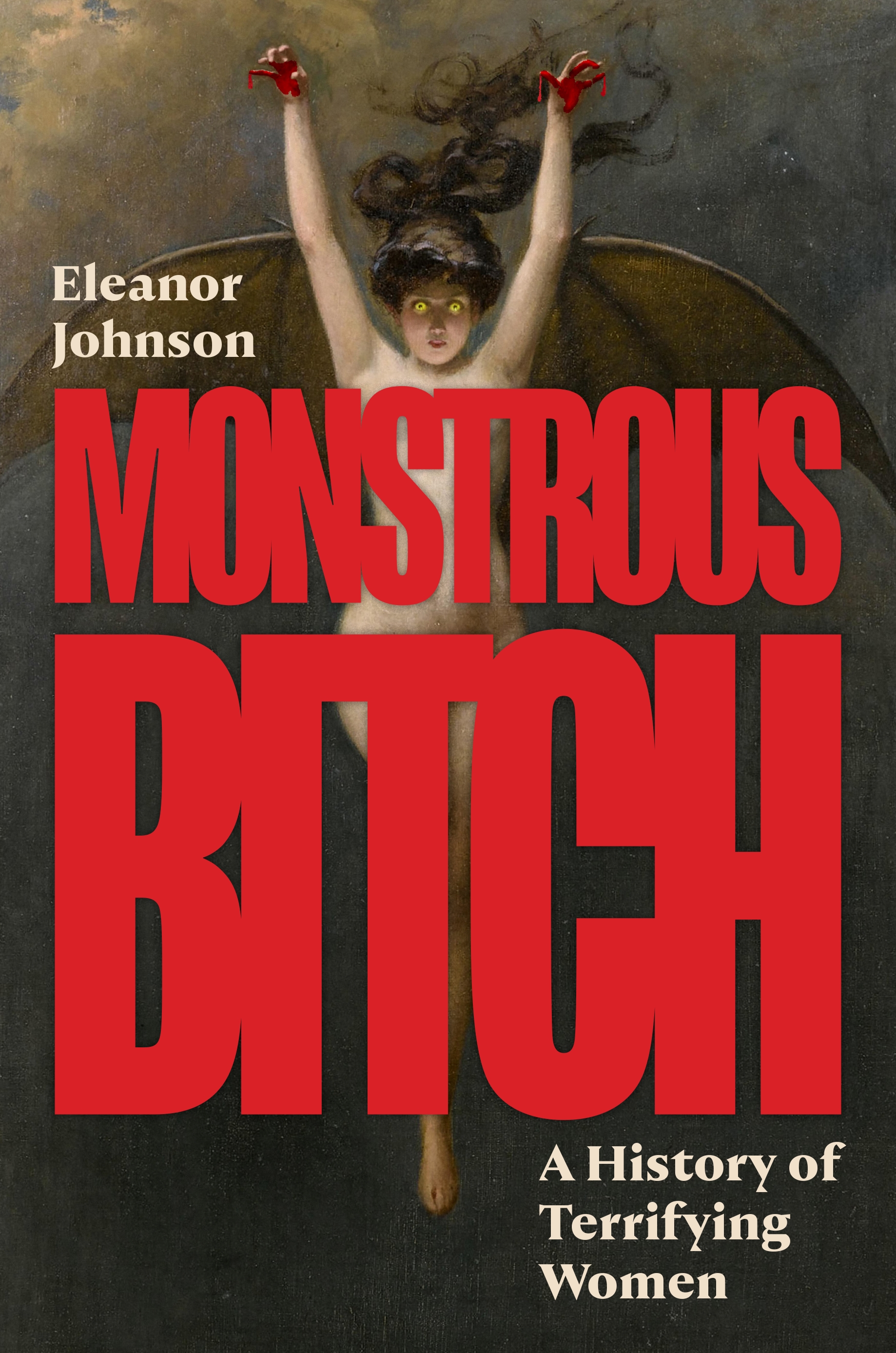
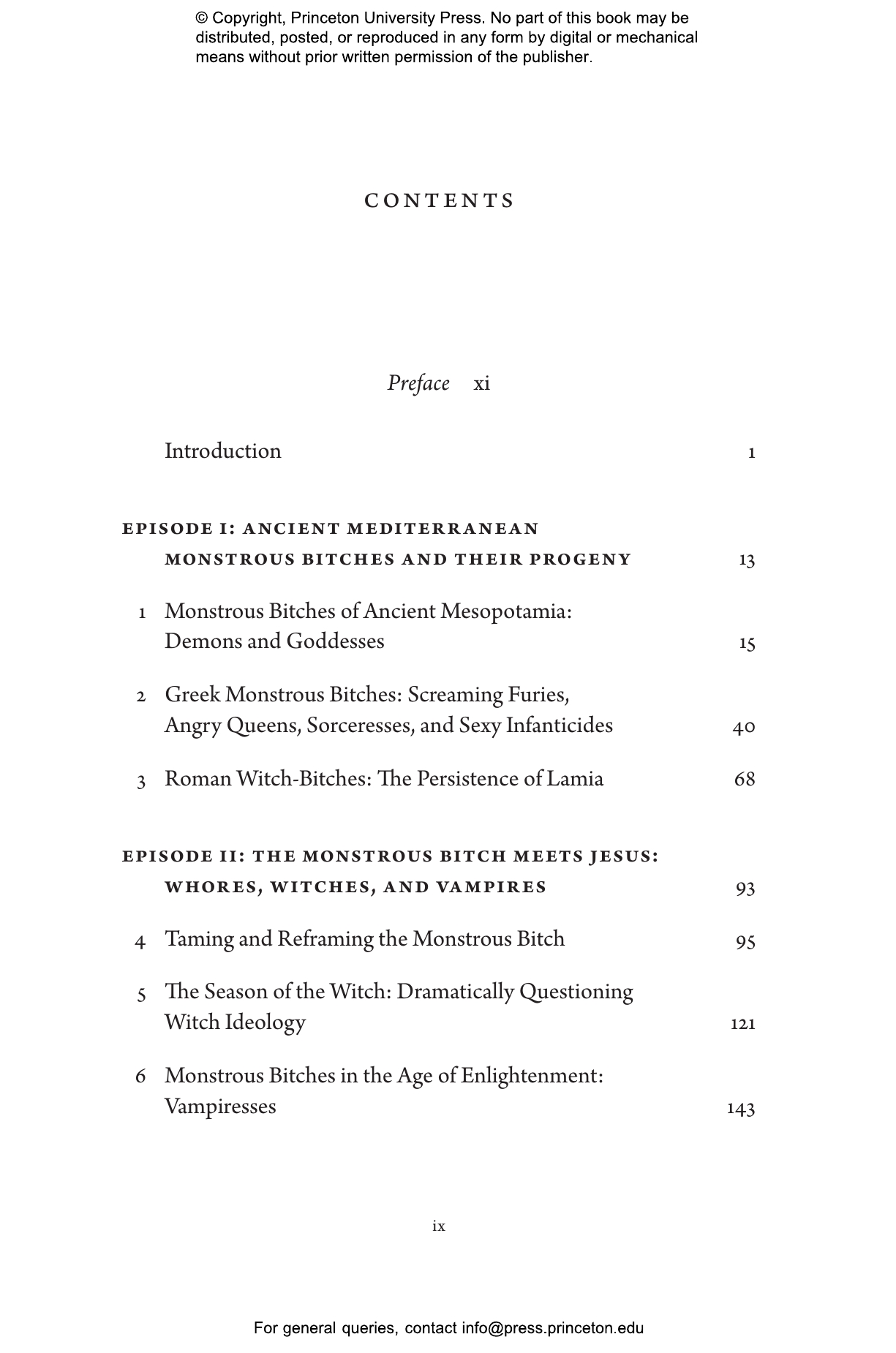
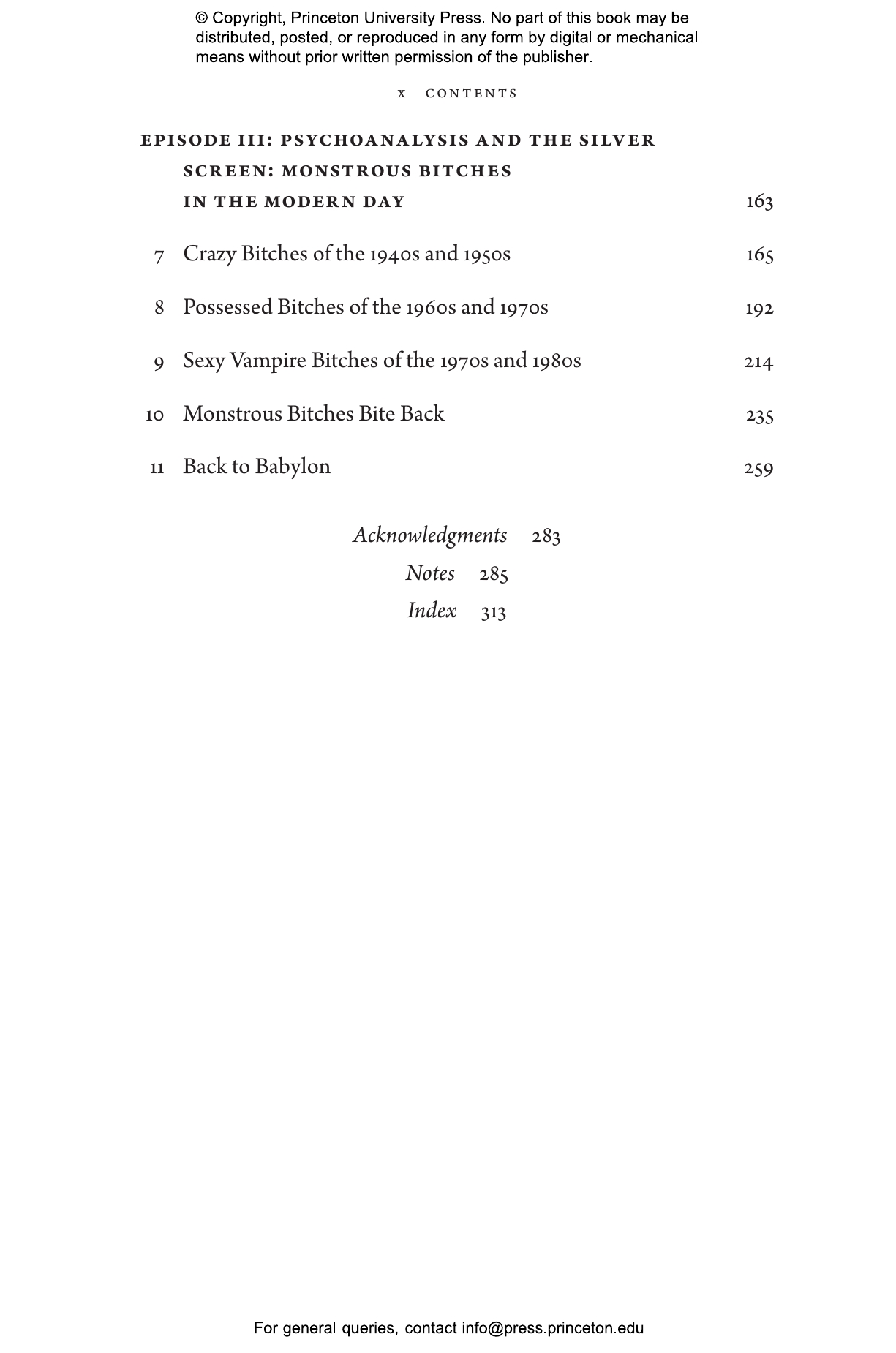
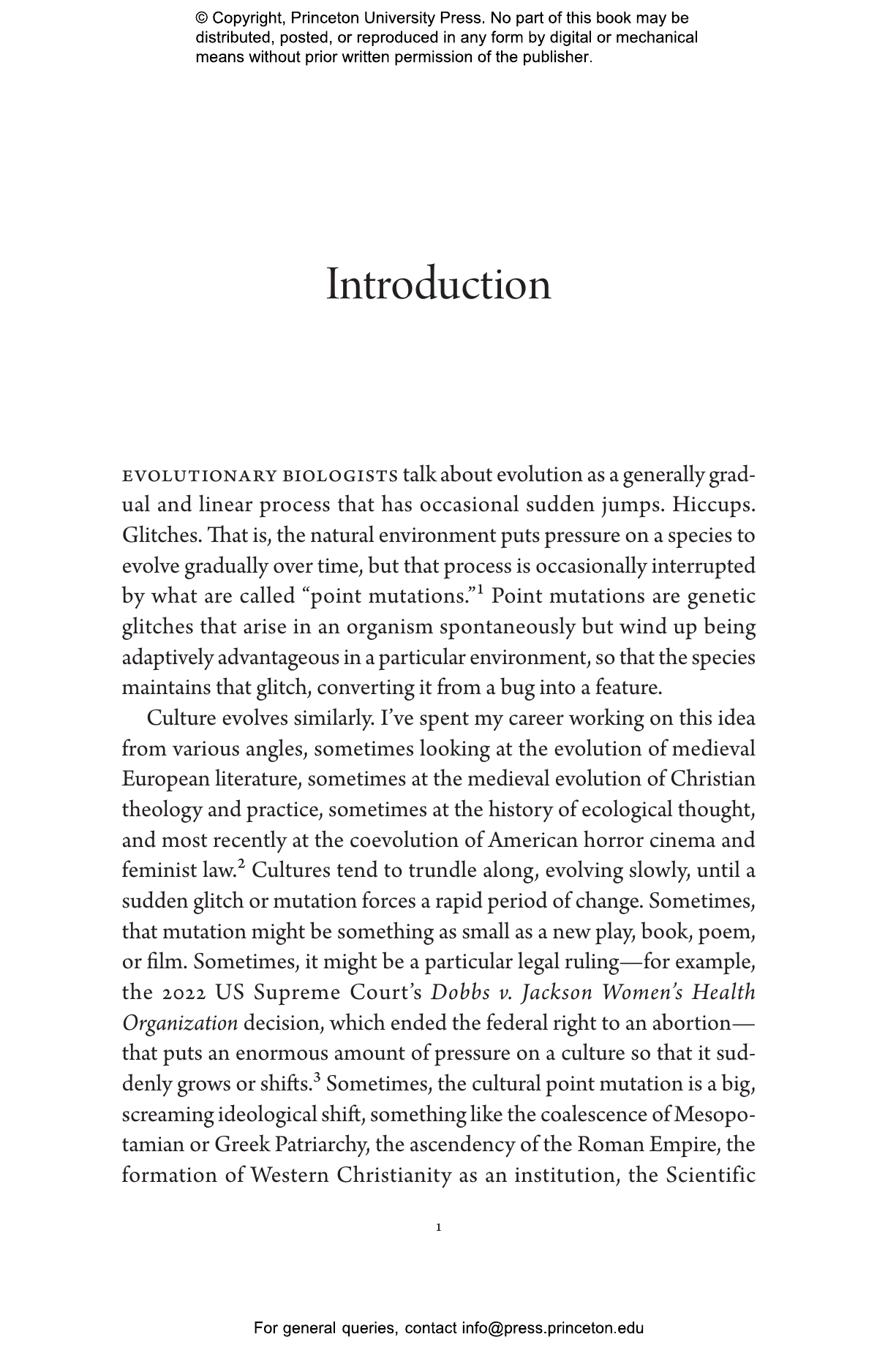
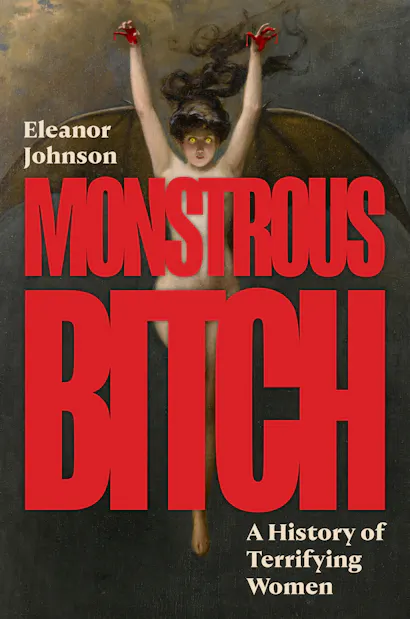
For as long as human societies have been telling stories, the patriarchy has felt threatened by women. In this book, Eleanor Johnson provides an engaging cultural history of a figure she calls the 鈥渕onstrous bitch,鈥� the notorious female who has haunted the patriarchal imagination for centuries, feared for her sexual promiscuity, her exercise of reproductive agency and control, and her outspoken way of contesting patriarchal power.
In a narrative brimming with insight, Johnson traces the origins of female monstrosity to the demoness Lamashtu of ancient Mesopotamia, showing how this infanticidal, hypersexual, loudmouthed monster appears in different guises throughout history. In classical Greece, she reemerges as the sorceress Medea, the child-devouring monster Lamia, and the vengeful Furies. In the medieval and early modern periods, she is an oversexed, baby-slaying, spellcasting witch; in the Romantic and Victorian eras, a vampiress; and in the modern age of psychoanalysis, a mental patient. After this longue dur茅e history, Johnson shows how monstrous bitchery has been challenged and reinterpreted in contemporary cinematic popular culture, becoming an expression of heroism and resistance in films like Ginger Snaps, Jennifer’s Body, and The Witch. She demonstrates how deeply embedded the roots of misogyny have become, and why it is more critical today than ever that we expose and address them.
An irreverent look at a pervasive trope that runs through four thousand years of Western culture, Monstrous Bitch reveals that while representations of the powerful woman have evolved over time, the fear and demonization of her remains the same.
Eleanor Johnson is professor of English and comparative literature at Columbia University. Her books include Scream with Me: Horror Films and the Rise of American Feminism (1968鈥�1980); Waste and the Wasters: Poetry and Ecosystemic Thought in Medieval England; Staging Contemplation: Participatory Theology in Middle English Prose, Verse, and Drama; and Practicing Literary Theory in the Middle Ages: Ethics and the Mixed Form in Chaucer, Gower, Usk, and Hoccleve.
鈥淥f all the grand narratives woven into the tradition known as 鈥榃estern Judeo-Christianity,鈥� the story of the demonically powerful woman is one of the most persistent and potent. Boldly tackling four thousand centuries of myth, literature, art, medicine, philosophy, theology, and film, Eleanor Johnson explains how the 鈥榤onstrous bitch鈥� in various forms both kept women down and inspired them to speak out and assert their power. If you鈥檝e ever wondered what ancient Mesopotamian goddesses have to do with the right to vote and reproductive freedom鈥攁nd especially if you haven鈥檛鈥攔ead this book! It crackles with scholarly insight and feminist energy.鈥�鈥擩oy Connolly, president of the American Council of Learned Societies
鈥淭imely and fun to read, Monstrous Bitch presents an urgent response to the fact that in modern Western society鈥攁nd especially the United States鈥攖he figure of the 鈥榤onstrous bitch鈥� is increasingly relevant as women鈥檚 hard-won rights are vanishing at an alarmingly rapid pace that virtually no one would have thought possible even five years ago.鈥�鈥擠ebbie Felton, author of Monsters and Monarchs: Serial Killers in Classical Myth and History
鈥淛ohnson shows how and why the Western tradition created and continuously recreates the figure of the 鈥榤onstrous bitch鈥欌�攃hild-killing, demonic, loud, sexy, and supernatural鈥攊n its popular cultures, from ancient Mesopotamia through the present day. Punchy, catchy, and accessible, there is nothing out there quite like this book.鈥�鈥擟arman Romano, author of Theologies of Fear in Early Greek Epic
This publication has been produced to meet accepted Accessibility standards and contains various accessibility features including concise image descriptions, a table of contents, a page list to navigate to pages corresponding to the print source version, and elements such as headings for structured navigation. Appearance of the text and page layout can be modified according to the capabilities of the reading system.
Accessibility Features
-
WCAG v2.2
-
WCAG level AA
-
Table of contents navigation
-
Single logical reading order
-
Short alternative textual descriptions
-
Print-equivalent page numbering
-
Landmark navigation
-
Index navigation
-
Epub Accessibility Specification 1.1
-
ARIA roles provided
-
All non-decorative content supports reading without sight
-
No known hazards or warnings